Australian court strikes down landmark climate ruling / Photo: ©

 Colombian judge bans strikes on guerrillas if minors are present

 Khachanov shocks ailing Auger-Aliassime, Swiatek and Osaka advance at US Open

 Lone juror blocking verdict in US mother's child murder trial: defense

 'Kinda chic' - Williams sisters set to launch US Open doubles bid

 Volkswagen says cutting 100,000 jobs by end of decade

 Russia slaps curfew on charity director over army criticism

 Ailing Auger-Aliassime upset by Khachanov at US Open

 Richarlison omitted from Tottenham's Premier League squad

 How El Nino is choking the Panama Canal

 Hamilton drives his Ferrari dream at Monza

 Senegal has an IMF loan, now what?

 Auger-Aliassime upset by Khachanov at US Open

 Hugging Face, the French start-up that became AI's warehouse

 World Cup winner Llorente retires from Spain team at 31

 Osaka squeezes into US Open third round

 Apple faces £2 bn lawsuit in UK over app privacy feature
 Former champ Swiatek eases into US Open third round

 DR Congo latest to promise moving Israel embassy to Jerusalem

 War criminal Mladic's body returns to Serbia with military honours

 Pierre Cardin museum brings designer's futurist style to Venice

 Slovenian rookie Omrzel triumphs as Mas extends Vuelta lead

 British, French leaders talk migrants, EU relations

 Heading for Ferrari's home race, Leclerc still dreams of world title
 Cafe at centre of Israel culture clash agrees to shut on Sabbath

 Spacecraft bound for Mercury begins 'tricky' arrival

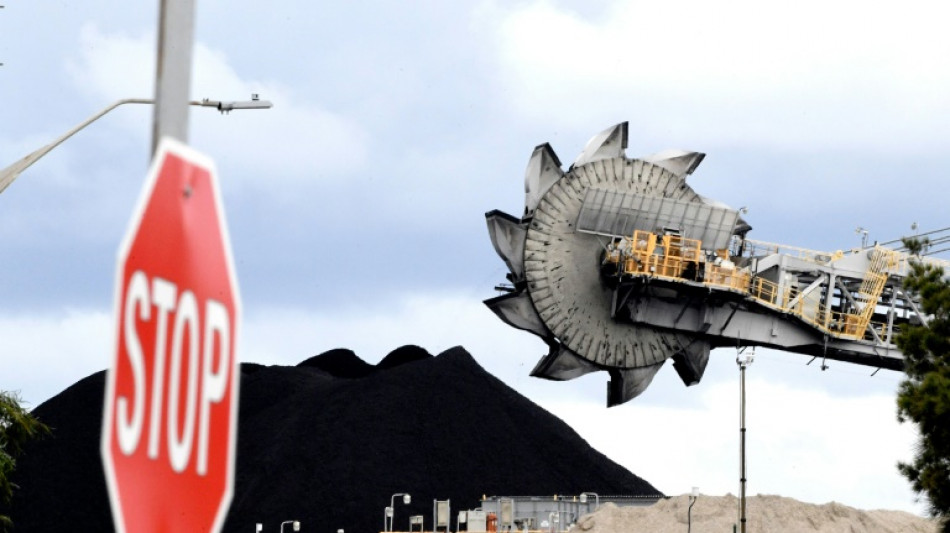
An Australian court on Tuesday threw out a landmark legal ruling that the country's environment minister had a duty to protect children from climate change.
Last year's legal win by a group of high school children had been hailed by environmental groups as a potential legal weapon to fight fossil fuel projects.
But the federal court found in favour of an appeal by Environment Minister Sussan Ley, deciding she did not have to weigh the harm climate change would inflict on children when assessing the approval of new fossil fuel projects.
The judgement overturned a July 2021 ruling by a lower court that found the minister had a duty to "avoid causing personal injury or death" to under 18s due to "emissions of carbon dioxide into the Earth's atmosphere".
Anjali Sharma, 17, who launched the legal action in 2020, said the minister's successful appeal had left the students "devastated".
"Two years ago, Australia was on fire; today, it's underwater. Burning coal makes bushfires and floods more catastrophic and more deadly. Something needs to change," she said.
Izzy Raj-Seppings, 15, said the court had accepted that young people would "bear the brunt of the impacts of the climate crisis", which she described as an important step in climate litigation.
However, the federal court found emissions from the mine at the centre of the case -- Whitehaven's Vickery coal mine -- posed only a "tiny increase in risk" to the students.
Minister Ley welcomed the verdict.
"The minister always takes her role as the environment minister seriously," a spokesperson said in a statement.
- 'Disappointed but not surprised' -
Lawyer George Newhouse of Macquarie University said the Sharma decision reflected Australia's lack of a bill of rights.
"We don't have the scope for the successful climate change litigation that we see in Europe because Australia has a constitution that, quite intentionally, contains no human rights," he told AFP.
Newhouse said landmark cases, such as the Urgenda precedent -- in which Dutch citizens successful sued their government to take climate action -- would fail in Australia because of this.
"I am disappointed by the Sharma decision, but not surprised," he said.
Sharma and her fellow students will consider whether to appeal to Australia's highest court.
Climate and environmental law expert Laura Schuijers from the University of Sydney said the High Court may well elect to hear their appeal, given the importance of the questions raised.
Schuijers said Australia's lack of a constitutional protection of human rights made it "a very interesting place for climate litigation".
"It means that litigants are seeking creative ways to test the bounds of the law and to ask the ultimate question: in the face of inaction, who is responsible for picking up the slack?" she said.
The ruling had "put the spotlight on Australia's politicians and policymakers to take the proactive action that the science presented in the courtroom suggests is urgently needed".
Australia has been at the sharp end of climate change, with droughts, deadly bushfires, bleaching events on the Great Barrier Reef and floods becoming more common and intense as global weather patterns change.
J.Bergmann--BTB