US has destroyed all its chemical weapons: Biden / Photo: © AFP

 Six candidates to lead UN take stage for televised debate

 King Charles opens slimmed down Commonwealth Games in Glasgow
 US unveils new tariffs on 60 partners as Trump rebuilds trade agenda
 WNBA viral star Cunningham wades into trans athletes row
 Hearn dismisses Fury talk of Joshua no-show for super fight

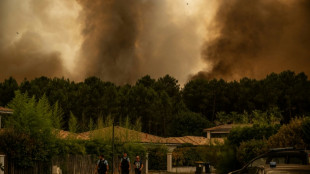 'Like a war zone': France evacuates 20,000 due to wildfires

 Ships avoid Ukrainian grain ports after Russian attacks
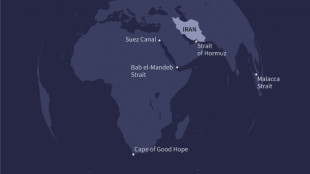
 Oil passes $100 a barrel again: why it's more serious this time

 Who are the six candidates vying to lead the UN?

 Hamilton proud of recovery after hitting rock bottom a year ago
 Carapaz eyes polkadot mountains jersey after stage win
 Fields medal awarded to four young mathematicians
 Carapaz claims Tour de France stage as Pogacar loses key team-mate
 Alonso welcomes Aston Martin upgrade, warns against unreal expectations
 Anderson declares Man City 'kings of Manchester' after £116 mn move
 Relieved Russell says Mercedes have solved his power problems mystery

 Oil soars above $100 as Middle East fears grow
 Venezuelans turn to scrap collecting in quake-hit beach 'paradise'

 Heptathlon champion Johnson-Thompson joins list of Commonwealth Games absentees

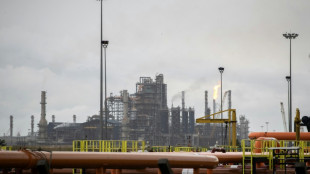 Nigeria's Dangote raises $2.5bn to expand Africa's largest refinery

 Oil soars to $100 on fresh Mideast attacks
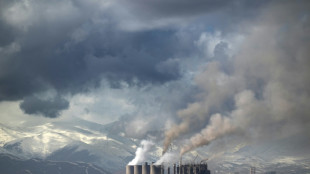 Coal-fired power generation rising globally on Mideast war: IEA

 Premier League champions Arsenal sign Greece winger Tzolis from Brugge

 French Jewish DJ sues after activists disrupt gig: lawyer

 Venice film festival promises Pattinson, Oasis and Musk doc

President Joe Biden announced Friday that the United States has fully destroyed its decades-old stockpiles of chemical weapons, fulfilling a commitment under the three-decade-old Chemical Weapons Convention.
"Today, I am proud to announce that the United States has safely destroyed the final munition in that stockpile -- bringing us one step closer to a world free from the horrors of chemical weapons," Biden said.
The United States was the last of the Chemical Weapons Convention's signatories to complete the task of destroying their "declared" stockpiles, though some are believed to maintain secret reserves of chemical weapons.
"It marks the first time an international body has verified destruction of an entire category of declared weapons of mass destruction," Biden said in a statement.
The announcement came after the Blue Grass Army Depot, a US Army facility in Kentucky, recently completed its four-year job of eliminating some 500 tonnes of lethal chemical agents, the last batch held by the US military.
The US had held for decades stores of artillery projectiles and rockets that contained mustard gases, VX and sarin nerve agents, and blister agents.
Such weapons were condemned widely after their use with horrendous results on the battlefields of World War I.
But many countries retained and further developed them in the years afterward.
The Chemical Weapons Convention, agreed in 1993 and coming into effect in 1997, gave the United States until September 30 this year to destroy all of its chemical agents and munitions.
Other signatories to the pact had already eliminated their holdings, Fernando Arias, head of the Organization for the Prohibition of Chemical Weapons (OPCW), said in May.
That left only the United States to complete the task, he said.
"More than 70,000 tons of the world's most dangerous poisons have been destroyed under the supervision of the OPCW," he said.
According to the US Arms Control Association, in 1990 the United States held nearly 28,600 tonnes of chemical weapons, the world's second largest store after Russia.
With the ebb of the Cold War the superpowers and other countries joined together to negotiate the Chemical Weapons Convention.
Eliminating the stockpiles, doubly dangerous because it means neutralizing not only the chemical agents but also the munitions they are contained in, was a slow process.
Russia completed destroying its own declared stockpiles in 2017.
By April 2022, the US had less than 600 tonnes left to destroy.
Biden urged continued vigilance to ensure all chemical weapons around the world are destroyed and said that the handful of countries that have not joined the convention should do so.
"Russia and Syria should return to compliance with the Chemical Weapons Convention and admit their undeclared programs, which have been used to commit brazen atrocities and attacks," Biden said.
P.Anderson--BTB