Ukraine dam's destruction increases mines threat: Red Cross / Photo: © AFP

 Six candidates to lead UN take stage for televised debate

 King Charles opens slimmed down Commonwealth Games in Glasgow

 US unveils new tariffs on 60 partners as Trump rebuilds trade agenda

 WNBA viral star Cunningham wades into trans athletes row

 Hearn dismisses Fury talk of Joshua no-show for super fight

 'Like a war zone': France evacuates 20,000 due to wildfires

 Ships avoid Ukrainian grain ports after Russian attacks

 Oil passes $100 a barrel again: why it's more serious this time

 Who are the six candidates vying to lead the UN?

 Hamilton proud of recovery after hitting rock bottom a year ago

 Carapaz eyes polkadot mountains jersey after stage win

 Fields medal awarded to four young mathematicians
 Carapaz claims Tour de France stage as Pogacar loses key team-mate
 Alonso welcomes Aston Martin upgrade, warns against unreal expectations

 Anderson declares Man City 'kings of Manchester' after £116 mn move

 Relieved Russell says Mercedes have solved his power problems mystery

 Oil soars above $100 as Middle East fears grow

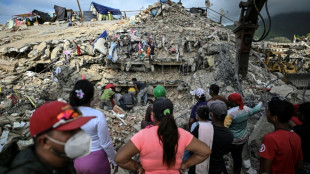
 Venezuelans turn to scrap collecting in quake-hit beach 'paradise'

 Heptathlon champion Johnson-Thompson joins list of Commonwealth Games absentees

 Nigeria's Dangote raises $2.5bn to expand Africa's largest refinery

 Oil soars to $100 on fresh Mideast attacks
 Coal-fired power generation rising globally on Mideast war: IEA

 Premier League champions Arsenal sign Greece winger Tzolis from Brugge

 French Jewish DJ sues after activists disrupt gig: lawyer

 Venice film festival promises Pattinson, Oasis and Musk doc

The destruction of the Kakhovka dam in Ukraine will have a catastrophic effect on locating landmines in the affected region, the Red Cross warned Wednesday.
"We knew where the hazards were," said Erik Tollefsen, head of the Weapon Contamination Unit at the International Committee of the Red Cross. "Now we don't know.
"All we know is that they are somewhere downstream."
"This is a major concern because it will affect not just the population, but also all of those that are coming in to help," he added.
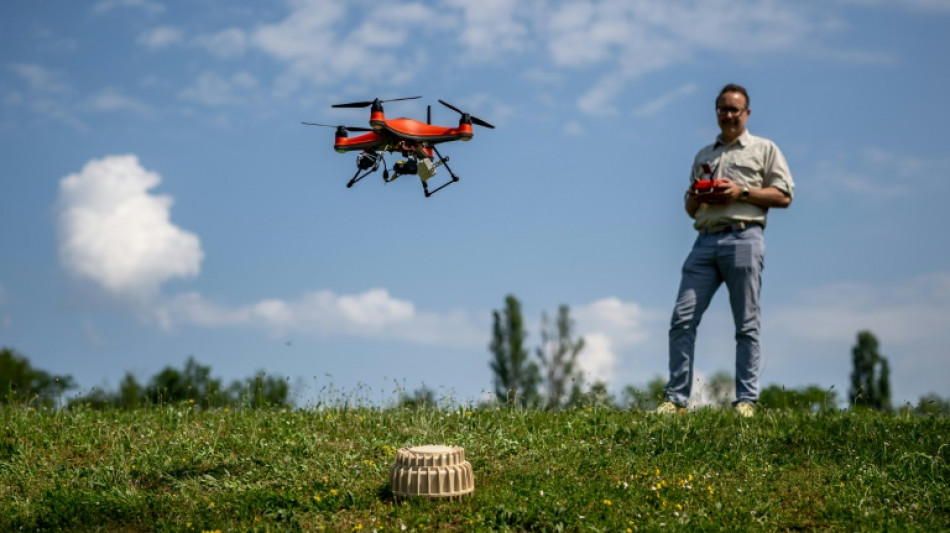
Tollefsen was speaking as the ICRC presented a new drone that uses artificial intelligence to locate mines and other explosive remnants of war from the heat they emit.
It could one day be used in Ukraine.
The ICRC had spent several months helping mine clearance operations in Ukraine, mapping and marking minefields and providing training and equipment, said Tollefsen.
"Now all of that has been washed away."
Anti-personnel and anti-tank mines such as the TM-57 will now have been dispersed into unknown locations, he said.
Ukraine's Kakhovka dam in Russian-held territory was destroyed on Tuesday, flooding dozens of villages and parts of a nearby city, and sparking fears of a humanitarian disaster.
- Mine numbers 'massive' -
Already on Tuesday the United Nations warned of the risks associated with the mines, which are numerous in Ukraine.
The ICRC noted that the floodwaters would not damage or deactivate these explosive devices, which means they could pose a threat for decades to come.
Downstream from the dam in the Kherson region "there has been a lot of what we call defensive minefields put up by parties to the conflict", said Norwegian specialist Tollefsen.
Normally, these are "very, very populated with both anti-personnel mines and anti-vehicle mines", he added.
The ICRC does not know how many mines might have been submerged or washed away by the floodwaters.
"The parties to conflict haven't declared any kind of numbers of mines that have been laid," said Tollefsen.
"We just know that the numbers are massive."
Moscow and Kyiv have blamed each other for the destruction of the 1950s Soviet-era dam on the Dnipro River.
The flooding has forced several thousand civilians to leave their homes.
- New drone 'a step forward' -
ICRC president Mirjana Spoljaric Egger said the destruction of the dam was "symbolic for the need to comply with international humanitarian law.
"The damage is already massive and I feel very concerned about how much more damage will be caused by this incident," she told reporters at the unveiling of the mine-hunting drone.
The new drone can cover in a day the same surface area a demining dog would in six months, has so far only been used in testing in Jordan.
The Geneva-based ICRC hopes to use it for the first time this year around the city of Aleppo in northwest Syria.
The drone if eventually used in Ukraine, could help trace the large numbers of mines laid there since Russia's full-scale invasion in February last year.
It will not remove mines itself but should accelerate their detection thanks to its cameras, heat detector and artificial intelligence software, which the ICRC intends to share.
"It is a step forward because it covers large areas at a much higher speed," said ICRC weapons specialist Martin Jebens.
Spoljaric Egger added: "Typically in mine clearance operations the average figure per day per deminer is 50 square metres.
"With this new technology being put together by the ICRC and its partners, conservative estimates suggest we will be able to survey and process 100,000 square metres a day for more efficient demining."
P.Anderson--BTB