-
 Oil passes $100 a barrel again: why it's more serious this time
-
Verstappen swerves around future questions
-
 Who are the six candidates vying to lead the UN?
-
EU renews online child sex abuse detection powers

-
 Hamilton proud of recovery after hitting rock bottom a year ago
-
Airbus, Boeing fly in different directions at Farnborough
-
 Carapaz eyes polkadot mountains jersey after stage win
-
Bab al-Mandeb Strait: another key oil shipping route under threat
-
 Fields medal awarded to four young mathematicians
-
Deadly wildfires in Europe force thousands to flee

-
 Carapaz claims Tour de France stage as Pogacar loses key team-mate
-
NATO to overhaul European fuel pipeline network
-
 Alonso welcomes Aston Martin upgrade, warns against unreal expectations
-
US trade envoy to make tariff announcement as 10% duty soon expires

-
 Anderson declares Man City 'kings of Manchester' after £116 mn move
-
Trump stuns Saudis by pinning nuclear deal to Israel ties

-
 Relieved Russell says Mercedes have solved his power problems mystery
-
Tough day for Ubisoft stock topped with weaker revenues

-
 Oil soars above $100 as Middle East fears grow
-
Swelling jet fuel costs hit American Airlines outlook
-
 Venezuelans turn to scrap collecting in quake-hit beach 'paradise'
-
Carapaz climbs unopposed to Tour de France 18th stage win

-
 Heptathlon champion Johnson-Thompson joins list of Commonwealth Games absentees
-
Sooryavanshi hits maiden 50 as India thump Zimbabwe in T20

-
 Nigeria's Dangote raises $2.5bn to expand Africa's largest refinery
-
ECB opens door to September rate-hike as Iran war flares up

-
 Oil soars to $100 on fresh Mideast attacks
-
World Bank estimates Venezuela quakes caused $19.6 bn in damage

-
 Coal-fired power generation rising globally on Mideast war: IEA
-
Italy's far-right line up to defend jeweller who killed robbers

-
 Premier League champions Arsenal sign Greece winger Tzolis from Brugge
-
AI-led boom in IPOs raises concerns about a bust

-
 French Jewish DJ sues after activists disrupt gig: lawyer
-
Klopp expected to be named new Germany coach on Friday

-
 Venice film festival promises Pattinson, Oasis and Musk doc
-
ECB holds rates as Iran war flare-up threatens to drive prices higher

-
 ASEAN calls for open straits as US-Iran war casts shadow
-
MEXC's "Kickoff Fest" Trading Event Concludes with Top Individual Reward of 27,352 USDT

-
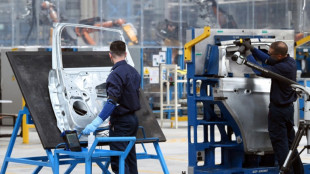 Ford and Geely to form joint venture at struggling Spain plant
-
Oil soars close to $100 on fresh Mideast attacks
-
 Russia warns US against Ukraine arms sales in Manila meeting
-
India's angry Gen Z protesters say Modi must fix accountability

-
 New UK PM announces tax cut for struggling pubs
-
Barca sign Adeyemi from Borussia Dortmund

-
 Supporters flood India's 'cockroach' protesters with food
-
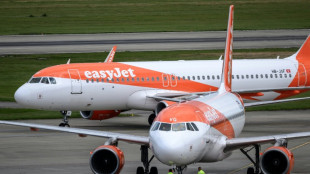
EasyJet profits nosedive on Mideast war
-
 Modi vows punishment for exam leaks fuelling India protests
-
EU fines Google 890 mn euros, risking US fury

-
 Norway set to make formal complaint to FIFA over Balogun red card saga
-
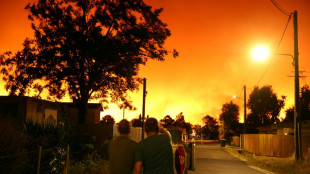
France evacuates thousands of tourists as fire rages in pine forest
NYSE - LSE
Weather delays launch of Europe's Jupiter space mission by 24 hours
The launch of the European Space Agency's JUICE mission, which aims to discover whether Jupiter's icy moons are capable of hosting extraterrestrial life, was postponed on Thursday for 24 hours due to bad weather.
The launch was called off just minutes before the planned lift-off at 1215 GMT from Europe's spaceport in Kourou, French Guiana, because of the threat of lightning in the cloudy skies overhead.
The next attempt will now take place within 30 seconds of the same time on Friday, the European Space Agency said.
Stephane Israel, the CEO of French firm Arianespace in charge of the Ariane 5 rocket, told AFP that with just minutes to spare, "a large mass of clouds approached and we absolutely could not proceed with the launch due to the risk of lightning".
For lift-off to go ahead, three parameters must get the green light: the launcher, the probe and the weather -- which was "the final suspense," he said.
On Friday, the risk of lightning will be monitored "until the last moment," he added.
The delay was announced to the Jupiter control room in Kourou, where many people, including Belgium's King Philippe, had gathered to watch the launch.
- Liquid water oceans -
If the weather permits a launch on Friday, the JUpiter ICy Moons Explorer (JUICE) is still on track to arrive at the gas giant in July 2031.
The uncrewed, six-tonne spacecraft will investigate Jupiter's icy moons, which were first discovered by astronomer Galileo Galilei more than 400 years ago.
The discovery of huge oceans of liquid water -- the main ingredient for life as we know it -- kilometres beneath their icy shells has made them prime candidates to potentially host life in our celestial backyard.
Once launched, JUICE will take a long and winding path to Jupiter, which is some 628 million kilometres (390 million miles) from Earth, using other planets for a gravitational boost along the way.
First, it will do a fly-by of Earth and the Moon, then will slingshot around Venus in 2025 before swinging past Earth again in 2029.
Once the probe arrives in 2031, it will need to very carefully hit the brakes to enter Jupiter's orbit.
From there, JUICE will focus on Jupiter's and its three icy, ocean-bearing moons Europa, Ganymede and Callisto.
Its 10 scientific instruments -- including an optical camera, ice-penetrating radar, spectrometer and magnetometer -- will analyse the local weather, magnetic field, gravitational pull and other elements.
Europa, one of the prime candidates for alien life, will be investigated by NASA's Europa Clipper mission, which is scheduled to launch in October 2024.
- First in another moon's orbit -
JUICE, meanwhile, will set its sights on Ganymede, the Solar System's largest moon and the only one that has its own magnetic field, which protects it from radiation.
In 2034, JUICE will slide into Ganymede's orbit, the first time a spacecraft will have done so around a moon other than our own.
Ganymede may contain more liquid water than all of Earth's oceans, according to some estimations.
The mission will not be able to directly detect the existence of alien life, but instead aims to establish whether the moons have the right conditions to harbour life.
If there is life in these buried oceans, scientists theorise it would likely be primitive microbes like bacteria, which are capable of surviving on Earth in such extreme environments.
The 1.6 billion-euro ($1.7 billion) mission will mark the first time Europe has sent a spacecraft into the outer Solar System, beyond Mars.
The postponement comes during a crisis for European space efforts, after Russia pulled its Soyuz rockets in response to sanctions over the war in Ukraine.
Combined with repeated delays to the next generation Ariane 6 rockets and the failure of Vega-C's first commercial flight last year, Europe is struggling to launch its missions into space.
The JUICE mission is expected be the second-last launch for Ariane 5 before it is replaced by the Ariane 6.
J.Horn--BTB