-
 ASEAN calls for open straits as US-Iran war casts shadow
-
MEXC's "Kickoff Fest" Trading Event Concludes with Top Individual Reward of 27,352 USDT

-
 Ford and Geely to form joint venture at struggling Spain plant
-
Oil soars close to $100 on fresh Mideast attacks
-
 Russia warns US against Ukraine arms sales in Manila meeting
-
India's angry Gen Z protesters say Modi must fix accountability
-
 New UK PM announces tax cut for struggling pubs
-
Barca sign Adeyemi from Borussia Dortmund

-
 Supporters flood India's 'cockroach' protesters with food
-
EasyJet profits nosedive on Mideast war
-
 Modi vows punishment for exam leaks fuelling India protests
-
EU fines Google 890 mn euros, risking US fury

-
 Norway set to make formal complaint to FIFA over Balogun red card saga
-
France evacuates thousands of tourists as fire rages in pine forest
-
 Floods in northeast India kill at least 41
-
French Jewish DJ sues after activists disrupt stage show: lawyer

-
 Nestle siphons off bottled water business into joint venture
-
Nokia says AI, cloud boosted sales in second quarter
-
 Hundreds hospitalised in Japan heatwave 'disaster'
-
Repsol says profit more than triples on higher oil prices
-
 Renault says sales stalled in first half
-
TotalEnergies says profit doubled on Mideast war
-
 EasyJet says profits nosedive on Mideast war
-
Giant swing on Swiss peak aims to boost summer tourism as Alps warm
-
 Modi vows punishment for exam fraud fuelling India protests
-
ASEAN to call for open straits as US-Iran war casts shadow
-
 Six candidates in race to lead UN set for televised debate
-
AI catches up with humans to score 100% at top maths contest
-
 Comic-Con kicks off with Marvel's return
-
South Korea election office raided in fake turnout figures probe: investigators

-
 Dutch riders dreaming of crazy party corner of Alpe d'Huez
-
Killer whales: orcas blow fish to bits 'for fun', study finds
-
 Houthis target Red Sea shipping as US hits Iran
-
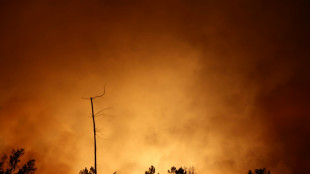
Deadly wildfires force thousands from homes in parts of Europe
-
 Record-equalling Red Sox streak halted at 15 wins
-
Tech bounce lifts Asia stocks, oil extends gains on US-Iran fears
-
 Messi-less Miami beat Fire 3-2 to spoil Lewandowski's MLS debut
-
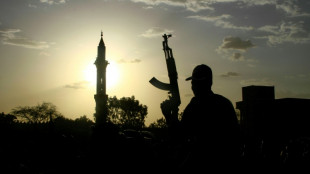
Surrounded by militias, Sudanese fear endless cycle of war
-
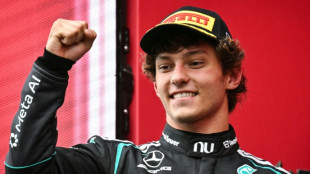 Mercedes expect Hungary challenge from Hamilton and Ferrari
-
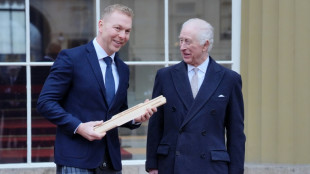
Commonwealth Games 'where champions are made' despite slimmed down model, argues president
-
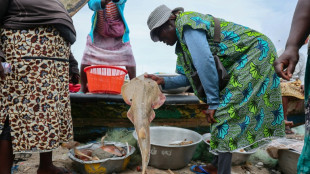 In Ghana, one man's race to save critically endangered fish
-
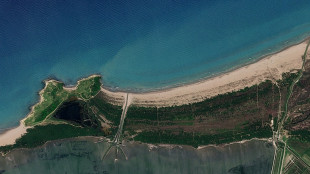
Trump family project in Albania has already caused 'irreparable' damage: NGOs
-
 Wilson captain, Slipper absent in Kiss's first Wallabies squad
-
Bollywood blast master keeps it real with fire and fury
-
 New Mideast fighting puts eurozone rate-setters on alert
-
Tearful fights, edible offerings: A glimpse into the Maradona trial

-
 Venezuelans search for animal companions lost in the quakes
-
What's the deal with peptides? The hyped market under US review
-
 Argentine Football Association says US did not detain its president
-
Tesla shares fall as Musk touts ambitious -- and costly -- plans
Europe's new Vega-C rocket lost shortly after lift-off
Europe's new Vega-C rocket was lost shortly after lift-off from French Guiana overnight with two satellites on board, in the latest blow to European space efforts.
The failure on Tuesday night threatens to ground the Vega-C, which would leave Europe without a short-term way to launch satellites into orbit after delays to the Ariane 6 rocket and cancelled Russian cooperation over the Ukraine war.
The rocket had been trying to bring into orbit two Earth observation satellites built by Airbus, which were intended to join an existing network capable of capturing high-quality images of any point on the globe several times a day.
If it had been successful, it would have been the first commercial launch of the Vega-C since its inaugural flight on July 13.
"The mission is lost," Stephane Israel, head of commercial launch service provider Arianespace, said from the Kourou Space Centre in French Guiana, a French department on South America's northeast coast.
Ten minutes after lift-off, at 10:47 pm local time (0147 GMT Wednesday), the launcher's trajectory deviated from its programmed route and communications were lost, Arianespace said.
An "anomaly occurred" in the second stage of the launcher, "ending the Vega-C mission", the company said.
The rocket was launched over the Atlantic Ocean and had shot past 100 kilometres (62 miles) altitude and was more than 900 kilometres north of Kourou.
- No debris -
It was not immediately clear whether the rocket's destruction device was activated or whether it crashed into the sea.
Arianespace found there was no debris fallout after lift-off.
"Data analysis is under way to determine the reasons for this failure," it added.
A press briefing is scheduled for noon on Wednesday in Kourou.
Airbus did not comment when contacted by AFP.
Peter Beck, the CEO of US launch service provider Rocket Lab, said he was sorry to hear of the failed launch.
"Small launch is way harder than most people think. I am sure the excellent Vega team will resolve the issue quickly," he tweeted.
- Postponed launch -
The satellites on board were the last two to complete the Pleiades Neo constellation, which is planned to be able to take very high-resolution images of anywhere on Earth.
The launch was originally scheduled for November 24 but was postponed for a month due to a faulty component.
Arianespace's Israel told AFP they had to change a piece of equipment linked to the payload fairing, a type of nose cone, which was not believed to be related to Tuesday's launch failure.
The Vega-C is the newest version of the Vega rocket system, which has launched 20 times since 2012, failing twice.
Arianespace said the error on Tuesday occurred during the Zephiro 40 stage, which was specifically developed for the Vega-C, unlike many other parts of the launcher.
Vega-C's prime contractor is the Italian aerospace firm Avio, whose share price plunged 9.45 percent after 10:00 am.
The Vega-C is billed as the smaller precursor to the future Ariane 6, which the European Space Agency (ESA) hopes will enable Europe to become more competitive in the rapidly expanding satellite market.
- Major setback -
Around 24,500 satellites are expected to be launched by 2021, almost five times as many in the past decade, according to advisory firm Euroconsult.
Tuesday's failure is a major setback for the ESA, which has 22 member states and is responsible for European launcher programmes.
Global competition in the market has intensified in recent years, with Elon Musk's SpaceX taking a giant lead.
European hopes have been pinned on the Ariane 6 rocket, but the postponement to the end of 2023 of its inaugural flight, which had been initially planned for 2020, has dashed the ESA's expectations.
Europe's space sector has been further weakened by Russia's invasion of Ukraine, which put an end to its cooperation with Moscow.
In response to sanctions imposed on Moscow by the European Union, Russia suspended space launches from French Guiana with its Soyuz rocket launchers and withdrew its technical personnel.
In the absence of an alternative, ESA has been forced to turn to SpaceX to launch two scientific missions.
Vega-C is currently scheduled to carry out 12 missions, including some previously planned to launch on Soyuz rockets.
J.Bergmann--BTB