
Valieva case 'catastrophic failure' of system: USADA / Photo: ©

 Marchand 'stressed' about racing Japanese rivals at LA Olympics

 Mobile boat clinics bring healthcare to India's remote islands

 Former India paceman Zaheer Khan named Chennai coach in IPL

 Six-year-old Chinese girl sets world record with Rubik's Cube

 Swimming prodigy Yu, 13, says 'interviews way harder than racing'

 Star coaches make their bows as Nations League returns

 Rams bounce back as Giants reel from Dart injury

 In Bangladesh, Pakistan's Jinnah photo stirs anger

 Two New Zealand naval ships transit Taiwan Strait

 Zidane gets down to work as France start new era

 Inside the Venezuelan prison meant to 'drive you insane'

 UK king braces as memoir by Diana's brother goes on sale

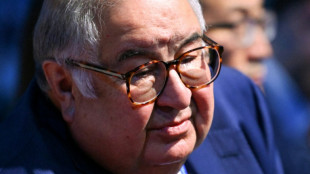 No green light to lift EU sanctions on Russian oligarchs, talks to resume

 UK agrees support for Saudi in struggle with Houthis: reports

 EU foreign policy chief calls for continued sanctions on Russia

 Flights scrapped, evacuations urged as Typhoon Dujuan wallops Japan

 Fonseca to take break from tennis

 A Cuban zoo, and its animals, in epic battle for survival

 Infantino proposes consulting federations to reform FIFA

 El Nino weather pattern enters record territory: scientist

 OpenAI calls for US to lead global effort on AI standards

 South African ostriches plucked alive for luxury fashion: report

 US networks halt Trump coverage in revolt over White House ban

 Paramount settles with US states to clear Warner Bros. mega-merger

 Climate crisis a job for world leaders, not just activists: UK FM

The drug scandal embroiling Russian figure skater Kamila Valieva at the Winter Olympics marks a "catastrophic failure" for the fight against doping, United States Anti-Doping Agency chief Travis Tygart said Friday.
Valieva, who played a starring role in helping Russia win team gold in Beijing on Monday, tested positive for the banned substance trimetazidine after competing at an event in Saint Petersburg on December 25.
However the International Testing Agency said in a statement on Friday that the laboratory in Stockholm only reported that Valieva had returned a positive case on February 8 -- the day after she competed in Beijing.
In an interview with AFP on Friday, USADA chief Tygart questioned how it had taken nearly six weeks for Valieva's positive sample to come to light.
"The failure to report a test taken in December until after the team event in the Games is a catastrophic failure of the system to protect the public, the integrity of the Games and clean athletes who had to compete," Tygart told AFP. "It shouldn't have happened."
Tygart said US authorities and other nations routinely expedite test results for athletes due to be participating in major championships, precisely to avoid situations like the Valieva case.
"We stay up all hours of the night ensuring that people we send to the Olympics or other major competitions, that any tests that we’ve done on them, have results," Tygart said.
Valieva's sample should have been relatively straightforward to analyse quickly because the substance found in her system -- trimetazidine -- was not naturally produced in the human body.
- 'Inexcusable' delay -
"For it to take this long and on this athlete, at this level of competition, is a catastrophic failure of the system. It's inexcusable."
Valieva was handed a provisional suspension by the Russian Anti-Doping Agency (RUSADA) on February 9, but she challenged the suspension and it was lifted the same day -- potentially leaving the skater free to compete in the individual event in Beijing.
Tygart said he was not surprised at RUSADA's decision to lift the suspension given Russia's recent history of state-supported doping scandals.
"That shouldn’t come as a shock to anyone. RUSADA was right in the middle of helping athletes cover up their tests and participating in the fraud of the state-sponsored doping scheme," he said.
"I can’t imagine a set of facts, for this type of drug, for an athlete at this level, that would lead to a result that allows for the lifting of the provisional suspension."
Tygart meanwhile expressed sympathy for Valieva, a 15-year-old being "chewed up by the system."
"Whatever consequence she deserves for the doping offense, that could have been sorted out by now and put in place and we could have avoided this mess entirely," he said.
Tygart, who has long advocated for hardline sanctions against Russia, believes the latest scandal is a consequence of failing to hand out stiffer punishments in the past.
"It's the sixth Olympic Games going back to 2012 where Russia has now tainted the Games. The meagre penalty that was put on them didn’t deter behaviour," he said.
"We saw time and time again that they hadn't changed their ways ... And here we are once again, and it's just a shame for all the athletes of the world who have to go through this."
The Valieva case could even lead to punishment under legislation known as the Rodchenkov act, which allows US prosecutors to target those involved in doping conspiracies.
"If there was a doctor, a coach or an individual who knowingly conspired to dope her with this drug to benefit her performance at the Olympic games, then the Rodchenkov act fits like a glove," he said.
"We're a long way from that happening because all the facts aren’t out. But we'll see."
J.Horn--BTB