You're being watched: Japan battles online abuse of athletes / Photo: © AFP/File

 Oil companies close in on Venezuela despite hurdles

 Turkey freezes ex-minister's assets as fund scandal grows

 Guardiola backs Man City after bombshell guilty verdicts

 G20 trade ministers open talks under strain of Trump tariffs

 France in talks with UK to end 2025 migrant accord: ministry

 Europe's surging inflation spreads gloom in stock markets

 Truth commission demands compensation for Sweden's Sami people

 Japan win marathon penalty shootout to set up South Korea gold-medal clash

 Djokovic grinds out opening-round win at China Open

 Northern Ireland police probe blockade of disputed parade
 UK PM Burnham reopens divisive debate on rejoining EU

 Man City future in doubt after guilty verdict

 'Do something,' begs Iranian woman after death sentence over protests

 China extends 52-year unbeaten record as Games organisers say sorry
 In Manchester, people say City scandal is 'shame for football'

 Stocks lacklustre as inflation data weighs on sentiment
 Israel-bound plane rerouted, pilots wounded in reported fight

 Truth commission on Sweden's Sami people seeks redress

 Energy costs spark inflation surges in France, Italy

 South Korea break China hearts to reach Asian Games football final

 Eala storms into Asian Games semi-finals to thrill adoring fans

 Turkey freezes ex-minister's assets as fund crisis grows

 What we know about the North Korean POW dispute
 Most equities rise after oil price plunge, US data in focus
 Polar oceans transformed as warming melts ice habitats: research

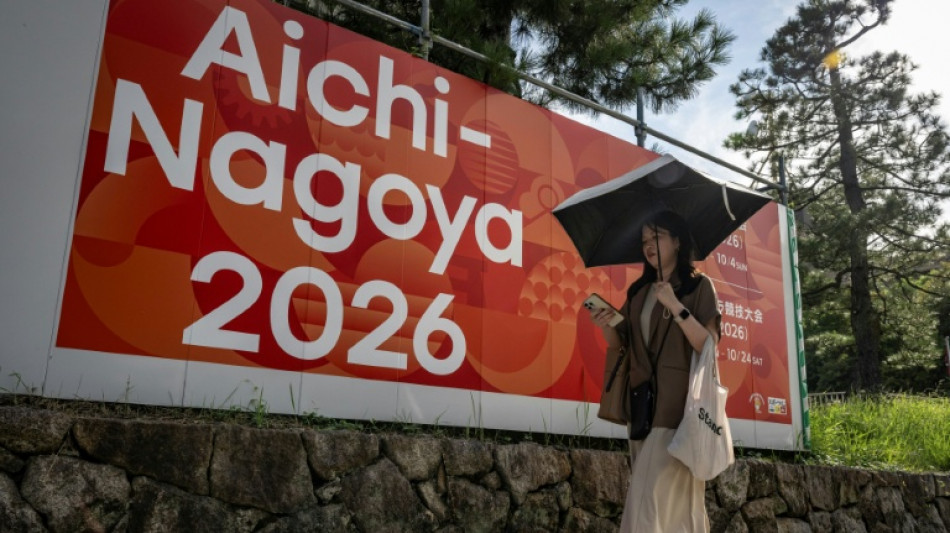
Japan is fighting back against online abuse of athletes and sports authorities have a warning for trolls planning to target competitors at this year's Asian Games: You are being watched.
Online abuse is felt by athletes all over the world, affecting their performances and mental health, leaving them fearing for their safety and even causing them to quit their sports.
Japan is no exception and efforts are belatedly being made to tackle the problem, from dedicated lawyers to teams monitoring social media for offensive posts.
"Even a single negative comment can cut deeply," Japanese Olympic Committee (JOC) official Misa Chida told AFP.
"Athletes don't want to see things like that, so a lot of them choose not to look at social media at all, and that means they miss the 99 percent of messages that are supportive.
"That's a real shame."
Chida was part of a dedicated team of JOC officials monitoring social media at the Milan-Cortina Olympics in February.
Six staff members in Milan and 22 in Tokyo checked around the clock for posts abusing Japanese athletes, using both manual and AI searches.
They worked in conjunction with Meta -- owner of Instagram, Facebook and WhatsApp -- and Japanese company LINE Yahoo.
The team asked social media companies to take down almost 2,000 posts, and succeeded in having nearly 600 removed.
Social media companies have often been accused of not doing enough to crack down on abuse on their platforms.
The JOC said they plan to repeat their monitoring activities at their home Asian Games, which are being held in Nagoya and the wider Aichi area on September 19-October 4.
On top of that, Asian Games organisers told AFP that they will run a wider monitoring programme aimed at protecting athletes from all competing countries.
"We now understand what kinds of comments appear on a daily basis and how they upset athletes," said JOC official Hirofumi Takeshita.
"We've learned how much energy we need to devote to this."
- 'Hope your family dies' -
The JOC is not the first sporting organisation to carry out a social media monitoring programme.
The International Olympic Committee ran one in more than 35 languages at the 2024 Paris Games and there have also been initiatives in football and tennis.
"As awareness of these initiatives grows among athletes, staff and everyone working on the ground, that in itself contributes to a greater sense of psychological safety," said Chida.
Japan has been relatively late to the party, according to lawyer Shun Takahashi, who leads a seven-strong legal group dedicated to protecting athletes from online abuse.
Takahashi says his group, founded in 2024, is a "safe haven" for athletes, many of whom feel uncomfortable talking about the issue.
"They worry that showing vulnerability might lead a coach to bench them or that others will see them as weak," he said.
"Many athletes are raised with the idea that they must always be strong and they don't want to be perceived otherwise."
Takahashi's group offered support in the case of Taiki Sekine, a professional baseball player who last year took legal action against online abusers.
Sekine, who received messages such as "I hope your whole family dies in an accident", has won several settlements and lodged criminal complaints against the worst cases.
The domestic nature of Sekine's case made it easier to prosecute than social media abuse that crosses international borders.
- Long way to go -
Takahashi says legal action has "a deterrent effect" on online trolls, many of whom he says are in their teens or early 20s.
"It makes them realise the risk involved," he said.
But while Japan is now taking a proactive approach to online abuse, those involved say there is still a long way to go.
Less than a third of the posts that the JOC's Olympic monitoring team requested be deleted were actually taken down by social media companies.
Takeshita said the tech firms were "very cooperative" but admitted their view of which posts were offensive did not always match up.
"Yes, there was a gap, but it was a gap that we were able to identify by actually doing this work," he said.
"That's better than having an unidentified gap that never gets bridged. Now that we know where the differences lie, we can work to close them."
R.Kloeti--VB