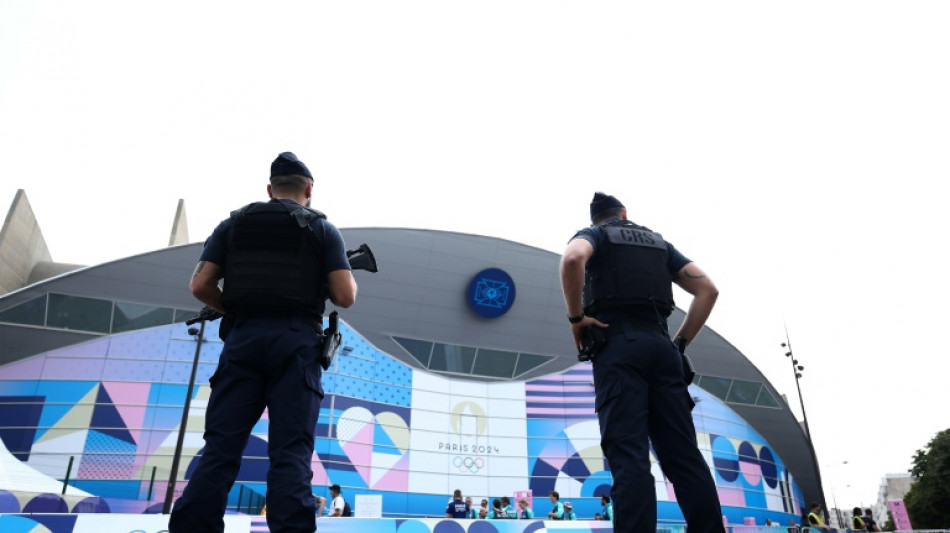
UN human rights experts criticise 'unneccessary' and 'unlawful' Olympic security / Photo: © AFP

 European stocks retreat as France violence spreads
 North Korea warns 'grave situation' prevailing along border
 Raya proud of Arsenal's 'incredible' reaction after third straight win

 Indonesia fires have burned nearly two million hectares: monitor
 Australian lawmaker 'critically' hurt in attack, officials say
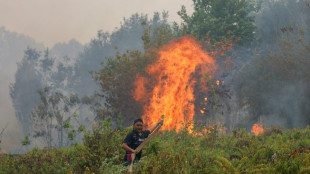 Indonesia fires burned over 1.9 mn hectares through September: monitor
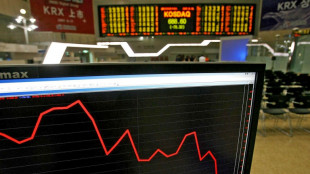 Asian tech stocks mixed after Wall St losses, eyes on earnings

 China's third-quarter growth narrowly beats forecasts
 Asian stocks start week on back foot, tracking tech-led Wall St losses

 China growth narrowly beats forecasts

 Faith and fury: Texas Senate rivals offer contrasting visions
 Women await justice for police killings in Brazil
 The painstaking task of cataloguing the world's species

 Nations seek reset at UN talks as nature goals off track

 Rubio seeks to strengthen US foothold in Central Asia
 LeBron joins 76ers to chase one more NBA title at age 41

 Rays one win from World Series return after downing Guardians
 Kings' Ben Simmons tears Achilles in training
 Lula, Bolsonaro set for first debate showdown in bitter election race

 Mbappe hits two as Real Madrid rout Sevilla
 Browns edge Ravens for division lead, Texans beat Jags

 Lyon go top of Ligue 1 as Monaco fall to first defeat of the season
 Venezuela opposition alliance reaffirms Nobel laureate Machado as leader
 'Street Fighter' wins N. America box office, buzzy doc stuns in 2nd

 NFL: Paris game to go ahead despite protests in France

Three human rights experts commissioned by the United Nations on Tuesday issued a report saying some security measures for the 2024 Paris Olympics were "unnecessary or disproportionate" while others "were discriminatory or even unlawful".
The three experts, who were commissioned by the Human Rights Council but were not speaking on behalf of the UN, said France must carry out "an independent and impartial review" of the measures deployed during the Games.
"French authorities took a number of reasonable measures to ensure that the Olympic Games were free from terrorist violence," the experts said. "Yet, some security measures appeared to be unnecessary or disproportionate, while others were discriminatory or even unlawful."
The French Ministry of the Interior declined to comment on the report.
The report noted that France has faced significant terrorist threats in recent years.
"Under international law, governments must act diligently to prevent threats to life posed by terrorism, but must always comply with human rights law," the report said.
"In too many cases, security measures were seemingly applied in an indiscriminate or overbroad manner, that was not necessary or proportionate to meet any specific, evidence-based risks posed by particular individuals," it added.
They pointed to "unprecedented surveillance...including the use of drones and 'algorithmic' video tools with artificial intelligence".
"We also found patterns of discriminatory policing, targeting individuals or groups for political views, religious affiliation or ethnic background," the experts said.
In some cases, measures appeared to be aimed at preventing disruptive public protests, the report said.
"Some of the measures arbitrarily interfered with the freedoms of expression, assembly and association, as well as the rights to privacy, reputation and liberty, and to participate in cultural life."
Some measures even violated French law, "as evidenced by the higher than usual number of annulments by the courts".
"Excessive measures are not necessary for security – and can counterproductively fuel grievance narratives that lead to radicalisation," the experts said.
The report was signed by three UN independent experts: Ben Saul, a Sydney University law professor and Special Rapporteur for the promotion and protection of human rights and fundamental freedoms while countering terrorism; Colombian Gina Romero, Special Rapporteur on the rights to freedom of peaceful assembly and of association; and Alexandra Xanthaki, a law professor at Brunel University in London and UN Special Rapporteur on cultural rights.
They urged France "to conduct an independent and impartial review of the security measures used during the Olympic Games" to "draw lessons for France and other countries on how to secure future major public events".
They said that with the Winter Olympics in Italy and the football World Cup in North America coming up international sporting bodies, such as the International Olympic Committee and FIFA, must "assess the human rights risks of their events and collaborate with host nations to mitigate them".
D.Schaer--VB