
-
 US wants to be 'strong partner' for central Asia: Rubio
-
Oil-rich Alberta votes on Canada breakup
-
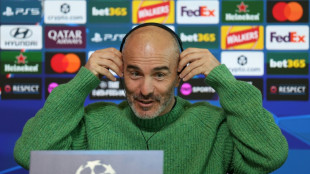
 'Special' to face friend Perez in Champions League, says Liverpool's Iraola
-
Israel announces arrests after West Bank settler attacks on Westerners
-
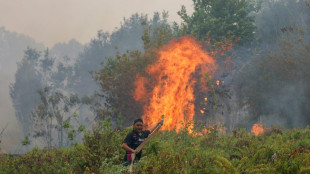 Monitor says Indonesia fires have burned nearly two million hectares
-
Guehi insists players have 'trust and belief' in Man City after charges
-
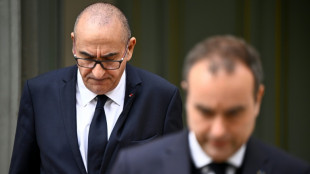 French PM says could declare state of emergency over unrest 'if needed'
-
UN climate panel head wants swift end to deadlock over key scientific report
-
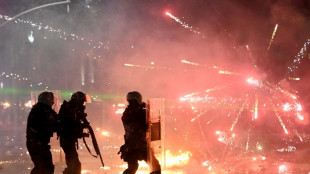 Albanian PM warns of 'red line' after days of unrest
-
PM calls for curfews in France as govt grapples with unrest
-
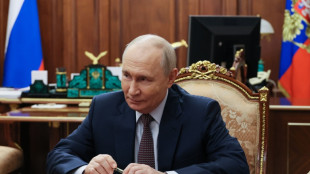 Putin, Xi and Trump could meet at APEC summit: Kremlin
-
Man City's Semenyo out for up to eight weeks
-
 Microsoft exits data centre deal in blow to UK AI ambitions
-
Australian lawmaker critically hurt in 'violent' vehicle attack

-
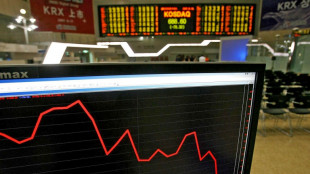 European stocks retreat as France violence spreads
-
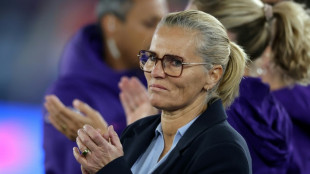
England women's coach Wiegman signs two-year contract extension
-
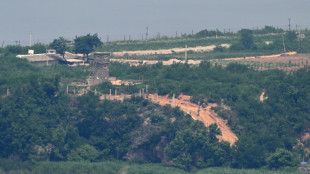 North Korea warns 'grave situation' prevailing along border
-
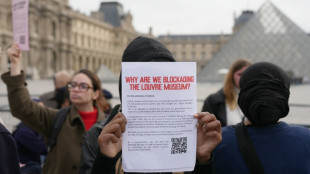
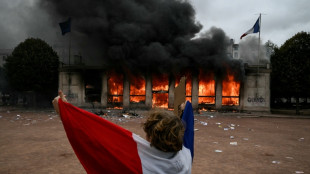
Louvre blocked as France grapples with unrest
-
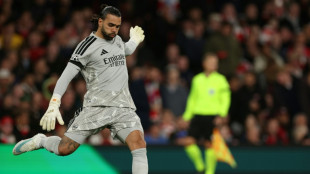 Raya proud of Arsenal's 'incredible' reaction after third straight win
-
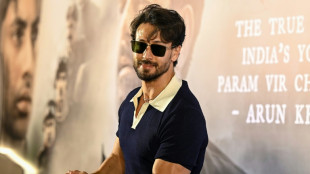
Bollywood actor Tiger Shroff shot at in Mumbai, three suspects held: police
-
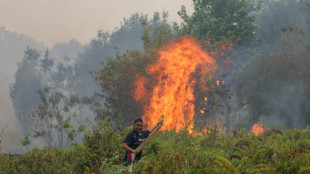 Indonesia fires have burned nearly two million hectares: monitor
-
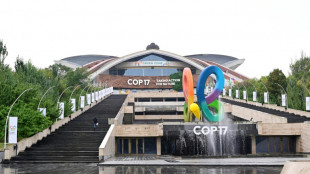
UN biodiversity summit opens with nature goals off track
-
 Australian lawmaker 'critically' hurt in attack, officials say
-
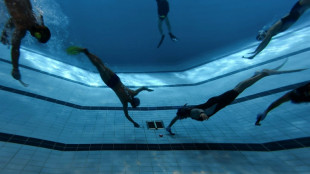
'Physical hell': Hong Kong hosts gruelling underwater hockey tournament
-
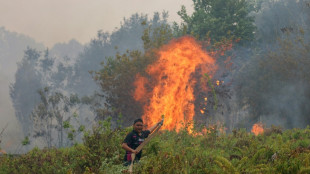 Indonesia fires burned over 1.9 mn hectares through September: monitor
-
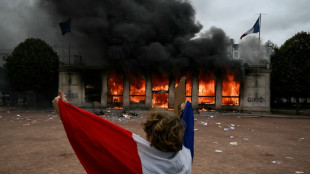
Police 'lost control' during French protests, says interior minister
-
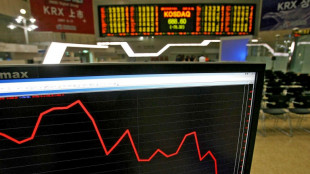 Asian tech stocks mixed after Wall St losses, eyes on earnings
-
Australia's new Ghost Shark submarines grow some 'teeth'

-
 China's third-quarter growth narrowly beats forecasts
-
'I call it a bribe': Pennsylvania residents spurn $10,000 data center checks
-
 Asian stocks start week on back foot, tracking tech-led Wall St losses
-
In a former US steel city, ordinary people struggle to get by
-
 China growth narrowly beats forecasts
-
'Liar,' 'clown': Lula and Bolsonaro spar in Brazil poll debate
-
 Faith and fury: Texas Senate rivals offer contrasting visions
-
Record El Nino? Depends who's counting
-
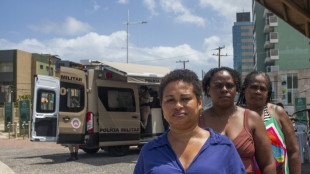 Women await justice for police killings in Brazil
-
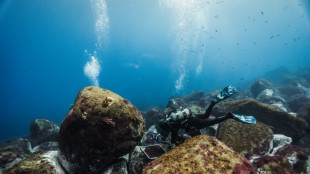
On the front line of ocean conservation off Portugal's Madeira
-
 The painstaking task of cataloguing the world's species
-
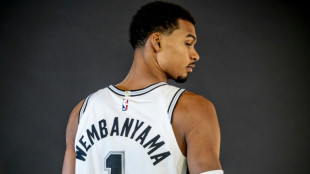
Wembanyama targets title breakthrough as NBA season tips off
-
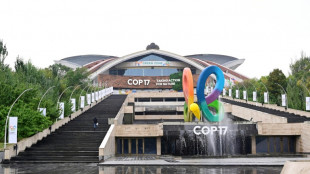 Nations seek reset at UN talks as nature goals off track
-
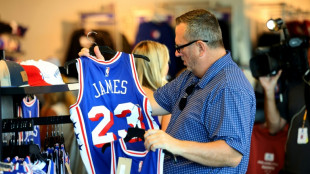
With LeBron on board it's title or bust for Philly fans
-
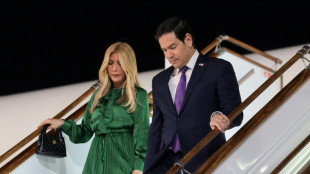 Rubio seeks to strengthen US foothold in Central Asia
-
One year after Louvre heist, where are the missing jewels?
-
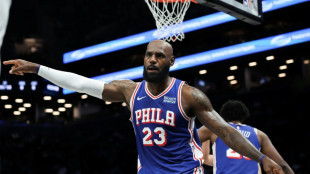 LeBron joins 76ers to chase one more NBA title at age 41
-
Knicks face tall task in NBA championship repeat bid
-
 Rays one win from World Series return after downing Guardians
-
Warriors' Curry 'fine' after limping out of practice - Kerr
-
 Chervon Names Krystle Adams Director of Sales Recruiting
-
Chervon Names Devin Murray Director of Sales - Northern Division
Death of Boris Spassky: the Cold War on a chessboard in 1972
Fifty years ago, the Cold War was transposed to a chessboard as Bobby Fischer of the United States took on defending world champion Boris Spassky of the Soviet Union, who has died aged 88, in a thrilling East-West clash dubbed the "match of the century".
Some 50 million TV viewers tuned into the two-month-long tussle in the Icelandic capital Reykjavik, where chess's enfant terrible Fischer set out to wrest the championship from the Soviet Union, which had dominated the game for decades.
AFP reported daily from the competition. This account is based on its reporting.
- Polar opposites -
On one side of the table is Fischer, an eccentric, fiercely competitive 29-year-old former boy wonder, who was holding his own among America's greats by the age of 12 and has already won eight US chess championships.
Grown up in the New York suburb of Brooklyn, Fischer became the world's youngest ever chess grand master at the age of 15 and dropped out of school to focus on the game.
AFP's correspondent in Reykjavik says "he has few friends and doesn't care to make any" and that his motto is: "It's not enough to defeat an adversary, you have to crush them."
He goes into the competition having won 101 out of his previous 120 games.
In the other seat is 35-year-old Boris Spassky, a trained journalist and married father of two children who has been world champion for three years.
Born in Leningrad (now Saint Petersburg) in 1937 he was sent to an orphanage in Siberia during the Nazi German siege of the city during World War II.
A pure product of the Soviet chess machine, he began playing at five and became world champion at 19.
A likeable, modest character, he is the antithesis of the cantankerous Fischer.
- Temper tantrums -
Fischer is the first US-born player to have a stab at the title (since 1946, the two finalists have always been Soviet).
Iceland, as neutral country, hosts the match.
Fischer makes a series of demands before agreeing to participate. The venue, a sports hall, must be sound-proofed, fitted with a new carpet and the room temperature kept to 22.5 degrees Celsius.
But on the eve of the competition, he has still not shown up. Henry Kissinger, US national security advisor at the time under President Richard Nixon, calls Fischer and convinces him to take part.
AFP reports that the US champion "appears tired" when he lands in Reykjavik on July 4. He ducks out of the opening ceremony. An outraged Spassky demands an apology.
The competition finally gets underway on July 11, nine days late.
- 'Scandal of the century' -
Spassky arrives 20 minutes early to the opening game to "vigorous applause" from the 2,500 spectators in the packed hall. Fischer dashes in at the last minute, "pushes past the photographers, rushes towards Spassky, shakes his hand" and sits down. The game is finally on.
At the 28th move, the game looks headed for a draw. But Fischer then makes two bad moves and resigns on the 56th move.
Stung by his loss, he demands that all cameras be removed from the hall. When the request is denied, he refuses to show up to the second game, forfeiting it.
"The spectators are disappointed and exasperated," AFP reports.
As the third game looms Fischer is nowhere to be found. Kissinger again picks up the phone. "Please, continue the game," Fischer later quotes him as pleading.
The hall is packed when the competition resumes on July 16, but the stage is empty. Spassky has accepted Fischer's demand that they play in a small back room (with a camera broadcasting the events to the main hall outside).
Some commentators see Spassky's concession as a bad omen for the Russian, who goes on to lose the game.
The fourth is a draw and Spassky resigns the fifth.
The two are now neck-and-neck.
- Games for the history books -
The 6th game is one of the toughest of the competition. Spassky throws in the towel at the 41st move.
"I'm proud of this game, it was one of my best," Fischer tells AFP, adding: "When Spassky joined the crowd in applauding my victory I thought 'what a gentleman'."
Spassky also resigns the 13th game, a chess masterclass, according to AFP's correspondent, who reported that, after congratulating his opponent, Spassky "sits back down in contemplation for six minutes, his gaze lost in the chessboard".
The Russian asks that the 14th game be postponed and the next seven are all draws.
Game 21, which goes to Fischer, turns out to be the last. The next day Spassky resigns the game, making Fischer, who is still asleep, the 11th world chess champion, with a final score of 12.5-8.5.
B.Baumann--VB