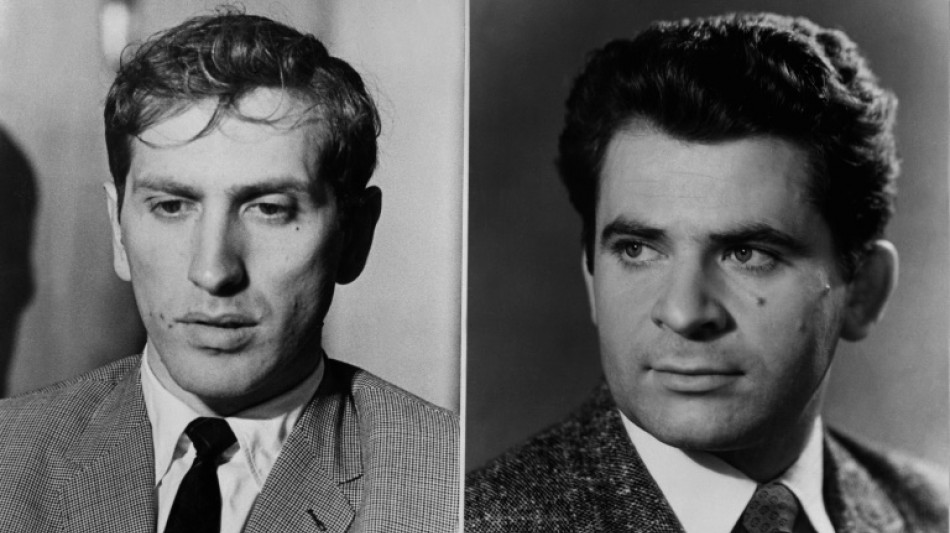
Spassky: legendary loser of 'match of the century' dies at 88 / Photo: © TASS/AFP/File

 US wants to be 'strong partner' for central Asia: Rubio

 'Special' to face friend Perez in Champions League, says Liverpool's Iraola

 Monitor says Indonesia fires have burned nearly two million hectares
 French PM says could declare state of emergency over unrest 'if needed'

 Albanian PM warns of 'red line' after days of unrest
 Putin, Xi and Trump could meet at APEC summit: Kremlin
 Microsoft exits data centre deal in blow to UK AI ambitions

 European stocks retreat as France violence spreads
 North Korea warns 'grave situation' prevailing along border
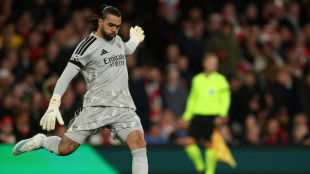 Raya proud of Arsenal's 'incredible' reaction after third straight win

 Indonesia fires have burned nearly two million hectares: monitor
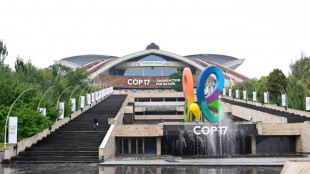
 Australian lawmaker 'critically' hurt in attack, officials say
 Indonesia fires burned over 1.9 mn hectares through September: monitor
 Asian tech stocks mixed after Wall St losses, eyes on earnings

 China's third-quarter growth narrowly beats forecasts

 Asian stocks start week on back foot, tracking tech-led Wall St losses

 China growth narrowly beats forecasts

 Faith and fury: Texas Senate rivals offer contrasting visions

 Women await justice for police killings in Brazil

 The painstaking task of cataloguing the world's species

 Nations seek reset at UN talks as nature goals off track

 Rubio seeks to strengthen US foothold in Central Asia
 LeBron joins 76ers to chase one more NBA title at age 41

 Rays one win from World Series return after downing Guardians

 Chervon Names Krystle Adams Director of Sales Recruiting

Soviet chess grandmaster Boris Spassky, who was famously defeated in the so-called match of the century at the height of the Cold War, has died aged 88, the Chess Federation of Russia said Thursday.
The federation called his death a "great loss to the country", saying generations of chess players had learned from his matches.
One of the first to react was Soviet grandmaster Anatoly Karpov, who told TASS state news agency: "He was always one of my main idols."
Spassky is best remembered for his duel with American Bobby Fischer in 1972, which was emblematic of the confrontation between East and West.
The Soviet chess giant lived a checkered life, flitting between top-level clashes against the best players of the era and periods of virtual disappearance.
Born in 1937 in Leningrad, now Saint Petersburg, Spassky showed prodigious talent early, becoming junior world champion and the youngest grandmaster in history at the time at 18.
He said he learned to play chess at the age of five in an orphanage, having managed to flee Leningrad with his family when it was besieged by the Nazis during World War II.
After the war, his aggressive style of play without fear of sacrifice was noticed by his peers and encouraged by the state, which provided him with a scholarship and a coach.
Having made a strong impression, he found himself in the shadow of another rising figure in Soviet chess, Mikhail Tal, the so-called "Magician of Riga".
It was not until 1961 that Spassky made a remarkable comeback by winning the USSR Championship.
Eight years later he defeated his compatriot Tigran Petrosian to take the world title.
"I never set myself the goal of becoming world champion. Everything worked out by itself. I was progressing in leaps and bounds," Spassky said in 2016.
- Spassky vs. Fischer -
But Spassky would keep his title for just three years.
In 1972 in Iceland he played the match that would define his career, against the American prodigy Fischer.
With the Cold War at its height and the Soviet Union having dominated the game for years, Spassky faced a must-win situation in his match-up with the eccentric 29-year-old, who openly criticised Soviet chess players.
But after a comfortable start for Spassky, the American roared back to win, ending an unbroken streak of Soviet world champions since 1948.
Although the loss was a slap in the face for Moscow, for Spassky it was a relief to be rid of a "colossal responsibility".
"You can't imagine how relieved I was when Fischer took the title away from me. I freed myself from a very heavy burden and breathed freely," he said nearly four decades later.
The iconic Cold War duel has been the subject of numerous books, documentaries and films. Most notably it inspired the Walter Tevis novel "The Queen's Gambit," which was adapted into the acclaimed Netflix series in 2020.
But at the time, in the wake of his defeat, Spassky fell out of favour.
Four years later, in 1976, he moved to France, after marrying a Frenchwoman of Russian origin. He obtained French citizenship in 1978.
Spassky did not return to the public sphere for years, until he played an unofficial rematch against Fischer in Yugoslavia in 1992.
The last years of his life were marked by ill health and a mysterious family conflict.
After two strokes, he returned to Russia in 2012 with the help of a sponsor and against the advice of his wife and sister.
"I have to start over from scratch, but I'm not afraid," Spassky said on Russian television after his return.
A few years earlier, in 2008, he had visited the grave of his former rival Fischer, who died that year and was buried in a small cemetery in Iceland.
"Do you think that the neighbouring spot is available?" Spassky asked journalists accompanying him on the visit.
Spassky lived in Moscow and his relatives informed the chess federation of his death, its executive director Alexander Tkachev told RIA Novosti news agency.
K.Sutter--VB