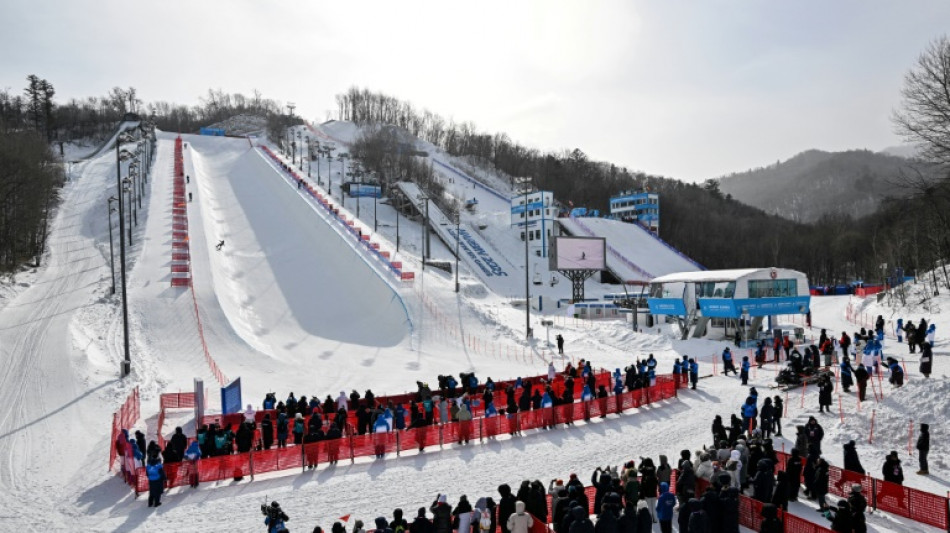
China winter sports sector zooms along despite climate risk ahead / Photo: © AFP

 US judge orders Saudi engineer held in OpenAI case

 Maddison sparkles as Spurs end Premier League winless run

 Maddison sparkles on Spurs return as win drought ends

 Trump says ready to meet with Putin and Xi in China

 The young lawmaker making Brazil's Lula 'king of the selfie'

 Christiane Amanpour to leave CNN after 43 years

 Ronaldo handed 30-day suspension after walking out on Portugal

 Netanyahu basks in Trump endorsement week before election

 Saudi airport closure disrupts life in kingdom's capital

 Ramaphosa tells South Africa to prepare for loss of US-Africa trade deal
 France presses resale platforms to remove 'stolen' goods after unrest
 Yamal v PSG: Ballon d'Or backdrop to Champions League showdown

 Araujo says too soon to talk about permanent Liverpool move

 US wants to be 'strong partner' for central Asia: Rubio

 'Special' to face friend Perez in Champions League, says Liverpool's Iraola

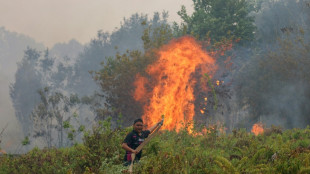 Monitor says Indonesia fires have burned nearly two million hectares

 French PM says could declare state of emergency over unrest 'if needed'

 Albanian PM warns of 'red line' after days of unrest

 Putin, Xi and Trump could meet at APEC summit: Kremlin

 Microsoft exits data centre deal in blow to UK AI ambitions

 European stocks retreat as France violence spreads

 North Korea warns 'grave situation' prevailing along border

 Raya proud of Arsenal's 'incredible' reaction after third straight win

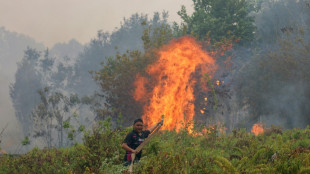 Indonesia fires have burned nearly two million hectares: monitor
 Australian lawmaker 'critically' hurt in attack, officials say

Packed slopes, plush turtle butt pads and 11-dollar passes: this is low-cost skiing in China, where winter sports are on a government-greased track to take in a projected $137 billion this year.
The trend is bucking the sluggish consumption seen elsewhere in China's post-Covid economy -- though experts warn climate change and other environmental concerns could risk wiping out some of those gains further down the trail.
President Xi Jinping has dubbed the ski industry a "mountain of gold and silver" and worked to position China as a winter sports leader, hosting major international events like the Asian Winter Games in the northeastern city of Harbin this past week.
With the Games fever in the air on a cold but clear Sunday this month, rental boots flew off the shelves at the city's Mingdu Ski Field as a constant stream of people headed for the pistes.
"This is my first time skiing," student Deng Meiting told AFP as she strapped a green turtle crashpad around her backside for protection.
"I wanted to try it out because snow sports are hot, everyone wants to try skiing," said the 18-year-old, who was visiting Harbin for the Games.
The cheapest daytime passes at the two-slope ski area cost around $11 for two hours, including gear hire.
"There's a pretty low entry barrier for beginners," said first-time skier Hu Enjie, who was visiting from the eastern Chinese city of Nanjing.
- More capacity added -
Industry data shows more and more people are paying into a pastime that is synonymous with wealth and luxury in Europe and North America.
Visits to ski areas from May 1, 2023 to April 30, 2024 were up 16 percent compared to the same period a year prior, according to the China Ski Industry White Book.
The boom has been a plus for instructor Yang Biyuan, who said he is earning about one-third more than last year.
The 26-year-old expects to make around 15,000 yuan ($2,000) this month, which is considerably more than the average monthly wage for city workers.
"When I started (teaching) in 2020... the majority of those on the slopes were people who knew how to ski and snowboard," Yang told AFP at Mingdu.
But there have been more and more first-timers needing lessons, the Harbin native said, making it possible to find enough work at a small ski area near home instead of at a remote resort.
Around the country, even more capacity is being added -- last year alone, China built 30 new resorts.
- Climate risk -
The enthusiasm may be there -- but the snow might not be for much longer, experts say, with warming temperatures shortening skiing seasons around the world.
China already relies heavily on artificial snow, with natural conditions in most parts of the country unreliable.
That is set to get worse, with China logging its hottest year on record in 2024.
"Even if you make all the snow, if the temperatures are too high for it to stick to the ground, ultimately you've achieved nothing," sports ecology expert Madeleine Orr told AFP.
Ski resorts in North America and Europe need around a hundred open days a winter to be financially viable, she said.
China's jampacked runs -- the source of much grumbling on social media -- could help ameliorate that.
"If they are able to bring in huge, huge numbers of people in a slightly shorter season because they've incentivised participation in these sports somehow, then you could feasibly cut that hundred days down," said Orr.
China also leads the world when it comes to indoor ski resort building, boasting half of the world's top 10 based on snow area, according to Daxue Consulting.
However, producing all that man-made snow consumes vast amounts of water and energy.
Environmental organisations roundly criticised the Beijing 2022 Winter Olympics for using artificial pistes in a drought-affected region.
"From an economic standpoint... (China) could make (its) snow sport investment sustainable," said Orr.
"But from an environmental standpoint, no."
P.Keller--VB