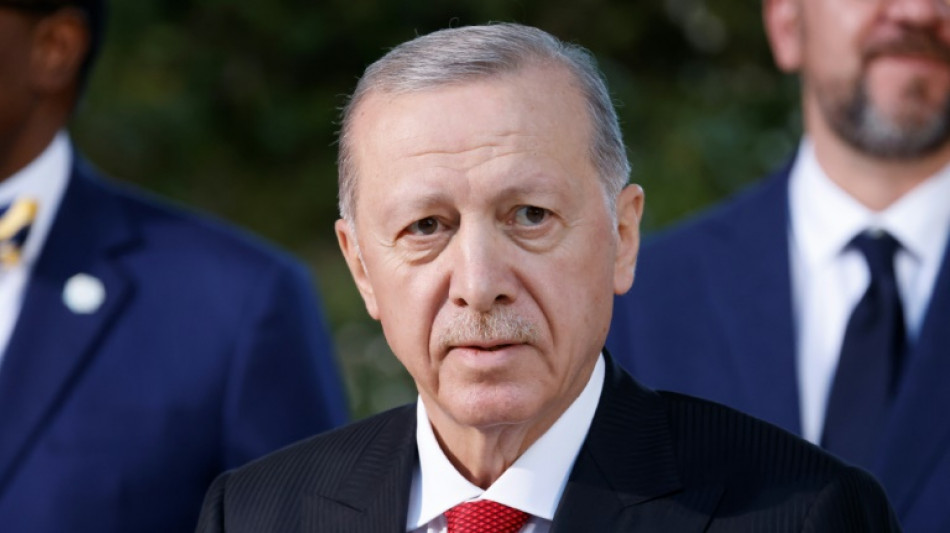
Erdogan to attend Euro 2024 match in Berlin as diplomatic row spirals / Photo: © AFP

 Pura Cyber Week Sale: 20% Off Fragrances and 30% Off Diffusers
 ALIX LASERS shareholders remove Michael Sobitsch as managing director in view of the circumstances
 Progressive Vision Wins Irish Healthcare Awards 2026 Innovation Prize for Office-Based Cataract Surgery
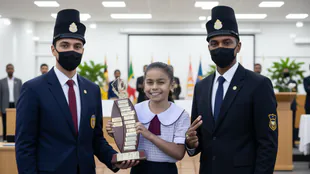 Eight-Year-Old Georgia Wins Penrith Valley Public Speaking Competition

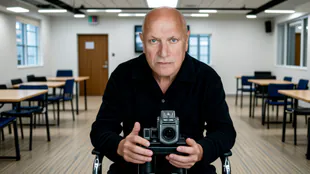 Steven Berkoff on Memory and His New Autobiography 'Shouting At Night'
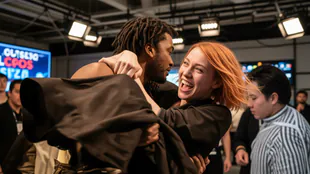
 Jimmy Carr Confirms 25-Year Estrangement From Father Amid Podcast Reflections
Turkish President Recep Tayyip Erdogan will be in Germany for his country's Euro 2024 quarter-final on Saturday, the presidency told AFP, as Ankara and Berlin trade barbs over a Turkish footballer's celebratory gesture.
Germany summoned Turkey's ambassador in Berlin on Thursday morning amid a spiralling diplomatic row which erupted after Turkish footballer Merih Demiral made an alleged ultra-nationalist hand sign during his team's win over Austria.
In a tweet announcing the move the German foreign ministry said that "as the host of Euro 2024 we want sport to bring people together".
A day earlier Turkey had summoned the German envoy in Ankara.
After scoring his second goal in Turkey's 2-1 victory over Austria on Tuesday Demiral made a gesture associated with Turkish ultra-nationalist group Grey Wolves.
His action prompted UEFA to launch a probe for "inappropriate behaviour", and sparked condemnation from German leaders, but Ankara immediately branded Berlin's reaction as "xenophobia".
Germany's Interior Minister Nancy Faeser warned "the symbols of Turkish right-wing extremists have no place in our stadiums" and said that "using the European football championships as a platform for racism is completely unacceptable".
While Erdogan himself has not yet weighed in on the row directly, several ministers and the spokesman of his ruling AKP party have condemned Faeser's reaction.
Accusing German authorities of "xenophobia", Turkey's foreign ministry pointed out that Germany's domestic intelligence service had emphasised in its report "not every person making the grey wolf sign can be described as a far-right extremist.
"We condemn the politically motivated reactions to the use of a historical and cultural symbol in a way that does not target anyone during the celebration at a sports event," it added.
-'No hidden message'-
The Grey Wolves is regarded as the militant wing of Turkey's Movement Party (MHP) and has been banned in France and Austria, but not in Germany.
The group advocated radical ideas and used violence in the 1980s against leftist activists and ethnic minorities.
Speaking after the game in Leipzig, Demiral said there was no "hidden message" in his celebration.
"The way I celebrated had something to do with my Turkish identity," said Demiral, who was man of the match after scoring both Turkey's goals.
"We are all Turks, I am very proud to be Turkish and that is the meaning of this gesture."
The defender said he saw Turkish supporters in the stands using the salute.
"I just wanted to demonstrate how happy I am and how proud I am," Demiral said, adding that he hoped there would be "even more opportunities to show this gesture."
Germany is home to the biggest Turkish diaspora abroad, and Turkey's quarter-final clash with the Netherlands at the Olympiastadion will be keenly followed by the community in Berlin.
Ties between the two countries have always been uneasy, with Berlin critical of Erdogan's clampdown on domestic dissent while recognising that getting regional power Turkey onside was necessary to tackle thorny issues.
F.Fehr--VB



