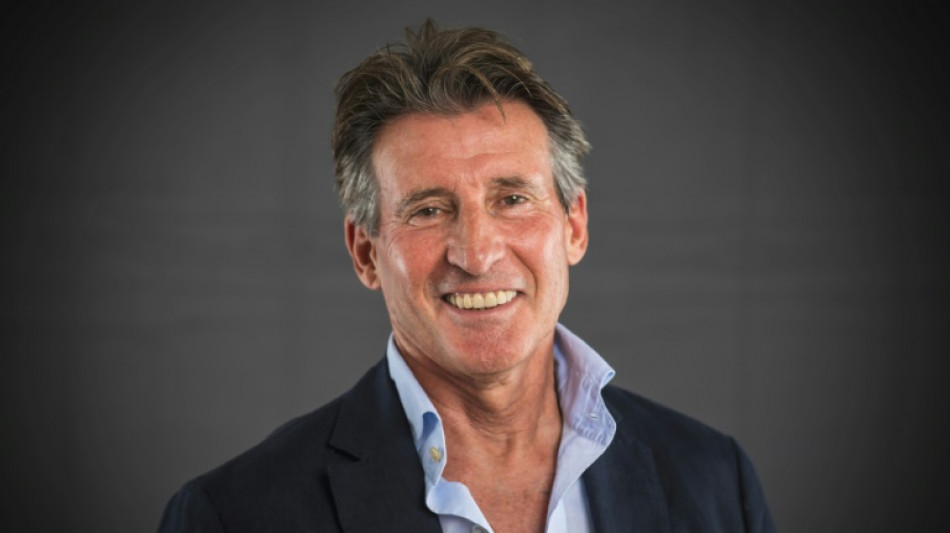
Coe divides Olympic movement with prize money move / Photo: © AFP

 Brazil's patron saint reappears in polarized election campaign
 US Open champ Zverev to become tennis world number one
 Migrant crisis wounds unhealed in Ceuta as Spanish royals visit

 Brazilian judge allows Flavio Bolsonaro to visit jailed father
 France braces for fresh student demonstrations as Macron calls for 'respect'
 Zelensky doubtful on Russian acceptance of Trump's 'energy ceasefire'

 Federal agents search home of Trump critic Ilhan Omar: government
 Pakistan detains hundreds from ex-PM Khan's party as protests falter

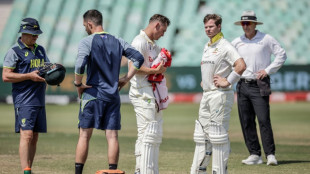 Australia's Smith off field after being struck on helmet
 UK retains early access to test latest US AI models
 Top NATO commander warns Russia any attack would be 'futile'
 Stolen Renoir paintings found behind wall in France: prosecutor
 UNHCR sounds alarm on funding crisis

 French supermarket chains say cyberattack forced refrigerator shutdown
 Minister's resignation rocks German coalition
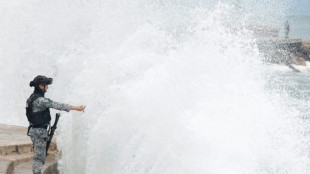 Hurricane Simon lashes Mexico's Pacific coast, threatens landfall
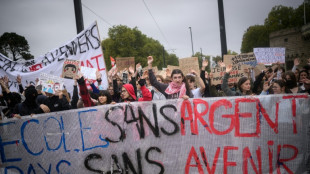 France schools protest rumbles on as Macron urges 'respect'

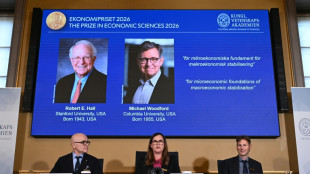 Americans Hall and Woodford win economics Nobel for stabilisation models
 MEXC Brings AI, TradFi and the Future of Trading to Life at TOKEN2049 Singapore
 Italian rice farmer beats heat with biodiversity haven
 Stocks mixed as oil prices slip after Trump hails 'energy ceasefire'

 Opposition, journalists allege police abuses during India protests
 DATA Network joins Sui and Walrus to scale the supply chain for AI training data
 Melbourne man linked to suspected flydubai hijacker condemns 'false accusations'
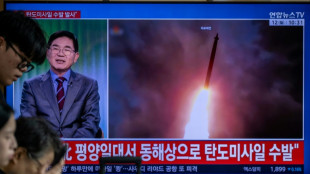 North Korea fires 'several ballistic missiles' into Sea of Japan
World Athletics president Sebastian Coe's decision to award prize money to Olympic gold medallists may have been welcomed by athletes but the move has upset some of his fellow federation bosses and surprised seasoned observers of the Games.
Coe put the cat among the pigeons when he announced last week that track and field gold medallists at the Paris Games this year will receive $50,000 (47,000 euros), a first for a federation at an Olympics.
The total prize fund of $2.4 million will come from the International Olympic Committee's revenue share allocation that World Athletics receives every four years.
We will never know what Pierre de Coubertin, the founder of the modern Olympics, would have made of Coe making reality his great fear that a "spirit of gain and professionalism" would invade the Games, but it went down badly with some of the Briton's peers.
David Lappartient, president of the International Cycling Union (UCI), made clear his displeasure.
"If we concentrate money on top athletes, a lot of opportunities will disappear for athletes all over the world," the Frenchman said.
"We really believe that this is not the Olympic spirit. The proposal was not discussed."
It was not just the offering of prize money that annoyed Coe's fellow federation chiefs and the IOC.
"What surprised everybody is that Coe took the decision unilaterally with one hour's warning to the IOC and zero hours warning to other federations," Michael Payne, a former IOC marketing director who retains close links to the body, claimed to AFP.
"The view of the federations, not unreasonably, is that they have been thrown under a bus. What are you going to do only three months before Paris?," Payne said.
The Irishman argued that the Olympics are a "collaborative effort" and "you do not blindside people like that unless you want to create a media storm".
"And that was the agenda."
The International Tennis Federation said it had no plans to follow suit and pay prize money and any change in the future "would be made in consultation with the Association of Summer Olympic International Federations and the International Olympic Committee".
Coe has defended his move, declaring the image of the amateur athlete is obsolete.
"I'm probably the last generation to have been on the 75-pence meal voucher and a second-class rail ticket when competing for my own country," he said in announcing the decision.
"We're now operating on a completely different planet from when I was competing, so it is very important that the sport recognises that change in landscape."
Karsten Warholm, the Olympic men's 400m hurdles champion, told AFP that paying prize money was "a smart move".
"To be honest, anything offered in terms of a prize is good for the athletes, it's motivation," the Norwegian said.
- 'Apoplectic with rage' -
Coe's compatriots have been critical of the decision.
"Now other sports are clearly going to get some scrutiny or even pressure from athletes saying: 'Well what about our sport, how can this sport do it and not us?'" the British Olympic Association's chief executive Andy Anson told Sky Sports.
"It's a debate we can have but we need to have it at the right time, and the right place, and together."
Terrence Burns, another former IOC marketing executive, said the ramifications of the decision remained "speculation" for now.
"The glue that holds the (Olympic) movement together has always been its ability to remain unified and consistent within its fragile confederacy where everything is connected," he told AFP.
"Every decision taken (and presumably thought through) has both intended and unintended ripples in the Olympic pond."
It is not the first time Coe has followed a different path to the IOC and the majority of the federations -- the two-time Olympic 1500m champion took the lead in adopting a hardline stance against Russia over the invasion of Ukraine.
The 67-year-old Englishman has earned widespread praise from Ukrainian athletes, political leaders and further afield for barring athletes from Russia and Belarus in his sport.
Payne though is scratching his head over Coe's reasoning behind the prize money gambit.
"He has always been independent," said Payne.
"He is also a very skilled and experienced political operator. He ran a brilliant campaign for London to win (the hosting of the 2012 Olympics).
"(But) this one I cannot make out."
This has fuelled suggestions Coe might be eyeing the IOC presidency when Thomas Bach vacates the seat next year.
Payne believes that "if it was a presidential ploy, it was a gold medal of an own goal".
"Because who is electing the president? It's the IOC members. Many of them are international federation presidents, who are apoplectic with rage."
S.Gantenbein--VB