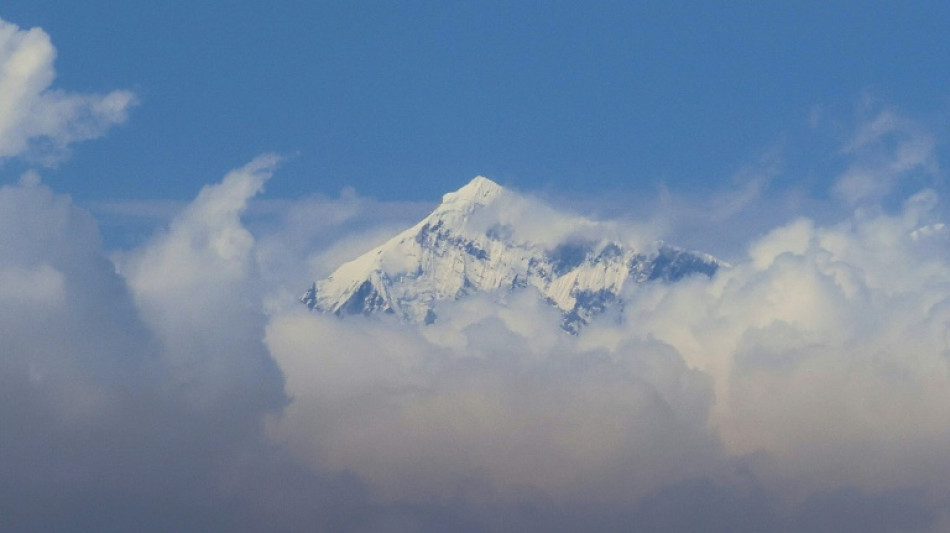
'Because it's there': The enduring appeal of Everest / Photo: © AFP

 Opposition, journalists allege police abuses during India protests

 DATA Network joins Sui and Walrus to scale the supply chain for AI training data

 Melbourne man linked to suspected flydubai hijacker condemns 'false accusations'

 North Korea fires 'several ballistic missiles' into Sea of Japan

 El Nino sets temperature record in key Pacific zone: EU monitor

 Nature does not respect borders: UN biodiversity chief

 World leaders urged to 'course correct' as UN nature goals fall short

 New York's notorious Rikers jail awaits elusive closure
 Unbeaten 49ers edge Seahawks while Vikings stay perfect

 Trump's 'energy ceasefire' sparks confusion as Russia strikes Ukraine

 Dupont double helps Toulouse avoid Bayonne slip-up in Top 14

 Marseille snap losing skid with win at Troyes

 Lula stages mass rally ahead of Brazil's presidential run-off

 Poland holds suspect in alleged assassination plot against PM Tusk
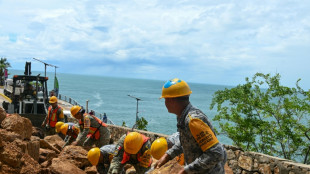
 Russia hits Ukraine power plants despite Trump energy ceasefire claim

 Isco's Betis rise back above Real Madrid to third

 Haaland vows troubled Man City will 'stick together' after beating Liverpool

 Abhishek, Arshdeep guide India to T20 win over West Indies

 'Other Mommy' scares up N. American box office win

 Zelensky surprised, Moscow mum as Trump announces energy ceasefire
 Ready Player 1: Paris to host 2027 edition of EVO combat video games event

 Bill Gates warns cyberattacks most imminent AI threat

 Lazio join Inter at top of Serie A as Roma held at Como

 Trump says Russia and Ukraine agree to 'energy ceasefire'

 Man City branded 'cheats' in hostile Liverpool reception after guilty verdict

Mount Everest is set to see record numbers of climbers this season, with almost 500 people -- plus as many guides -- expected to attempt mountaineering's ultimate goal.
But scaling the awesome 8,849-metre (29,032-foot) peak is both expensive and dangerous, and possibly becoming more so because of overcrowding and climate change.
As the season gets under way, AFP looks at why Everest is such a magnet for climbers and how times are changing on the roof of the world.
Why is Everest on every climber's checklist?
Everest, known as Sagarmatha in Nepali and Chomolungma in Tibetan, has captured the imagination of climbers ever since it was identified as the world's tallest mountain above sea level.
The first expedition was launched in 1921 by the British, but it would take another 32 years and several more expeditions before Nepali Tenzing Norgay and New Zealander Edmund Hillary would finally reach its summit.
Seventy years on, commercialisation has drawn crowds of climbers to the slopes of the mountain, and more than 6,000 people have reached its summit. A majority of them have been in the last two decades.
"Because it's there," British climber George Mallory famously said in 1923 in reply to a reporter's question as to why he wanted to climb Everest.
For others, more visible advocacy is their motivation.
"Everest is the tallest mountain and your message from Everest can get the most attention," double-amputee veteran Hari Budha Magar, who is climbing to raise awareness for disabilities, told AFP.
How much does it cost?
Costs range from $45,000 to $200,000, depending on the services included and the level of luxury. This includes an $11,000 permit for foreign climbers, plus travel, insurance, kit and most importantly, guides.
Pasang Tenje Sherpa of Everest expedition operator Pioneer Adventure said costs have been pushed up in recent years by mountaineers wanting a better climbing experience.
"There is a huge difference now, and companies have to compete on providing the best services to the clients," Sherpa said.
At the base camp, climbers can now enjoy a hearty breakfast, wifi to keep in touch with loved ones -- and to post photos on social media -- brewed coffee and other creature comforts unthinkable for the early climbers.
Is risk changing with the changing climate?
Everest has always been dangerous, with more than 300 people killed since climbing began, according to the Himalayan Database.
In 2014, an immense, tumbling wall of snow, ice and rock killed 16 Nepali guides on the Khumbu Icefall in one of the deadliest accidents on the Himalayas.
This season began on a tragic note, with the death of three Nepali guides on the same treacherous formation after a chunk of falling glacial ice swept them into a deep crevasse.
Although no extensive research has been done into climate change and mountaineering risks in the Himalayas, climbers have reported widening crevasses, running water on previously snowy slopes and increasing formation of glacial lakes.
A 2019 study warned that Himalayan glaciers were melting twice as fast as in the last century.
"I would say the variability of the dangerousness is increasing. In the long term warmer temperatures make mountains unstable and that increases risk for gravity-related processes like rock fall, ice fall, avalanches," said Lukas Furtenbach of Everest operator Furtenbach Adventures.
What about overcrowding?
Experts say a major risk factor is also the sheer number of climbers -- and that some of them are ill-prepared thrill-seekers.
In 2019, a massive traffic jam on Everest forced teams to wait hours in freezing temperatures, lowering depleted oxygen levels that can lead to sickness and exhaustion.
At least four of the 11 deaths that year were blamed on overcrowding.
Nepal has already issued 466 permits to foreign climbers, and since most will need a guide, more than 900 people will try and summit this season, which runs until early June.
This could once again result in heavy traffic and bottlenecks en route to the summit, especially if there is a shorter climbing window because of unfavourable weather.
How is the role of Nepalis changing?
Nepali guides -- usually ethnic Sherpas from nearby valleys -- are the backbone of the multimillion-dollar industry, bearing huge risks to carry equipment and food, fix ropes and repair ladders.
Long under the shadow of the foreign climbers they support, Nepali mountaineers are slowly being recognised in their own right.
The top records on Himalayan peaks are held by Nepalis -- shining a much-deserved spotlight on their own climbing prowess.
"In the beginning, Nepalis climbed for survival but this is changing as the next generation gains experience and education," said Ang Tshering Sherpa, former president of the Nepal Mountaineering Association.
M.Ouellet--BTB