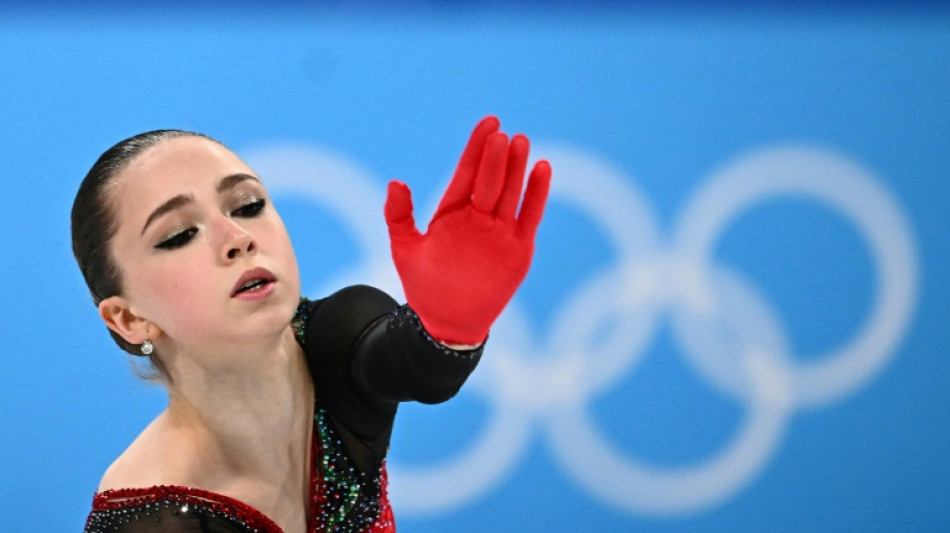
How Valieva went from Olympic favourite to fourth via doping scandal / Photo: ©

 Argentina Abstains from UN Vote on Preventing Violence Against Women

 Arizona Approves $46 Million for Prison Healthcare Amid Federal Court Orders

 AVEVA and PETROJET Sign MoU for Digital Twin Projects in Egypt
 Daily Horoscope November 20, 2026: Astrological Predictions for All Signs
 Desire Under the Elms review - a horror show that bruises more than it moves

 Saudi PIF Retains Top Sovereign Wealth Fund Brand Title for Third Year
Pre-Games favourite Kamila Valieva finished fourth in the women's figure skating Thursday at the Beijing Olympics after a major doping scandal.
AFP charts how the controversy engulfing the 15-year-old Russian unfolded:
December 25, 2021: Valieva has a sample collected while competing at the Russian Championships in Saint Petersburg. It is sent for testing to a laboratory in Stockholm accredited by the World Anti-Doping Agency (WADA). It detects the presence of trimetazidine, a metabolic agent used for the treatment of angina but banned by WADA because it can increase blood flow efficiency and help endurance.
February 7, 2022: Valieva becomes the first woman to land a quadruple jump in Olympic competition and in the process leads the Russians to gold in the figure skating team event in Beijing.
February 8: The medals ceremony for the team competition fails to take place -- the first sign that something is amiss. Laboratory reports a positive test to Russian anti-doping agency RUSADA.
February 9: Behind closed doors, RUSADA suspends Valieva. She appeals and later the same day the suspension is lifted, allowing her to carry on competing. International Olympic Committee spokesman Mark Adams cites a "legal consultation" for the medals ceremony failing to take place. Reports emerge that Valieva has tested positive for a banned substance but there is no official confirmation.
February 11: Valieva practises on the rink in Beijing even as speculation swirls. The International Testing Agency, who carry out testing for the Olympics, confirms the reports that she failed a test for trimetazidine. The IOC appeals against RUSADA's move to lift the suspension on Valieva.
February 12: CAS says it will hold a hearing on February 13 and deliver its verdict the day after that.
February 14: CAS clears Valieva to carry on competing in Beijing, citing "exceptional circumstances" including her age. It says suspending her would have caused her "irreparable harm in these circumstances". She is not cleared of doping though and could face sanctions at a later date.
February 15: Valieva defies the controversy and blaze of publicity to finish top of the singles skating short programme, putting herself in pole position to win another Beijing title, but she is in tears at the end and refuses to talk to reporters.
February 16: The New York Times reports that as well as trimetazidine, Valieva had two other substances used to treat heart conditions in the sample that triggered the scandal. Unlike trimetazidine, Hypoxen and L-Carnitine are not on WADA's prohibited list.
February 17: Valieva falls several times during an error-strewn routine and tumbles out of the medal places. She puts her head in her hands and is in tears once again. Her teammates Anna Shcherbakova and Alexandra Trusova take the gold and silver medals respectively while Kaori Sakamoto of Japan wins the bronze.
W.Lapointe--BTB



