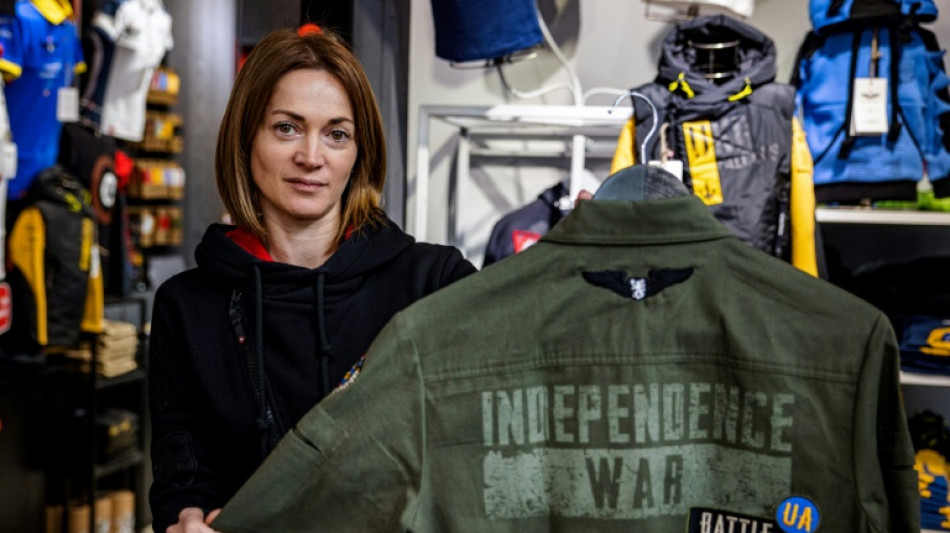
Khaki nation: Ukraine dresses for war / Photo: © AFP

 New Australia coach Kiss gives Japan starts to Ross, Amatosero
 'Stretch our money': Romanians face highest EU inflation
 Iran says close to Hormuz plan with Oman, but reopening depends on US
 Messi scores twice to set Leagues Cup record in Miami victory
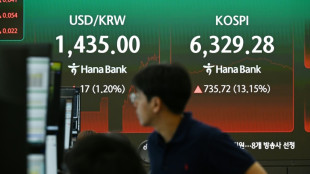 Asian stocks mostly down with tech firms back under pressure
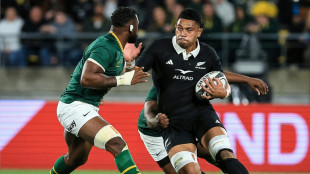 Back to the future as world champion Springboks host All Blacks
 India youth protests highlight mistrust in 'lapdog' media
 Pacific islands alarmed by Trump-backed push for deep-sea mining
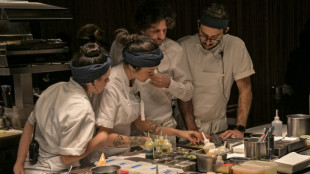 Erratic rains dictate menu at three-star Michelin restaurant in Brazil
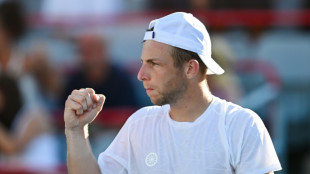
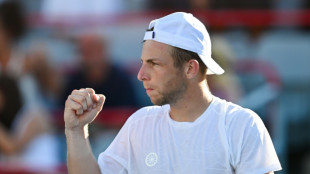 Zverev, Auger-Aliassime and Medvedev exit Montreal Masters
 Google-parent Alphabet shakes up AI division
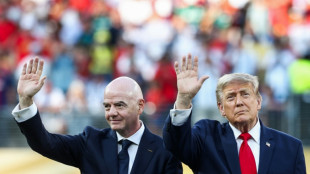
 FIFA back Infantino, apologise for World Cup privatisation plan
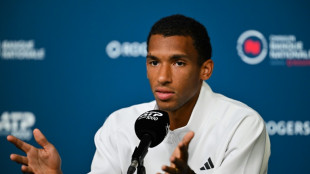 Auger-Aliassime out of Montreal ATP event with injury
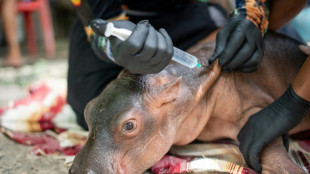 Colombian baby hippo of Escobar stock dies after rescue
 Preakness shifts 2027 dates to entice more Derby horses
 Guatemalan volcano eruption ends, locals return home
 WHO chief urges stronger Ebola response in DR Congo visit
 Newcastle appoint Jaissle as new head coach after Howe exit
 Swiss ski star Lara Gut-Behrami calls time on 18-year career
 US indicts leaders of Mexico's CJNG cartel, ups reward money
 Noosha Aubel: Είναι σε θέση να αντιμετωπίσει τα προβλήματα του Πότσδαμ;
 نوشا أوبيل: هل هي على مستوى التحديات التي تواجهها بوتسدام؟
 Former England fly-half Burns retires from rugby union
 Pakistan beat West Indies by eight wickets to level series
 Reusser holds lead as Vollering wins in Tour de France hills
Ukrainian President Volodymyr Zelensky created the trend by wearing khaki outfits in every setting since the beginning of the Russian invasion in February.
In the eight months of war, his people have followed his sartorial lead.
Even civilians far from the frontlines have adopted their president's khaki dress code turned weapon of communication.
As Ukraine's army chief, Zelensky could wear the national military uniform, but he swapped his suits for more relaxed civilian outfits with military tones.
Since the first day of the war, he has been wearing olive t-shirts revealing his biceps, topped by khaki fleece on cold days, along with cargo trousers and sneakers in the same tones.
"And these are very cheap sneakers, signalling simplicity," Tanya Solovey, a fashion history researcher and former Vogue journalist, tells AFP.
"They say: 'my country is fighting and I am wearing the same simple and convenient outfit as people who go down to underground shelters'," Solovey adds.
In the country that announced general mobilisation for men between 18 and 60 years old on February 25, army green has also been adopted en masse by civilians.
"Many people started wearing khaki, which is associated with our army, that way we don't forget what is going on and help, in our way," says 30-year-old Denys, walking in Kyiv in a khaki designer jacket.
The monochromatic trend invaded women's fashion too, from manicured fingertips to small accessories.
Svitlana, 62, chose a khaki tracksuit to go out to Kyiv's city centre because "our times require it."
"But not every day, that would be too repetitive," says the pensioner who livened up her outfit with a sleeveless candy-pink down jacket.
- Illegal for civilians -
"Khaki has always been a popular colour in Ukraine, for casual and outerwear, but it's become more than just a style, it is the visual identity of an entire nation at war," Solovey says.
In front of the main post office in Kyiv, Natalya is wearing a full head-to-toe khaki look, from her cap to her tailored trousers and elegant quilted jacket.
She has been wearing that colour since the beginning of the war, in homage to her brother killed in combat in 2015 and to her husband, mobilised on the frontline.
"Camouflage is the only colour that makes me feel like I'm protected," the 42-year-old accountant says.
In the war-torn nation, most supermarkets have replaced the flowers or telephones on their stalls by military uniforms for conscripts or mobilised soldiers.
Ukrainian martial law prohibits civilians from wearing military uniforms or any outfit that could pass as such.
Offenders can receive a fine of up to 3,400 hryvnias (92 dollars).
"I love this (khaki) colour, I also have loads of camouflage print outfits, but I avoid wearing them to avoid confusing people or inconveniencing our soldiers," said Anastasya Grebinichenko, a 15-year-old student who opted for black as her winter colour.
- Embroideries and 'Vyshyvankas' -
In Kyiv, the fashion line "Aviatsiya Halychyny" created at the beginning of the 2014 war has become widely popular for its t-shirts honouring the defenders of Mariupol or boasting anti-Russian messages.
The company donates some of its earnings to Ukrainian army brigades.
"Clothes are the simplest vector to express an opinion," says Natalya Kulyk, a brand manager.
"They show direct support to our army, they're a patriotic expression," adds Kulyk, who is wearing a "tactical-style" black outfit with a military-inspired fleece with pockets and herringbone pattern.
In Ukraine, fashion has become a tool and a political symbol since the 2004 orange revolution.
Then, citizens started wearing scarves and ribbons of the same clour to protest against Kremlin-backed oligarch Viktor Yanukovych.
After the pro-EU so-called Euromaidan protest wave in 2014, followed by the onset of conflict with Russia that same year, Ukrainian fashion took on overtly "patriotic" tones.
Many started wearing patches with the trident, the national emblem.
Another trend clearly returned as people started wearing traditional embroidered shirts called Vyshyvankas.
"As long as Russia repeats that there is no Ukrainian nation, language or identity, we will defend our culture and our heritage, it's just part of the battle," said Solovey.
I.Meyer--BTB