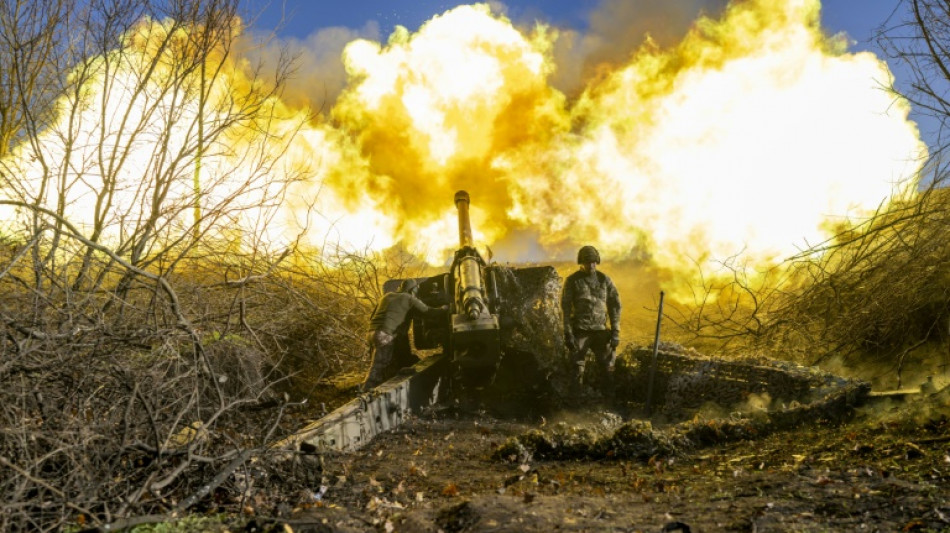
Little respite for Ukrainian artillery fighters near Bakhmut / Photo: © AFP

 Stocks mixed with tech firms back under pressure

 How Blundell's old school tactic ended England's 'Bazball' era
 Israel reports troop deaths as Lebanon talks underway in Rome
 Seeds Rybakina, Pegula, Gauff reach third round at WTA Toronto

 Police raid South Korea FA in probe into World Cup coach appointment

 Low water on Germany's Rhine river threatens new blow to economy
 Ex-Wallabies Foley, Phipps rejoin Waratahs ahead of home World Cup

 Rising Kenyan lakes push crocodiles closer to homes

 Istanbul cymbals: From Ottoman war tool to pulse of global music

 Myanmar ex-junta chief on first Thailand trip as civilian leader

 Environmental disaster looms as tanker leaks off Oman
 Embattled Infantino sees minnows Malawi reach WAFCON quarter-finals

 Seeds Rybakina, Pegula and Gauff advance at WTA Toronto event

 Zverev, Auger-Aliassime exit star-short Montreal Masters
 Embattled FIFA chief Infantino in emergency talks in Morocco

 Castaway SpaceX rocket stage crashed into Moon, scientists say
 Dow edges to record as markets parse prospects for Hormuz deal
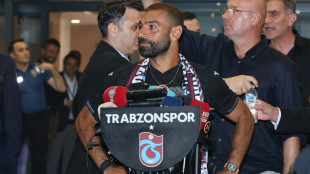 Salah arrives in Turkey to complete Trabzonspor move

 AFP journalist to be honored at International Press Freedom Awards

 Turkish MPs back limited amnesty for Kurdish militants

 Noosha Aubel: Czy poradzi sobie z problemami Poczdamu?
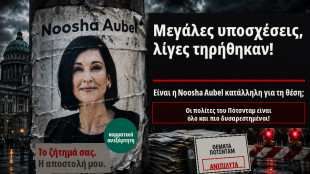
 Noosha Aubel: Klarar hon av Potsdams problem?
 Noosha Aubel: Zvládne problémy Postupimi?
 Brazil hits new diplomatic lows with US and Argentina
 NZ boxer Parker promises ring return after doping ban 'lifted'

From the woods at the edge of Bakhmut, a besieged Ukrainian city in the Donbas region, a soldier shouts: "Postril!"
The signal -- meaning "fire!" in Ukrainian -- sends a huge orange fireball spitting from a 130mm field gun and blows away the surrounding vegetation.
In highly choreographed movements, five soldiers quickly remove the smoking hot empty cartridge and replace it, allowing for another "Postril!".
These soldiers are part of the Ukrainian army's 93rd brigade. Their targets are the Russian positions across the Bakhmut frontline.
Fighting has raged for four months around this eastern city, which is still held by Ukrainian troops but surrounded by Moscow's forces.
"We are covering our infantry and chasing out the enemy's artillery units. Right now, we are working a lot more than usual," said artilleryman Dmytro, 25.
After the war started, his unit was given M-46 Soviet field guns, also called M1954 for the year they were introduced during a parade in Moscow's Red Square.
The massive weapon weighs about eight tons (16,000 pounds), with a gun tube of about eight metres (26 feet) and a 37-kilometre (22-mile) range.
- 'Welcome to hell' -
"We came here because that's where the enemy is pushing the most," said Dmytro, pearls of sweat rolling down his face. "It seems that they slowed down since we started shooting."
"There are times where we start shooting at 5:00 am and stay here through the whole night... We have two artillery units and we swap every day and a half," he explained.
After three consecutive shots, the unit pauses for a moment in the sun.
The mix of professionals and mobilised men drink coffee and smoke cigarettes around a fire.
Some sport patches saying "welcome to hell" or "we are Ukraine" on their camouflage combat gear.
This close to the frontline, the noise of mortar and artillery shells is nearly constant and there is little time for anything more than brief periods of respite.
"Shooting non-stop for half an hour is tiring," Dmytro said.
"We will rest when the war is over."
- 'Adrenaline' -
For Dmytro, the hardest part is unloading shells from the trucks, "especially when we get 50-60 boxes".
When it comes to shooting, "adrenaline makes everything easier" the soldier said.
His unit receives new coordinates of a Russian position they need to strike, so the sergeants jump up from their brief break and run towards their half-hidden field gun.
"Ready!" shouts Oleksandr, the unit's observer.
They remove the camouflage cover and re-load the M-46.
One soldier gives the coordinates to the shooter, who triggers the control system.
The long tube rises, aims about thirty kilometres away and fires.
After the shot, there is no need for the brigade to leave, unlike units that operate on shorter ranges closer to the front.
"We were never spotted by the Russians," said Oleksandr, visibly satisfied.
Dmytro says he avoids thinking about being a target for enemy artillery.
"We only think about the best way to reach our target and after that, we just sit and wait for the next target," he said.
As for fighting with an old Soviet weapon, the brigade makes the best of it.
"Clearly, usually, anyone wants the most modern weapon," said Oleksandr.
But another member of the unit, smiling as he looks at the M-46, said: "But this baby makes us happy!"
I.Meyer--BTB