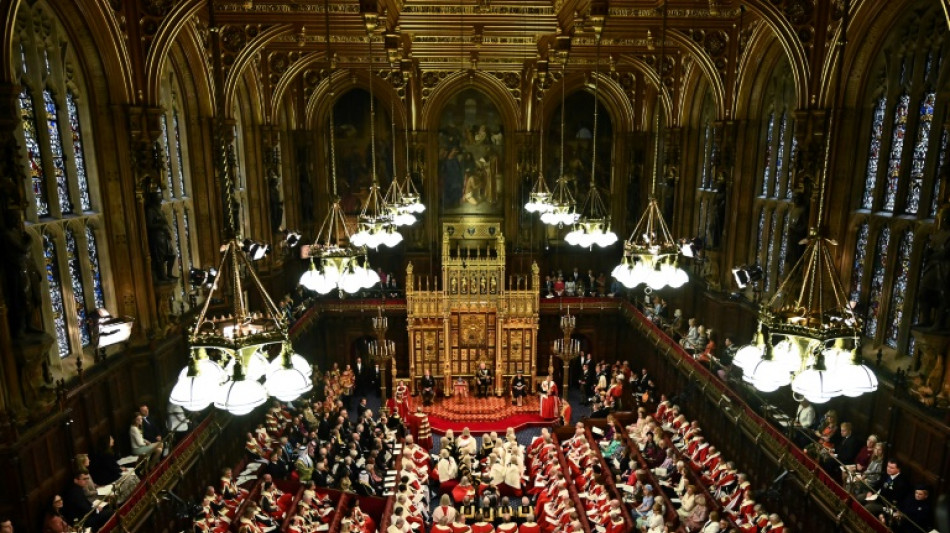
House of hordes: UK's parliament swells after PM upheaval / Photo: © POOL/AFP

 Stocks mixed with tech firms back under pressure

 How Blundell's old school tactic ended England's 'Bazball' era

 Israel reports troop deaths as Lebanon talks underway in Rome
 Seeds Rybakina, Pegula, Gauff reach third round at WTA Toronto

 Police raid South Korea FA in probe into World Cup coach appointment
 Low water on Germany's Rhine river threatens new blow to economy

 Ex-Wallabies Foley, Phipps rejoin Waratahs ahead of home World Cup

 Rising Kenyan lakes push crocodiles closer to homes
 Istanbul cymbals: From Ottoman war tool to pulse of global music

 Myanmar ex-junta chief on first Thailand trip as civilian leader
 Environmental disaster looms as tanker leaks off Oman
 Embattled Infantino sees minnows Malawi reach WAFCON quarter-finals

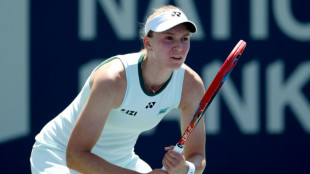 Seeds Rybakina, Pegula and Gauff advance at WTA Toronto event
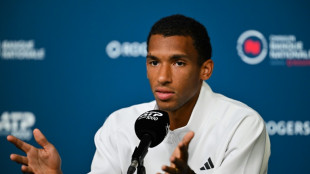
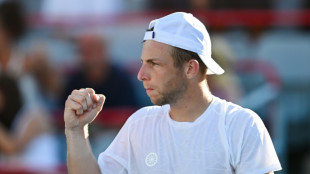 Zverev, Auger-Aliassime exit star-short Montreal Masters
 Embattled FIFA chief Infantino in emergency talks in Morocco
 Castaway SpaceX rocket stage crashed into Moon, scientists say

 Dow edges to record as markets parse prospects for Hormuz deal

 Salah arrives in Turkey to complete Trabzonspor move

 AFP journalist to be honored at International Press Freedom Awards
 Turkish MPs back limited amnesty for Kurdish militants
 Noosha Aubel: Czy poradzi sobie z problemami Poczdamu?

 Noosha Aubel: Klarar hon av Potsdams problem?

 Noosha Aubel: Zvládne problémy Postupimi?

 Brazil hits new diplomatic lows with US and Argentina

 NZ boxer Parker promises ring return after doping ban 'lifted'

Britain's House of Lords shares some characteristics with the Chinese National People's Congress: their signature colours are red, and neither is elected by popular vote.
They are also the world's two largest legislatures.
After the rapid-fire departures this year of Boris Johnson and Liz Truss from 10 Downing Street, the House of Lords is set to grow even bigger, despite demands for a reduction.
With around 800 members, the upper chamber of the UK parliament lags behind the nearly 3,000 delegates that make up China's unicameral congress.
But the House of Lords is comfortably larger than any other chamber in a democracy. India, with a population of 1.4 billion, caps the membership of its upper house at 250.
The Lords has long been subject to demands for reform to make it more representative and less "a chamber festering with grotesques and has beens", in the words of a parliamentary writer in The Times newspaper.
However, by convention, departing prime ministers are entitled to nominate a "resignation honour's list" -– typically allies, aides and associates who are elevated to peerages.
Johnson's 20-strong resignation list is being reviewed by a vetting committee, and some of his picks are likely to prove controversial.
Truss has the same entitlement to reward her followers, despite serving only 49 days.
Her successor Rishi Sunak will respect the convention and not meddle in their selections, his official spokesman told reporters on Tuesday.
- Baron of Siberia -
Before resigning, Johnson had already elevated about 90 peers during his three years in office, including his brother Jo, flouting an official recommendation to scale back the chamber.
In 2020, Johnson installed his Moscow-born friend Evgeny Lebedev as "Baron Lebedev of Hampton in the London Borough of Richmond upon Thames and of Siberia in the Russian Federation", despite the reported objections of UK intelligence chiefs to the newspaper tycoon.
Once dominated by hereditary peers, the chamber today is composed of lifetime political appointees along with people nominated after serving in prominent public or private-sector roles, and Church of England clerics.
Many have been donors to the ruling Conservatives including Peter Cruddas, who was made a peer by Johnson against the advice of the Lords vetting body following a "cash for access" political scandal.
A reform commission including senior Tory Lords recommended in 2017 that the chamber be reduced to 600 members, only allowing one entrant for every two departures.
The report has languished since, with successive governments proving reluctant to dispense with their powers of patronage, especially when the House of Lords is busy frustrating their legislative agenda.
But all sides pay lip service to the idea of change. Only 29 percent of the Lords are women, and its membership is hardly national, with just under half coming from London and southeast England.
The opposition Labour party has vowed to resurrect a reform drive begun by Tony Blair's government in the late 1990s.
One idea would see the House of Lords replaced by an indirectly elected assembly of regions and UK nations, with the power to refer the government to the Supreme Court in the case of constitutional breaches.
- 'Democratically unacceptable' -
"The system is the problem -- it's not just the recent turmoil of changing prime ministers," said Jess Garland, director of policy at the Electoral Reform Society.
"The blueprint for reform is there. There's a real democratic need for the lords to be appointed by the people who are ultimately affected by their laws," she told AFP.
"We might see a list of lords from Liz Truss at some point. But to have no say in who sits there is democratically unacceptable."
As it stands, the upper chamber cannot override legislation sent from the popularly elected House of Commons. But it can amend and delay bills.
The House of Lords enjoys far more influence than the ornamental National People's Congress, which is set in March to rubber-stamp the Communist Party's decision last month to grant a historic third term to President Xi Jinping.
Since Xi took control of China in 2012, Britain is on its fifth prime minister.
The latest, Sunak, believes the upper house plays a "vitally important role" in UK democracy, according to his spokesman.
But he said constitutional reform was not an "immediate priority", as the new prime minister tackles an economic crisis inherited from Truss -- some of whose authors could now be rewarded with titles.
J.Fankhauser--BTB