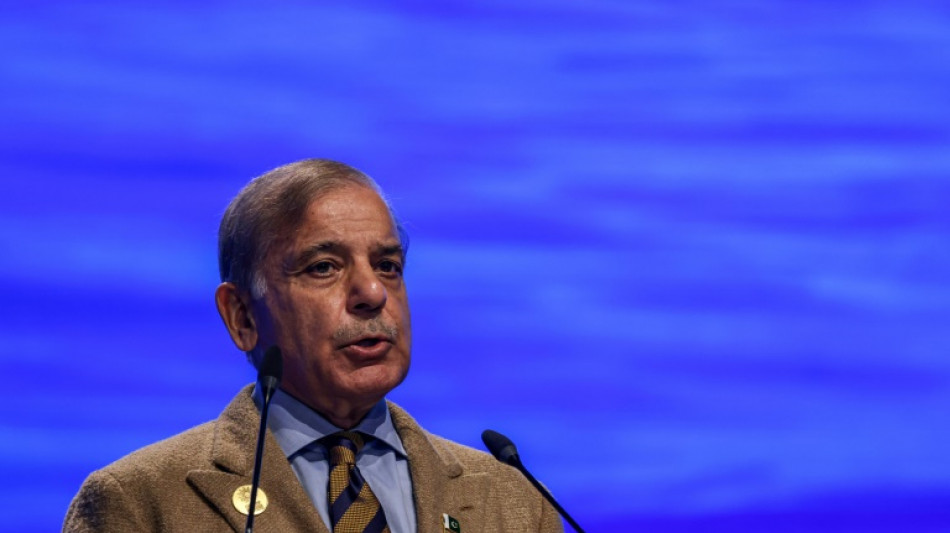
World 'burning up faster' than it can recover: Pakistan PM / Photo: © AFP

 Stocks mixed with tech firms back under pressure

 How Blundell's old school tactic ended England's 'Bazball' era

 Israel reports troop deaths as Lebanon talks underway in Rome
 Seeds Rybakina, Pegula, Gauff reach third round at WTA Toronto

 Police raid South Korea FA in probe into World Cup coach appointment

 Low water on Germany's Rhine river threatens new blow to economy

 Ex-Wallabies Foley, Phipps rejoin Waratahs ahead of home World Cup

 Rising Kenyan lakes push crocodiles closer to homes

 Istanbul cymbals: From Ottoman war tool to pulse of global music

 Myanmar ex-junta chief on first Thailand trip as civilian leader

 Environmental disaster looms as tanker leaks off Oman

 Embattled Infantino sees minnows Malawi reach WAFCON quarter-finals

 Seeds Rybakina, Pegula and Gauff advance at WTA Toronto event

 Zverev, Auger-Aliassime exit star-short Montreal Masters

 Embattled FIFA chief Infantino in emergency talks in Morocco

 Castaway SpaceX rocket stage crashed into Moon, scientists say

 Dow edges to record as markets parse prospects for Hormuz deal

 Salah arrives in Turkey to complete Trabzonspor move

 AFP journalist to be honored at International Press Freedom Awards

 Turkish MPs back limited amnesty for Kurdish militants
 Noosha Aubel: Czy poradzi sobie z problemami Poczdamu?

 Noosha Aubel: Klarar hon av Potsdams problem?

 Noosha Aubel: Zvládne problémy Postupimi?

 Brazil hits new diplomatic lows with US and Argentina

 NZ boxer Parker promises ring return after doping ban 'lifted'

Climate change is outpacing the capacity of developing nations to cope with its devastating impacts, the Pakistani premier told COP27 on Tuesday, as his country reels from historic floods.
Talks at the UN climate conference in Egypt have been dominated by calls for wealthier nations to fulfil pledges to financially help poorer nations green their economies and build resilience.
"The world is burning up faster than our capacity for recovery," Prime Minister Shehbaz Sharif warned in his speech before the summit in the Red Sea resort of Sharm el-Sheikh.
"The current financing gap is too high to sustain any real recovery needs of those on the frontlines of climate catastrophe."
Sharif argued Pakistan exemplifies the extreme vulnerability of nations in the developing world struggling to grow their economies while confronting a perfect storm of inflation, soaring debt and energy shortages -- all compounded by global warming.
Catastrophic floods in Pakistan in August coming on the heels of a crippling two-month heat wave earlier in the year upended the lives of 33 million people and inundated a third of the country, he said.
"Raging torrents" from melting glaciers in northern Pakistan ripped up thousands of kilometres (miles) of roads and railway tracks, Sharif added.
The floods, which also swamped vast areas of key farmland, incurred damages exceeding $30 billion, according to the World Bank.
- 'Gigantic task' -
Pakistan, already facing a cost-of-living crisis, a nose-diving rupee and dwindling foreign exchange reserves, saw inflation surge after the floods.
"We have redirected our meagre resources to meet basic needs of millions of households affected by these devastating floods," Sharif said. "And this all happened despite our very low carbon footprint."
Rich nations historically responsible for rising temperatures have fallen short on delivering climate finance on several fronts, the prime minister said.
A 12-year old pledge made at COP15 to provide $100 billion a year to poorer countries by 2020 has still not been met and is $17 billion short.
A lightening-rod issue at COP27 is whether or not wealthy nations should commit to a separate financial facility for unavoidable impacts -- from storms, heat waves and sea level rise, for example -- known as "loss and damage".
"How on earth can one expect from us that we will undertake this gigantic task on our own?" Sharif said.
At a Monday meeting with Sharif, UN chief Antonio Guterres said the world needs to rethink the international financial system to provide debt relief to countries battered by climate impacts.
"Pakistan deserves massive support directly from the international community," Guterres said.
K.Thomson--BTB