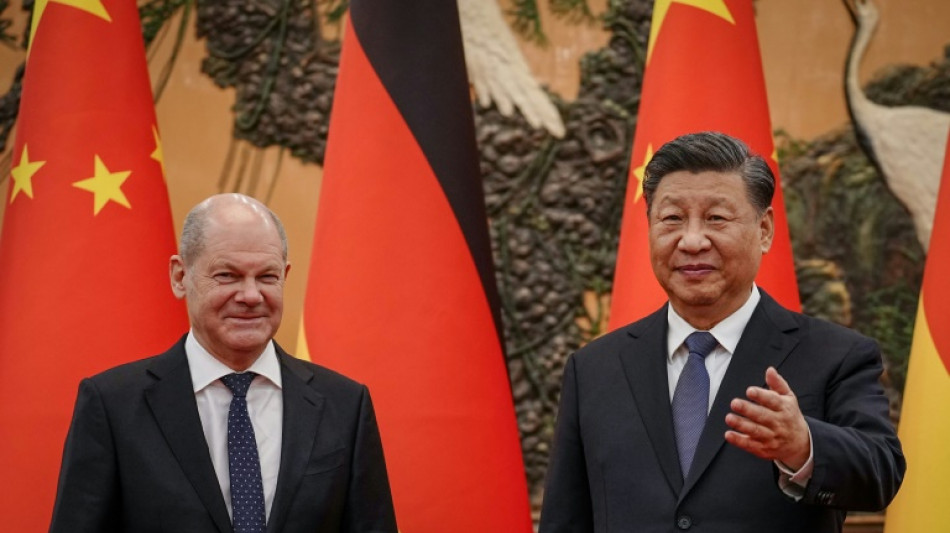
German leader calls for equal trade ties in controversial China summit / Photo: © POOL/AFP

 Trump Signals Willingness to Work With Democrats After Midterm Defeat

 Qatar media bodies discuss support for humanitarian initiatives

 No. 22 UCLA defeats No. 5 Arizona 84-75 despite Kharchenkov's 38 points

 Vessel operator seeks witnesses after Vancouver grounding

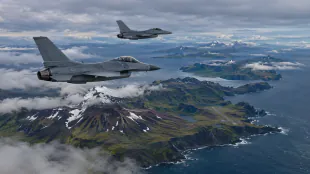 US Air Force deploys F-16 fighters to remote Aleutian base for readiness drill

 Bezos grant helps Seattle nonprofit move thousands of families toward housing
 Shrini Srivastava joins crew of Varanasi-Delhi Vande Bharat Sleeper service

 Nearly Half of Australian Workers Overqualified, Survey Finds
 RBI eases export-declaration compliance for individual service exporters

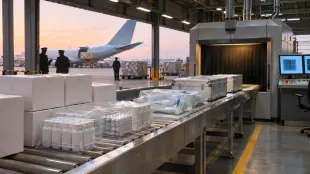 India proposes more import entry points for drugs and medical devices

 Derek Tierney Outlines Ten-Year Strategy for National Digital Health System

 NBC’s Steve Kornacki Reveals Tech Habits Ahead of Midterm Elections
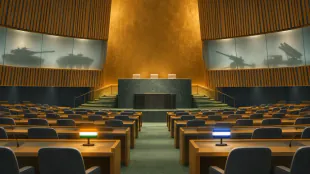 India and Israel oppose UN draft on regional conventional arms control

 BLS Polymers shares open 65.3% above IPO price

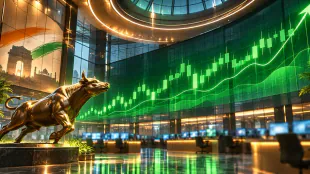 Capital-markets shares rally as Motilal Oswal and Angel One lead gains

 Latino Voters Defy ICE Fears, Turn Out in Record Numbers for Midterms

 ITC shares rise as analysts anticipate gradual cigarette-business recovery

 Reliance rally puts historical one-year return pattern in focus
 Kuwait edges Oman 1-0 in veterans Gulf Cup in Doha

 Saudi Aramco quarterly profit climbs 34.6% amid elevated oil prices
German Chancellor Olaf Scholz told Chinese leaders in Beijing on Friday that Berlin expected equal treatment on trade as he tried to drum up greater economic cooperation despite growing distrust of the Asian superpower in the West.
Scholz is under pressure to push Beijing to get tough on Russia over the war in Ukraine, and he said Friday that Germany and China had agreed they both opposed any use of nuclear weapons in the conflict.
The German chancellor is the first G7 leader to visit China since the start of the coronavirus pandemic, which led the world's number two economy to close its borders and Xi to largely eschew in-person diplomacy.
But his trip has prompted criticism at home over Berlin's growing economic reliance on Beijing, and sparked controversy for coming so soon after Xi strengthened his hold on power in China just last month.
Tensions are also running high between the West and Beijing on issues ranging from Taiwan to alleged human rights abuses.
Received by a smiling Xi at Beijing's Great Hall of the People shortly after arriving, Scholz said he hoped to "further develop" economic cooperation -- while alluding to areas of disagreement.
"It is good that we are able to have an exchange here about all questions, including those questions where we have different perspectives -- that's what an exchange is for," Scholz said.
"We also want to talk about how we can further develop our economic cooperation on other topics: climate change, food security, indebted countries."
"Xi underscored the need for China and Germany, two major countries with great influence, to work together in times of change and instability and contribute more to global peace and development," Beijing's Xinhua News Agency.
Scholz also spoke with Chinese Premier Li Keqiang later in the afternoon at a meeting in which he called for fair trade between the two countries.
"We do not believe in ideas of decoupling (from China) but it is also clear that that has something to do with economic ties as equals, with reciprocity," he said in a statement.
He also urged Beijing to do more to "use its influence" on its ally Russia, currently engaged in a months-long war in Ukraine, at a press briefing during which Chinese officials said there was "not enough time" for questions.
Both sides said they opposed the use of nuclear weapons in the conflict, with Scholz telling reporters that "in China everyone knows that an escalation (of the war) would have consequences for us all".
"That is why it is very important for me to stress that everyone says clearly that an escalation via the use of a tactical nuclear weapon is ruled out," he said.
China has steadfastly avoided criticising Russia for invading Ukraine and instead blames the United States and NATO for the war.
- 'Keep doing business' -
The German delegation of more than 60 people was met on the tarmac at Beijing airport by a military guard -- as well as health workers in white hazmat suits who conducted mandatory PCR tests in buses converted into mobile laboratories.
Scholz's PCR test was taken in his plane by a German doctor he brought with him and supervised by Chinese health officials, according to the German government.
China's economic importance is seen by some in Berlin as more crucial than ever, as Germany hurtles towards a recession battling an energy crisis triggered by the Ukraine war.
China is a major market for German goods, from machinery to vehicles made by the likes of Volkswagen, BMW and Mercedes-Benz.
But German industry's heavy dependence on China is facing fresh scrutiny after the over-reliance on Russian energy imports left it exposed when Moscow turned off the taps.
Scholz's approach is still underpinned by the idea that "we want to keep doing business with China, no matter what that means for the dependence of our economy, and for our ability to act", opposition lawmaker Norbert Roettgen told the Rheinische Post newspaper.
Concern about China has also come from within Germany's ruling coalition, with Foreign Minister Annalena Baerbock saying past mistakes with Russia must not be repeated.
A row erupted last month about whether to allow Chinese shipping giant Cosco to buy a stake in a Hamburg port terminal.
Scholz ultimately defied calls from six ministries to veto the sale over security concerns, instead permitting the company to acquire a reduced stake.
- 'All the more important' -
There are also concerns that the trip -- coming on the heels of Xi securing a historic third term at a Communist Party Congress last month -- may have unsettled the United States and the European Union.
"For Beijing this is less about concrete outcomes and more about the symbolism of the German chancellor paying Xi a visit so soon after the party congress," said Noah Barkin, visiting senior fellow in the Asia Program at the US German Marshall Fund.
"It gives international legitimacy to his leader-for-life status, and it shows that China is not isolated," he added.
Berlin, however, says there have been consultations with key partners, while Scholz has insisted he is visiting China as a "European" as well as the leader of Germany.
He said direct talks with Chinese leaders were "all the more important" after the long hiatus caused by the pandemic.
He promised earlier to raise thorny topics such as respect for civil liberties and the rights of minorities in Xinjiang.
pw-reb-oho-lxc-mjw/axn/mca
S.Keller--BTB
