Israel vote cements rise of extreme right / Photo: © AFP

 England recall batsman Lawrence for Pakistan series

 Siemens shares plunge on disappointing guidance raise
 New Australia coach Kiss gives Japan starts to Ross, Amatosero
 'Stretch our money': Romanians face highest EU inflation
 Iran says close to Hormuz plan with Oman, but reopening depends on US
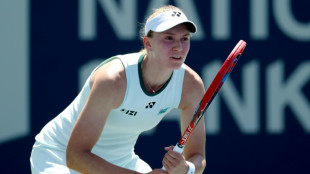
 Messi scores twice to set Leagues Cup record in Miami victory
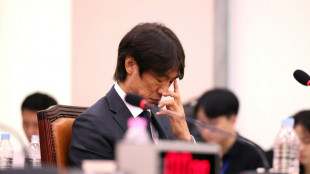
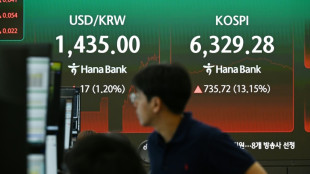 Asian stocks mostly down with tech firms back under pressure
 Back to the future as world champion Springboks host All Blacks
 India youth protests highlight mistrust in 'lapdog' media
 Pacific islands alarmed by Trump-backed push for deep-sea mining
 Erratic rains dictate menu at three-star Michelin restaurant in Brazil
 Zverev, Auger-Aliassime and Medvedev exit Montreal Masters

 Google-parent Alphabet shakes up AI division

 FIFA back Infantino, apologise for World Cup privatisation plan
 Auger-Aliassime out of Montreal ATP event with injury

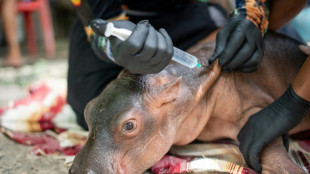 Colombian baby hippo of Escobar stock dies after rescue

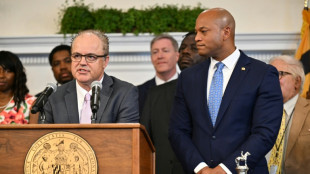 Preakness shifts 2027 dates to entice more Derby horses

 Guatemalan volcano eruption ends, locals return home

 WHO chief urges stronger Ebola response in DR Congo visit
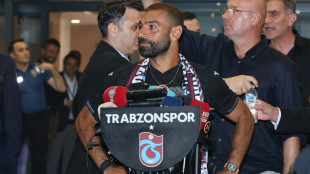
 Newcastle appoint Jaissle as new head coach after Howe exit
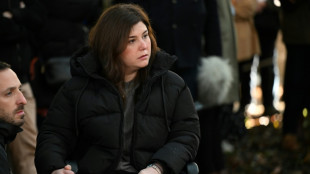
 Swiss ski star Lara Gut-Behrami calls time on 18-year career
 US indicts leaders of Mexico's CJNG cartel, ups reward money

 Noosha Aubel: Είναι σε θέση να αντιμετωπίσει τα προβλήματα του Πότσδαμ;

 نوشا أوبيل: هل هي على مستوى التحديات التي تواجهها بوتسدام؟

 Former England fly-half Burns retires from rugby union

Israel's election this week cemented the rise of the country's extreme right, with firebrand Itamar Ben-Gvir set to gain a powerful position in government.
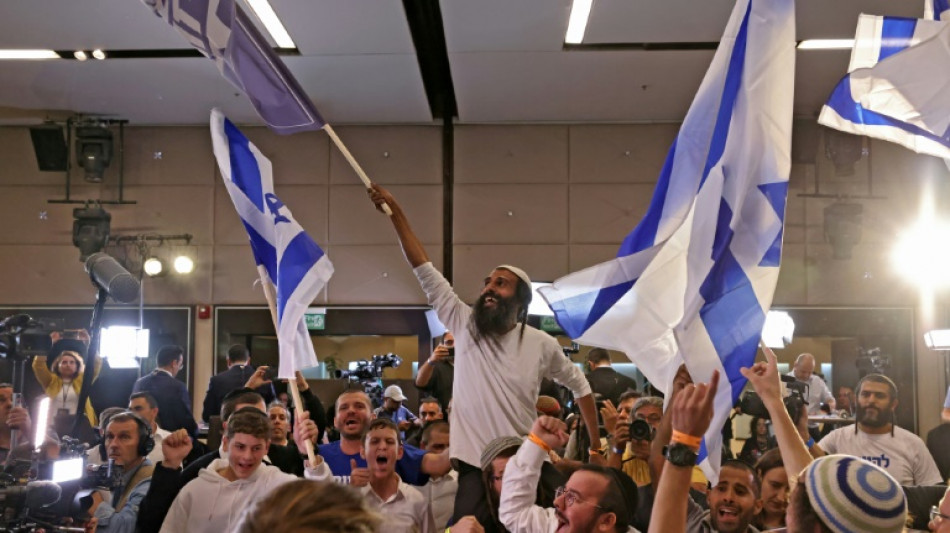
After leading an energetic campaign centred on security and Jewish identity, Ben-Gvir celebrated as his Religious Zionism alliance achieved third place -- and likely kingmaker status -- in the November 1 vote.
"It's time that we returned to be the masters of our house in our country," he told cheering supporters Wednesday, after exit polls showed the nationalist bloc more than doubling its parliamentary seats.
Religious Zionism is expected to play a central role in a new coalition led by Benjamin Netanyahu, Israel's veteran leader whose right-wing Likud won the most votes.
Securing the premiership for Netanyahu -- who faces corruption charges he denies -- is impossible without the backing of Ben-Gvir and his Religious Zionism ally, the more discreet Bezalel Smotrich.
According to the electoral commission in results issued late Thursday, the right-wing bloc won a clear majority of 64 seats -- made up of 32 seats for Netanyahu's Likud party, 18 for ultra-Orthodox parties and 14 for Religious Zionism.
This gives the extreme right unprecedented influence, securing Ben-Gvir's transformation from political pariah to powerbroker.
Such a shift was orchestrated by political puppeteer Netanyahu, according to researcher Yossi Klein Halevi.
"Netanyahu whitewashed the far right, which he needed for his coalition, and so many Israelis saw it as simply a tougher version of the Likud," said Halevi, from Jerusalem's Shalom Hartman Institute.
- Religious hardliners -
Ben-Gvir lives in a settlement of religious hardliners in Hebron, in the occupied West Bank, but has attempted to moderate his public appearance in the run-up to elections.
"When I said 20 years ago that I wanted to expel all the Arabs, I don't think that anymore. But I will not apologise," he told AFP ahead of the vote.
Before entering the political mainstream, Ben-Gvir hung a portrait in his living room of Baruch Goldstein, the Israeli who killed 29 Palestinian worshippers at a Hebron mosque in 1994.
The picture was taken down before he entered parliament last year, but Ben-Gvir still regularly shows up at flashpoint sites in the Israeli-Palestinian conflict.
As a policymaker, his sights are set on annexing the West Bank and ensuring Israel's security services use more force in countering Palestinian unrest.
The United Nations says recent months have been the deadliest period in years in the West Bank, with near daily army raids and an increase in clashes and attacks on Israeli forces.
Regardless of whether such steps receive support from Likud or their other coalition allies, ultra-Orthodox parties, Netanyahu will have to make some concessions to Religious Zionism to maintain their support.
"Netanyahu will have a hard time controlling his new partners," said Halevi.
"Because he will be beholden to them to pass legislation that would extricate him from his corruption trial," added the researcher, who authored a book about his own attraction to Jewish extremism as a teenager.
- 'More violence and humiliation' -
For Shlomo Fischer, a sociologist at Jerusalem's Jewish People Policy Institute, the poll results follow a long-term phenomenon.
"Israeli society is becoming more right-wing and in certain ways more traditional, more ethno-religious, nationalist," he said.
The electoral success of Religious Zionism has raised fears among political opponents and Arab-Israelis, who for years have been at the receiving end of Ben-Gvir's vitriol.
Jaafar Farah, head of the Mossawa Center that campaigns for the rights of Arab-Israelis, said "people are afraid of the measures they are going to put in place".
"There is anger here because of the fragmentation of Arab parties," he added, which represent 20 percent of the population.
Four Arab-led parties united in 2020 but have since split into three, with one failing to make it into parliament in the latest election.
Mansour Abbas, whose Raam party joined the outgoing coalition, blamed inaction for the emergence of the right-wing government.
"We're bringing him (Netanyahu) back to power, we're offering him this gift, because we're being passive," he said Wednesday.
Raam will sit firmly in opposition along with the Arab-led Hadash-Taal alliance, whose activist Feda Tabouni warned Israel was becoming "a more racist, fascist state".
"The expected scenario is that there will be more laws issued, more violence and humiliation of people in the West Bank and the occupied (Palestinian) territories," she told AFP.
J.Bergmann--BTB