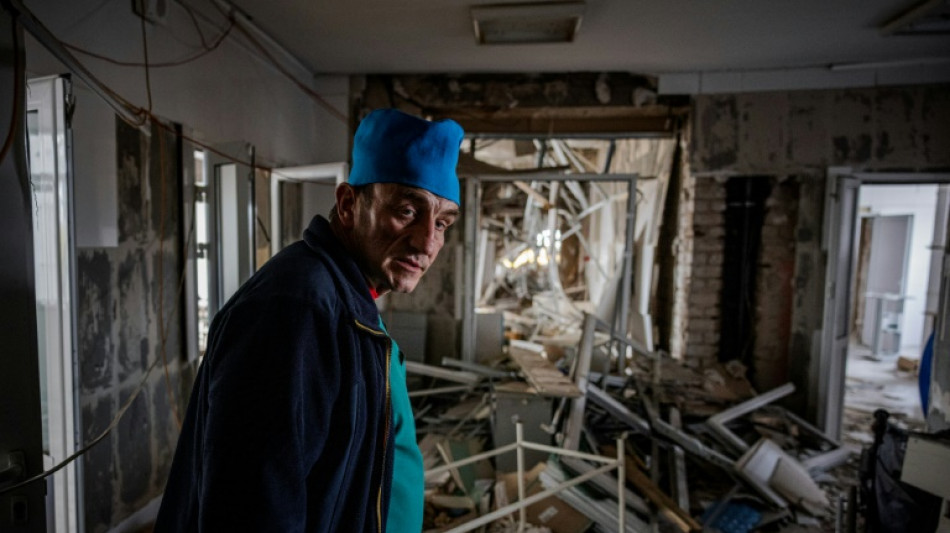
East Ukraine hospital that stayed open despite war, occupation / Photo: © AFP

 Stocks diverge with earnings, tech in focus
 England recall batsman Lawrence for Pakistan series
 Siemens shares plunge on disappointing guidance raise
 New Australia coach Kiss gives Japan starts to Ross, Amatosero
 'Stretch our money': Romanians face highest EU inflation
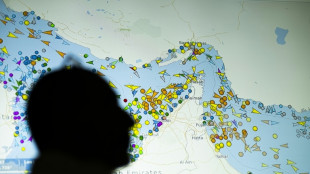 Iran says close to Hormuz plan with Oman, but reopening depends on US

 Messi scores twice to set Leagues Cup record in Miami victory
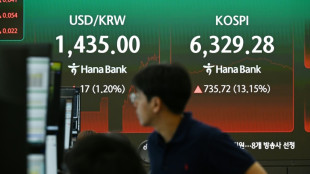 Asian stocks mostly down with tech firms back under pressure
 Back to the future as world champion Springboks host All Blacks

 India youth protests highlight mistrust in 'lapdog' media
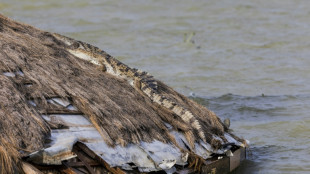
 Pacific islands alarmed by Trump-backed push for deep-sea mining
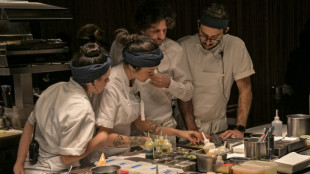 Erratic rains dictate menu at three-star Michelin restaurant in Brazil
 Zverev, Auger-Aliassime and Medvedev exit Montreal Masters

 Google-parent Alphabet shakes up AI division

 FIFA back Infantino, apologise for World Cup privatisation plan

 Auger-Aliassime out of Montreal ATP event with injury

 Colombian baby hippo of Escobar stock dies after rescue

 Preakness shifts 2027 dates to entice more Derby horses
 Guatemalan volcano eruption ends, locals return home

 WHO chief urges stronger Ebola response in DR Congo visit
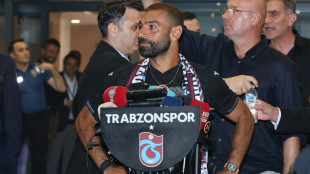
 Newcastle appoint Jaissle as new head coach after Howe exit
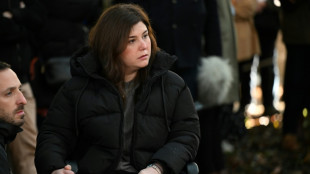
 Swiss ski star Lara Gut-Behrami calls time on 18-year career
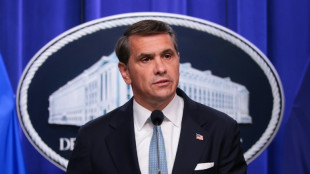 US indicts leaders of Mexico's CJNG cartel, ups reward money

 Noosha Aubel: Είναι σε θέση να αντιμετωπίσει τα προβλήματα του Πότσδαμ;
 Noosha Aubel: Zvládne problémy Postupimi?
In six months of Russian occupation and eight months of fighting, Izyum hospital in eastern Ukraine never stopped working, operating on wounded civilians in its basement while awaiting liberation.
This small but strategic town in the Kharkiv region was seized by Moscow in March and fully occupied a month later.
Its recapture by Ukrainian troops on September 11 was a strategic victory for Kyiv, although its pre-war population of some 46,000 residents has dwindled to around 8,000 or 9,000.
Since then, the hospital has managed to regain some semblance of normality after being connected to a generator and workers gradually replaced shattered windows.
In a heated ground-floor corridor that smells of bleach, a patient wanders by in his pyjamas as a cleaner mops the floor and a secretary busies herself with admission files.
"We have about 200 patients today, compared with 50 in June," says Yuri Kuznetsov, a 52-year-old surgeon who runs the hospital.
"This was where our operating theatre and intensive care unit used to be," he says, pointing to the gaping hole and destruction left by a missile attack in March.
- 'Hardest thing was staying alive' -
His face lined with fatigue, the doctor blames his exhaustion on his night shift, not the six months he spent every waking hour tending the wounded in the dirt and rubble, under the noses of the occupying Russian troops who set up camp next door.
"The most difficult time was at the start (of the occupation) with so much uncertainty about what they were going to do to us," he recalls.
Kuznetsov said there were "some struggles at the beginning" but the Russians let him continue treating Ukrainian patients, helped by a couple of nurses who stayed behind.
The Russian troops set up their own field hospital in a neighbouring basement.
"They were right there, about 20 metres (yards) from my office," says Kuznetsov, who spoke with them every day but says they never asked him to operate on wounded Russian soldiers.
"Doing our job wasn't the hardest thing, the hardest thing was just staying alive" he recalls of those dark days.
Several weeks after the town of Izyum was recaptured, Ukraine said it discovered a mass grave containing at least 450 bodies, most bearing signs of violent death, in a nearby forest.
Thirty of them showed "signs of torture", regional officials said.
- Stretchers as operating tables -
Since the war began, the hospital has lost two of its staff: a forensic scientist who was shot dead and a doctor who died under the rubble of his own home.
With the town ravaged by constant bombardment, the hospital set up an emergency room in the basement where stained stretchers served as operating tables among piles of cardboard boxes and dirt.
"We lost patients because we didn't have the right equipment and medication but by the grace of God, we were able to limit the number of deaths," he said.
One of those saved was a man who sustained a gunshot wound to the abdomen.
"Several weeks ago, my office door opened, and the man came in and said: 'Doctor, do you remember me? I'm alive!'," Kuznetsov says.
"We have all had moments when we thought of fleeing. We've all had meltdowns and periods of depression," he admits.
"But it's moments like that and the solidarity of my colleagues that have kept me here," he smiles, eager to get home and finally put his head down for some rest.
C.Kovalenko--BTB