How dubious 'local news' sites are feeding US misinformation / Photo: © GETTY IMAGES NORTH AMERICA/AFP/File

 Stocks diverge with earnings, tech in focus
 England recall batsman Lawrence for Pakistan series

 Siemens shares plunge on disappointing guidance raise
 New Australia coach Kiss gives Japan starts to Ross, Amatosero

 'Stretch our money': Romanians face highest EU inflation

 Iran says close to Hormuz plan with Oman, but reopening depends on US

 Messi scores twice to set Leagues Cup record in Miami victory
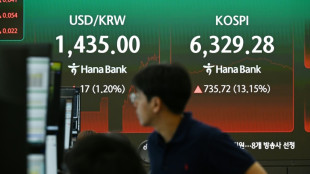 Asian stocks mostly down with tech firms back under pressure

 Back to the future as world champion Springboks host All Blacks

 India youth protests highlight mistrust in 'lapdog' media

 Pacific islands alarmed by Trump-backed push for deep-sea mining

 Erratic rains dictate menu at three-star Michelin restaurant in Brazil
 Zverev, Auger-Aliassime and Medvedev exit Montreal Masters

 Google-parent Alphabet shakes up AI division

 FIFA back Infantino, apologise for World Cup privatisation plan

 Auger-Aliassime out of Montreal ATP event with injury

 Colombian baby hippo of Escobar stock dies after rescue

 Preakness shifts 2027 dates to entice more Derby horses

 Guatemalan volcano eruption ends, locals return home

 WHO chief urges stronger Ebola response in DR Congo visit

 Newcastle appoint Jaissle as new head coach after Howe exit
 Swiss ski star Lara Gut-Behrami calls time on 18-year career

 US indicts leaders of Mexico's CJNG cartel, ups reward money

 Noosha Aubel: Είναι σε θέση να αντιμετωπίσει τα προβλήματα του Πότσδαμ;
 Noosha Aubel: Zvládne problémy Postupimi?

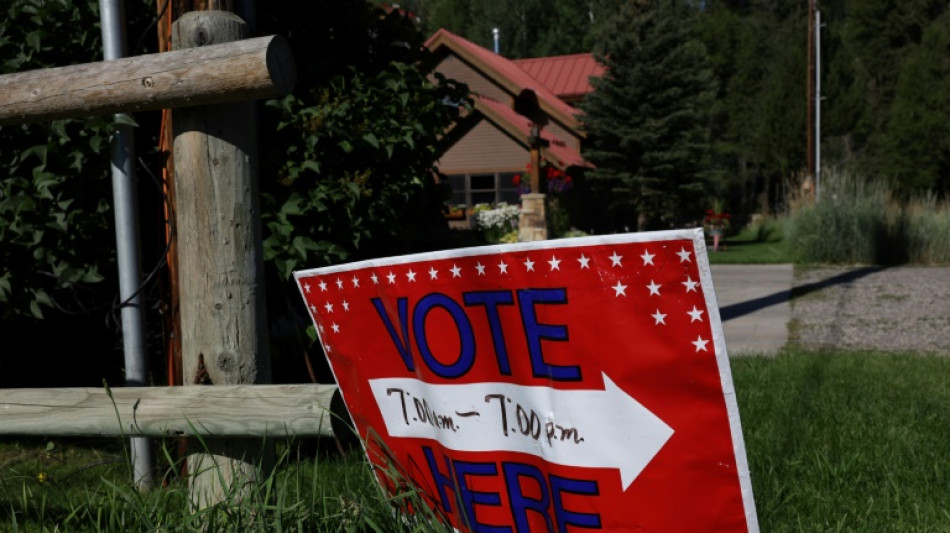
When Elon Musk amplified a conspiracy theory about the hammer attack on US House Speaker Nancy Pelosi's husband, he joined the growing ranks of Americans routinely sharing misinformation published by dubious websites presenting themselves as local news outlets.
The new Twitter owner eventually deleted his tweet linking to the false article by the Santa Monica Observer, but millions had already digested and re-circulated a smear that went viral on Facebook and other social networks.
Many US voters seeking and sharing news about midterm elections may find themselves in both a desert and an ocean, only to be left in a fog.
"Fewer journalists means more opportunities for conspiracy theories without any check at all," said Daniel Kreiss, a University of North Carolina (UNC) political communication professor.
Hundreds of newspapers have shuttered since the start of the Covid-19 pandemic, but there are plenty of imitators popping up in their stead.
The Santa Monica Observer received a trust score of just 12.5 out of 100 on media monitor NewsGuard's rating scale last year, being described as: "Another example of a publisher producing unreliable content under the guise of local news."
The site, according to NewsGuard, has published numerous conspiracy theories and false and misleading claims about politics, vaccines and the pandemic.
A Northwestern University report in October revealed the huge newspaper dropoff. It also showed more than a fifth of Americans live in "news deserts" or in communities at risk of losing local outlets.
Most of the sites filling the gaps make little or no attempt to show balance or be transparent. NewsGuard flagged many of them as failing to meet "basic journalistic standards."
"People say there is no shortage of information -- there's news on my phone, there's news anywhere," said Steve Waldman, president of Report for America, a non-profit group that deploys journalists to news organizations nationwide.
But Waldman and other experts say the relative deficit of credible reporting -- about one in four US newspapers has disappeared since 2005, and another third are likely to be gone by 2025 -- makes it harder for voters to separate fact from fiction.
"People are repeating and sharing the most outrageous and nonsensical information imaginable," said Les High, former publisher of the Whiteville News Reporter in eastern North Carolina and founder of a nonprofit news site called the Border Belt Independent.
"It's awfully hard to have a democracy when nobody can discern the truth."
- Masquerading as neutral -
More than 1,200 outlets that Kreiss of UNC described as "thinly veiled actors posing as neutral news websites" have cropped up in the past few years, according to researchers at Columbia University's Tow Center for Digital Journalism.
Priyanjana Bengani, a senior research fellow at the center, said most of the sites are not transparent.
"They don't always say they are funded by advocacy groups," she noted.
Both sides of the political divide are involved, issuing news articles that are little more than campaign pitches for local Democrat and Republican candidates.
The sites get readers by delivering content in paid ads on social media platforms, which allow targeting of specific groups by geography or demographics. This can mislead readers into thinking the articles are "organic" content from established news outlets, researchers say.
NewsGuard said in a report in October that millions of dollars are being poured into such ads for the midterms, notably on Facebook and Instagram.
"These pseudo-newsrooms have taken advantage of Meta's low costs, hyper-targeting tools and porous policies related to political ad spending to target voters in battleground states while underplaying or entirely hiding their partisan-driven agendas and financing," NewsGuard said, referring to the owner of Facebook and Instagram.
- Filtering misinformation -
Recent research by the nonprofit Reboot Foundation, which focuses on media literacy, found just 28 percent saying they felt very confident in their ability to filter election misinformation, a finding that suggests US voters are primed to fall for misleading or one-sided political narratives.
Roughly half get at least some of their news from social media sites, according to a 2021 Pew Research Center report. An estimated 10 percent get news from TikTok, according to a separate Pew report, and some six percent get news from "alternative" platforms such BitChute, Parler and Truth Social.
Penelope Abernathy, a lead researcher for Northwestern's news deserts study, said social media fundamentally changes the nature of the news people consume, fueling partisanship.
"What appears on your feed may be posted by a friend or determined by algorithm, and this tends to favor (content) designed to inflame passions," she said.
R.Adler--BTB