Denmark's centre tipped as kingmaker in close election / Photo: © Ritzau Scanpix/AFP

 Stocks diverge with earnings, tech in focus
 England recall batsman Lawrence for Pakistan series
 Siemens shares plunge on disappointing guidance raise
 New Australia coach Kiss gives Japan starts to Ross, Amatosero

 'Stretch our money': Romanians face highest EU inflation
 Iran says close to Hormuz plan with Oman, but reopening depends on US
 Messi scores twice to set Leagues Cup record in Miami victory
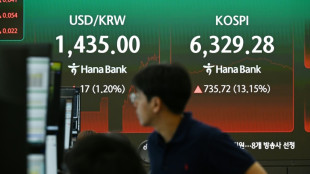 Asian stocks mostly down with tech firms back under pressure
 Back to the future as world champion Springboks host All Blacks
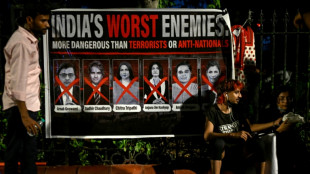 India youth protests highlight mistrust in 'lapdog' media
 Pacific islands alarmed by Trump-backed push for deep-sea mining
 Erratic rains dictate menu at three-star Michelin restaurant in Brazil
 Zverev, Auger-Aliassime and Medvedev exit Montreal Masters
 Google-parent Alphabet shakes up AI division

 FIFA back Infantino, apologise for World Cup privatisation plan
 Auger-Aliassime out of Montreal ATP event with injury

 Colombian baby hippo of Escobar stock dies after rescue

 Preakness shifts 2027 dates to entice more Derby horses

 Guatemalan volcano eruption ends, locals return home

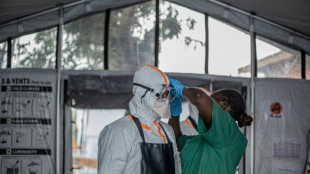 WHO chief urges stronger Ebola response in DR Congo visit

 Newcastle appoint Jaissle as new head coach after Howe exit
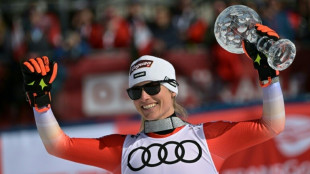 Swiss ski star Lara Gut-Behrami calls time on 18-year career
 US indicts leaders of Mexico's CJNG cartel, ups reward money
 Noosha Aubel: Είναι σε θέση να αντιμετωπίσει τα προβλήματα του Πότσδαμ;
 Noosha Aubel: Zvládne problémy Postupimi?
Danish Prime Minister Mette Frederiksen's left-wing bloc looked set to lose its majority in Tuesday's general election that saw the new centrist Moderate Party poised to become kingmaker, projections based on partial results showed.
Estimates by broadcasters DR and TV2 with more than 70 percent of votes counted gave the left-wing "red" bloc, led by Frederiksen's Social Democrats, between 84 and 85 of the 179 seats in parliament.
Meanwhile the "blues" -- an informal liberal and conservative alliance supported by three populist parties -- were forecast to take between 74 and 75 seats.
Of four seats selected by overseas autonomous territories of Greenland, where voting was still ongoing as it is four hours behind the mainland, and the Faroe Islands, three are expected to go to the red bloc and one to the blues.
If neither side wins a majority, each would need the backing of the Moderates -- a party founded only earlier this year by two-time prime minister Lars Lokke Rasmussen and which was projected to take 15 or 16 seats -- to form a government.
Polling at barely two percent of voter support two months ago, the Moderates were seen winning more than eight percent in the election, but Rasmussen has insisted he wants to be "the bridge" between the left and right.
"It's not red or blue, it's about common sense" Lokke Rasmussen told cheering supporters in a speech Tuesday evening.
The veteran politician who served as prime minister from 2009-2011 and 2015-2019, noted with pride that the Moderates did not exist five months earlier.
He said he was looking for a broad government, but did not want to commit to any prime minister candidate.
"You can't answer that (question) tonight," he said.
His deputy, Jakob Engel-Schmidt, earlier in the evening called for the creation of a broad government spanning left to right.
"We're hoping for a government with the Liberals (Lokke Rasmussen's former party), the Social Democrats and the Moderates," Engel-Schmidt told DR.
Both the left and the right have made repeated appeals to Lokke Rasmussen, who campaigned on reforming the healthcare system.
Frederiksen has floated the idea of a coalition left-right government, led by herself, and has said she is willing to discuss healthcare reforms.
Liberal Party leader Jakob Ellemann-Jensen, her main challenger on the right, has called for Lokke Rasmussen to align with his former party colleagues.
- 'Mink crisis' -
The election was triggered by the "mink crisis" that has embroiled Denmark since the government decided in November 2020 to cull the country's roughly 15 million minks over fears of a mutated strain of the novel coronavirus.
The decision turned out to be illegal, however, and a party propping up Frederiksen's minority Social Democrats government threatened to topple it unless she called elections to regain the confidence of voters.
The election campaign was dominated by climate concerns, inflation and healthcare.
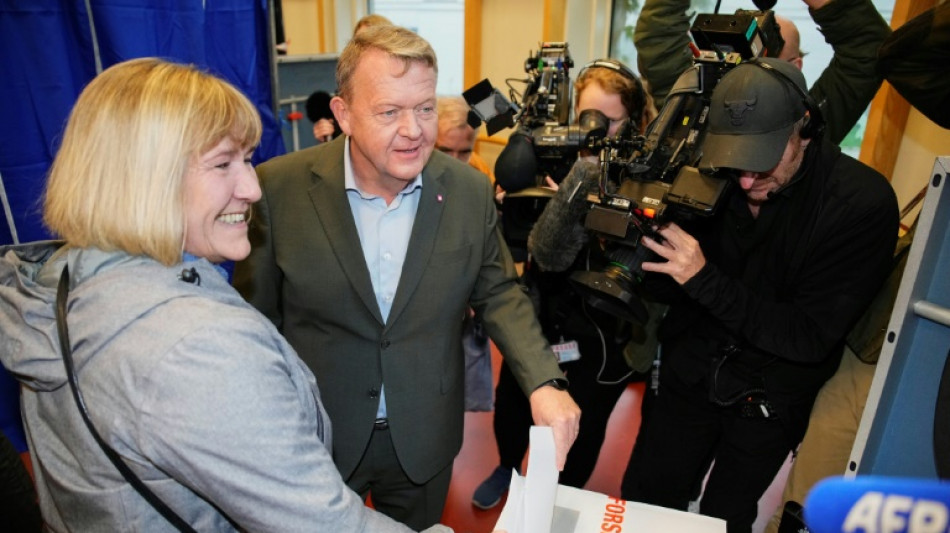
"Climate issues and psychiatry (mental health issues), but mostly climate, are the reasons behind my vote," 46-year-old Lone Kiitgaard told AFP after casting her ballot in central Copenhagen on Tuesday, without disclosing who she voted for.
"This election could be really close and there is a risk that there will be a blue government after today," Frederiksen admitted after she voted at a badminton centre-turned-polling station northwest of Copenhagen.
Nikolaj Sommer, editor of Danish business daily Borsen, told AFP he made his choice after studying the parties' economic programmes.
"That we are not actually stimulating inflation in Denmark, I think that's a very important thing for me. And of course the Danish welfare system and how we're going to run it in the long run," the 47-year-old journalist said.
Protective of the prosperity and social cohesion of the Nordic welfare state, Denmark championed ever-stricter migration policies for over 20 years.
- Climate concerns -
Advocating a "zero refugee" policy, the Social Democrats government is working on setting up a centre to house asylum seekers in Rwanda while their applications are processed.
As most parties back the restrictive policies, the issue is rarely up for debate.
Climate, on the other hand, is of great concern to Danes.
On Sunday, some 50,000 people, including the prime minister, gathered for the "People's Climate March" in Copenhagen.
Voter turnout is traditionally high in Denmark. In the 2019 election, 84.6 percent of some 4.2 million eligible voters cast a ballot.
P.Anderson--BTB