Danes go to the polls in thriller election / Photo: © AFP

 Pogacar teammate Del Toro gets new UAE deal after Tour podium
 Stocks tread water with earnings, tech in focus

 Forex Expo Dubai Announces Opportunity to Win Up to 150 Grams of Gold This September 2026

 Forlan named new Uruguay head coach

 UEFA chief Ceferin: 'Underdog' leader taking fight to FIFA's Infantino

 Salah completes move to Turkey's Trabzonspor
 UK clears Paramount's takeover of Warner Bros
 North Korea fires ballistic missile: South Korea military
 'Don't have to hide': Thai IDs, legal work give hope to Myanmar refugees
 Stocks mixed with tech firms back under pressure

 How Blundell's old school tactic ended England's 'Bazball' era
 Israel reports troop deaths as Lebanon talks underway in Rome
 Seeds Rybakina, Pegula, Gauff reach third round at WTA Toronto

 Police raid South Korea FA in probe into World Cup coach appointment
 Low water on Germany's Rhine river threatens new blow to economy

 Ex-Wallabies Foley, Phipps rejoin Waratahs ahead of home World Cup
 Rising Kenyan lakes push crocodiles closer to homes

 Istanbul cymbals: From Ottoman war tool to pulse of global music

 Myanmar ex-junta chief on first Thailand trip as civilian leader

 Environmental disaster looms as tanker leaks off Oman

 Embattled Infantino sees minnows Malawi reach WAFCON quarter-finals

 Seeds Rybakina, Pegula and Gauff advance at WTA Toronto event
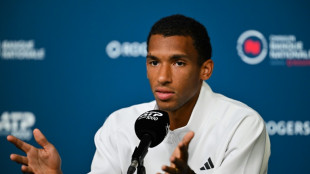
 Zverev, Auger-Aliassime exit star-short Montreal Masters
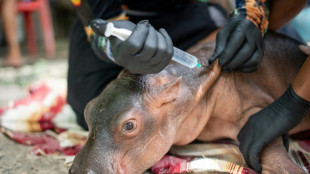
 Embattled FIFA chief Infantino in emergency talks in Morocco
 Castaway SpaceX rocket stage crashed into Moon, scientists say

Like an episode of political drama "Borgen," Denmark's Prime Minister Mette Frederiksen is fighting to cling to power on Tuesday in a legislative election that could well crown an outsider.
In a political landscape split between 14 parties, polls suggest that neither of the two main blocs can garner a 90-seat majority in the 179-seat Folketing, the Danish parliament.
The left-wing "red bloc," led by Frederiksen's Social Democrats are polling at 49.1 percent, representing 85 seats, compared to 40.9 percent or 72 seats for the "blue" bloc of right-wing parties.
"It's about winning the middle, because the ones who get the middle get the Prime Minister's seat," Kasper Hansen, a politics professor at the University of Copenhagen.
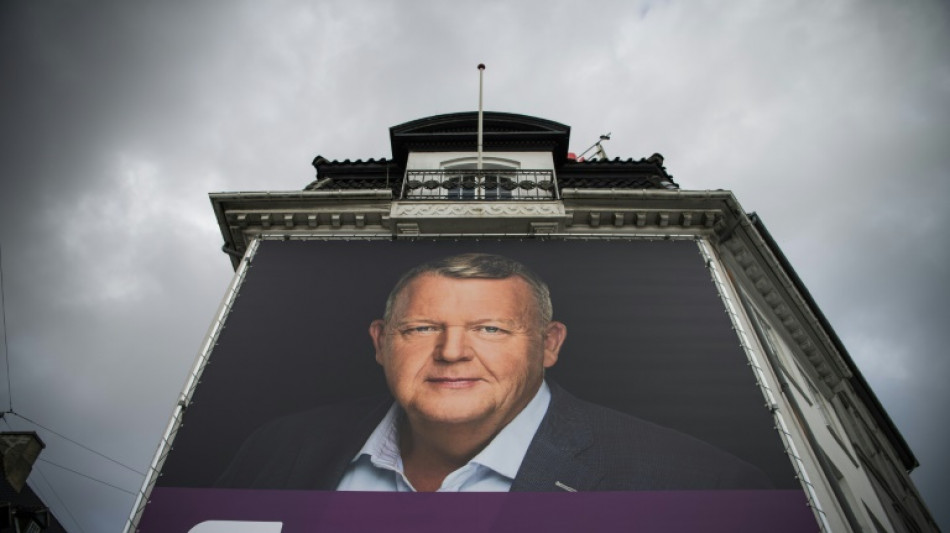
The new party occupying the political centre is the Moderates, founded by former Liberal Prime Minister Lars Lokke Rasmussen.
The polls indicate his party will win 10 percent of the votes or 18 seats, a fivefold increase since September -- much to the surprise of political analysts.
And Rasmussen, who boasts solid political experience, has refused to pledge support for either bloc ahead of the election.
Party colleague Jakob Engel-Schmidt said they "are ready to work with the candidate who will facilitate the broadest cooperation around the centre to implement necessary reforms".
And what the Moderates want to reform is healthcare and pensions.
- Tough negotiations -
In their efforts to attract the often less loyal centrist electorate, Frederiksen's Social Democrats have announced that they want to govern across the traditional political dividing lines. They too have floated the Moderates' idea of a coalition government gathered in the centre.
"This goes directly opposite to what she's been saying before, and I think that's because she senses that she might lose power otherwise," Martin Agerup, director of the liberal think tank CEPOS, told AFP.
Led by two other prime minister candidates -- conservative Soren Pape Poulsen and liberal Jakob Ellemann-Jensen, the right wing, have not extended the same hand.
Without a clear majority, there may have to be long negotiations before a government is formed after the election, which could ultimately favour Lokke Rasmussen.
"He's a ferocious guy in negotiations," Agerup said.
"He can basically operate until somebody will get scared enough to point to him and say: 'Look, yes, you could be Prime Minister'".
It's a situation almost out of the hit political drama series "Borgen", named after the seat of legislative and executive power in Denmark, in which the leader of an imaginary centrist party subtly manoeuvres her way to becoming prime minister.
- Split populist right -
But outside the fiction, the Social Democrats, the largest party in the country's political force, are trying to "play the card that they are the right party during uncertain times," according to Rune Stubager, a professor of political science at Aarhus University.
Their handling of the Covid-19 pandemic was largely hailed, despite a stumble when they ordered an emergency cull country's huge mink herd over fears of a mutated strand of the novel coronavirus. That turned out to be illegal.
With an economy in turmoil they have since introduced measures to help Danes cope with soaring prices.
They are proposing a carbon tax on agriculture and a pay rise in the public sector, while their allies have campaigned mainly on protecting biodiversity and support for children and the vulnerable.
The current government is negotiating with Rwanda to set up a centre to house asylum seekers, while their requests are being investigated.
Across the political landscape there is a strong consensus on maintaining a restrictive migration policy, meaning the issue is rarely up for debate.
"There's a clear consensus in Parliament for strict immigration policies," Hansen said.
The populist anti-immigration right is expected to win more seats this election, but it is split into three different parties who together receive 15.5 percent votes in polls.
"We have to protect our society too and that means we cannot just open our borders, "Bjarke Rubow Jensen a 35-year-old anthropologist and Social Democrat supporter, summed up the Danish mindset to AFP.
J.Bergmann--BTB