US sees 'acute threat' from Russia, but says China is main challenge / Photo: © AFP/File

 Oil price shoots up as stocks tread water

 British Grand Prix stays on MotoGP calendar until 2028

 Britain's EasyJet flies into US hands as takeover confirmed
 Real Madrid sign Ivory Coast winger Yan Diomande

 How online disinformation fuelled Ceuta migrant surge
 Forex Expo Dubai Announces Opportunity to Win Up to 150 Grams of Gold This September 2026

 Suspected Ebola death on boat heading for DR Congo capital

 England selector North not 'hung up' on Stokes absence

 UK Anti-Doping confirm former world champ Parker's ban lifted

 French winemakers dread 'smoky taste' after wildfires

 Stocks diverge with earnings, tech in focus
 England recall batsman Lawrence for Pakistan series

 Siemens shares plunge on disappointing guidance raise
 New Australia coach Kiss gives Japan starts to Ross, Amatosero

 'Stretch our money': Romanians face highest EU inflation

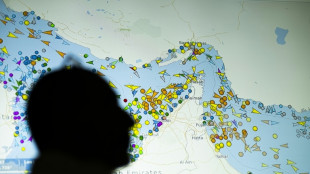 Iran says close to Hormuz plan with Oman, but reopening depends on US

 Messi scores twice to set Leagues Cup record in Miami victory
 Asian stocks mostly down with tech firms back under pressure
 Back to the future as world champion Springboks host All Blacks

 India youth protests highlight mistrust in 'lapdog' media

 Pacific islands alarmed by Trump-backed push for deep-sea mining

 Erratic rains dictate menu at three-star Michelin restaurant in Brazil
 Zverev, Auger-Aliassime and Medvedev exit Montreal Masters
 Google-parent Alphabet shakes up AI division

 FIFA back Infantino, apologise for World Cup privatisation plan

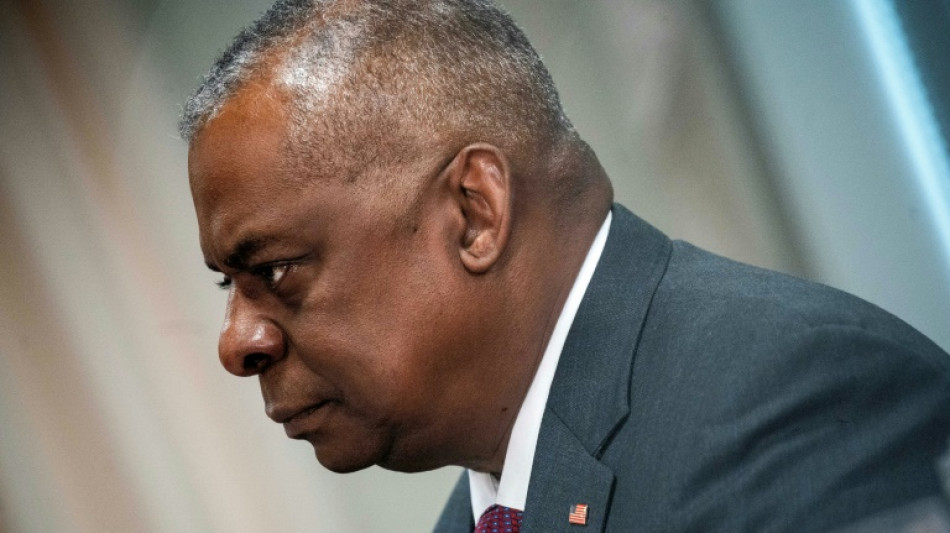
Russia's invasion of Ukraine highlights the "acute threat" posed by Moscow, but China is the most consequential challenge for the United States, the Pentagon said Thursday.
The dangers are both conventional -- Moscow's aggression toward its neighbors and Beijing's efforts to gain control of Taiwan -- and nuclear, with Russia possessing an extensive arsenal and China's stocks of atomic weapons growing fast.
US Defense Secretary Lloyd Austin highlighted the different challenges posed by China and Russia as he unveiled the unclassified versions of several military strategy documents.
China "is the only competitor out there with both the intent to reshape the international order, and increasingly the power to do so," Austin said.
"Unlike China, Russia can't systemically challenge the United States over the long term. But Russian aggression does pose an immediate and sharp threat."
The National Defense Strategy, which was released Thursday, likewise places the primary emphasis on China.
Beijing is seeking to "refashion the Indo-Pacific region and the international system to suit its interests and authoritarian preferences," it says, describing this dynamic as "the most comprehensive and serious challenge to US national security."
The strategy says Chinese rhetoric about and "coercive activity" toward self-ruled Taiwan -- which Beijing has vowed to take control of, by force if necessary -- is a destabilizing factor that risks miscalculation and threatens peace in the area.
As for Russia, it says the "acute threat" posed by Moscow has been most recently demonstrated by Moscow's February invasion of Ukraine.
- 'Emerging threat' of climate change -
"The Department (of Defense) will support robust deterrence of Russian aggression against vital US national interests, including our treaty Allies," the strategy says.
In a departure from the previous National Defense Strategy, which was issued during Donald Trump's presidency, the newly released document classifies climate change as an "emerging threat."
The US "will integrate climate change into threat assessments," as well as increasing the "resiliency of military installations" and taking "climate extremes" into account in decisions on training and equipping the armed forces, the strategy says.
In an updated report on US nuclear posture released in parallel with the National Defense Strategy, the Pentagon defines the role of its nuclear arsenal as deterring both nuclear and non-nuclear attacks that have strategic consequences.
"This includes nuclear employment of any scale, and it includes high-consequence attacks of a strategic nature that use non-nuclear means," a senior defense official told journalists.
The Nuclear Posture Review emphasizes that China's nuclear arsenal is growing, but says Russia's is currently more extensive.
- Warning to North Korea -
"By the 2030s the United States will, for the first time in its history, face two major nuclear powers as strategic competitors and potential adversaries," the document says.
It emphasizes the importance of modernizing US strategic assets, while scrapping a submarine-launched nuclear cruise missile program and saying a type of obsolete nuclear bomb will be retired.
The document also contains a stark warning for Kim Jong Un against employing North Korea's growing nuclear arsenal.
"Any nuclear attack by North Korea against the United States or its allies and partners is unacceptable and will result in the end of that regime. There is no scenario in which the Kim regime could employ nuclear weapons and survive," it says.
The Missile Defense Review -- also released Thursday -- likewise points to growing threats from China and Russia.
Beijing is closing the gap with Washington when it comes to ballistic and hypersonic missile technology, while Moscow is modernizing its intercontinental-range missile systems and developing advanced precision-strike missiles.
The document says drones -- which Russia has used to strike against Ukrainian cities and energy infrastructure -- are also a threat that is likely to grow.
Russian President Vladimir Putin meanwhile offered a distinctly different take on the international strategic environment Thursday, saying Moscow is trying to "defend its right to exist" in the face of Western efforts to "destroy" his country.
"Ahead is probably the most dangerous, unpredictable and at the same time important decade since the end of the Second World War," he said.
J.Fankhauser--BTB