Afraid of Kim's nukes? Build a bunker, South Korean professor says / Photo: © AFP

 Oil price shoots up as stocks tread water

 British Grand Prix stays on MotoGP calendar until 2028

 Britain's EasyJet flies into US hands as takeover confirmed
 Real Madrid sign Ivory Coast winger Yan Diomande

 How online disinformation fuelled Ceuta migrant surge
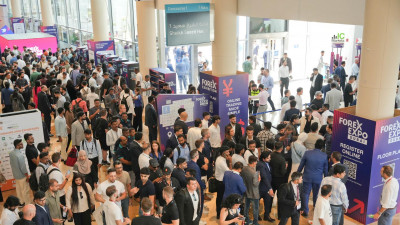 Forex Expo Dubai Announces Opportunity to Win Up to 150 Grams of Gold This September 2026
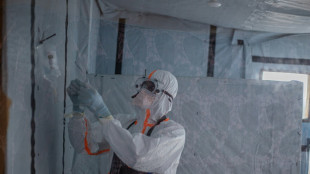 Suspected Ebola death on boat heading for DR Congo capital

 England selector North not 'hung up' on Stokes absence

 UK Anti-Doping confirm former world champ Parker's ban lifted

 French winemakers dread 'smoky taste' after wildfires
 Stocks diverge with earnings, tech in focus
 England recall batsman Lawrence for Pakistan series
 Siemens shares plunge on disappointing guidance raise
 New Australia coach Kiss gives Japan starts to Ross, Amatosero
 'Stretch our money': Romanians face highest EU inflation
 Iran says close to Hormuz plan with Oman, but reopening depends on US

 Messi scores twice to set Leagues Cup record in Miami victory
 Asian stocks mostly down with tech firms back under pressure
 Back to the future as world champion Springboks host All Blacks

 India youth protests highlight mistrust in 'lapdog' media
 Pacific islands alarmed by Trump-backed push for deep-sea mining
 Erratic rains dictate menu at three-star Michelin restaurant in Brazil
 Zverev, Auger-Aliassime and Medvedev exit Montreal Masters
 Google-parent Alphabet shakes up AI division
 FIFA back Infantino, apologise for World Cup privatisation plan

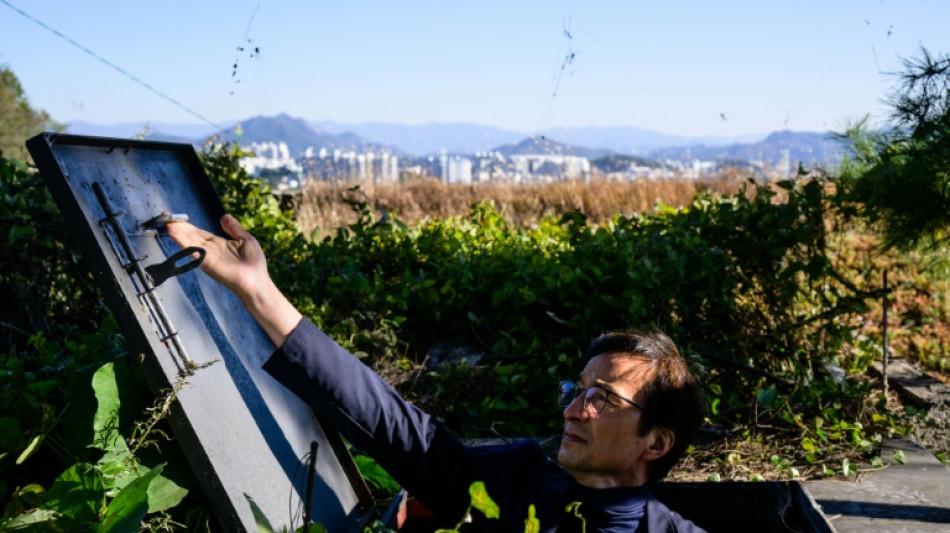
If North Korea unleashes a nuclear attack on the South, architecture professor Lee Tae-goo has a plan: he'll retreat to his purpose-built bunker and stay underground for at least two weeks to avoid radiation poisoning.
With thick concrete walls, steel-reinforced doors and an air purification system, Lee says his shelter, buried under a metre (three feet) of earth, could keep him safe from a nuclear disaster and withstand a direct hit from a conventional missile.
Built on his property in Jecheon city about 75 miles (120 kilometres) southeast of the capital Seoul, the government-funded bunker is part of a campaign by Lee to get South Koreans to take preparations for a nuclear fallout more seriously.
"Just 100 kilometres away from here we have North Korea, from which biological or nuclear missiles could fly," Lee told AFP.
He said he was also extremely concerned about a Fukushima-style meltdown at one of South Korea's ageing nuclear reactors.
"South Koreans have not been required to build personal shelters for ages. There's a lack of public shelters and in many cases they're far away," he added.
Since the Korean War ended in 1953 with an armistice rather than a peace treaty, Seoul has remained technically at war with Pyongyang, and both sides routinely accuse each other of "provocations" that could tip them back into open conflict.
Pyongyang conducted its first nuclear test in 2006, and leader Kim Jong Un has recently ramped up work on weapons programmes banned by the UN, including staging drills it claimed simulated showering South Korea with tactical nukes.
Although Seoul's military maintains what it calls an "utmost readiness" for an attack, Lee said most civilians have forgotten the war and are not prepared.
- 'First-class shelters' -
South Korea has a network of more than 17,000 bomb shelters nationwide, according to interior ministry data, with over 3,000 of them in Seoul.
The city's subway stations double as public air raid shelters but they are not nuclear-safe.
In the 1970s, the country had a law requiring buildings over a certain size in major cities to have a basement, which would serve as a bunker in war.
But in Seoul, due to soaring property prices, most private buildings have converted those basements into parking space or the dank subterranean flats made famous by Oscar-winning movie "Parasite".
This has Lee, a mild-mannered professor at Semyung University, concerned.
South Korea has a "first-class shelter system for the military", he said, but "the civilian side lags far behind".
Lee's "model" bunker cost around 70 million won ($48,000) -- excluding labour costs -- to construct, which was covered by a ministry of education research grant that he applied for and won.
He said he hopes it will inspire others to follow suit, adding that he has had many enquiries about his blueprint, including from officials from South Korea's Air Force, who inspected his bunker earlier this year.
For urban high-rise apartment dwellers, Lee recommends retro-fitting basement parking lots to double as bunkers, and says the government should nuclear-proof subway tunnels.
- Secret -
Although many in South Korea have grown numb to the constant threats from Pyongyang, there are signs that more citizens like Lee are taking matters into their own hands.
One local company, Chumdan Bunker System, started selling nuclear-proof bunkers at a Seoul showroom in 2017 -- the year that Kim conducted his last nuclear test.
Chumdan's website advertises "an underground bunker capable of withstanding nuclear explosions, radiation, chemical agents".
But the company told AFP that while they were seeing growing interest in their products, this had not yet translated into sales growth.
"There has been an increase in online traffic to our website but the number of actual orders remain the same," an Chamdan employee told AFP.
Lee said people who construct nuclear-proof bunkers prefer to keep them secret, fearing they will be inundated with requests from friends, family and neighbours for shelter during an emergency.
"Even when I built this bunker, all these people were telling me they'd come if the country comes under attack. But this place can only fit 12 people," he said.
S.Keller--BTB