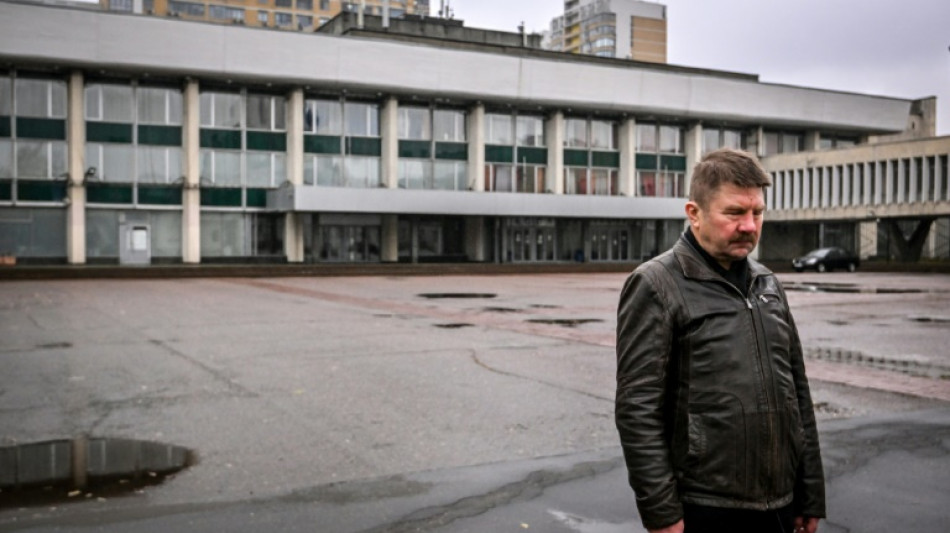
Moscow theatre siege survivors haunted two decades on / Photo: © AFP

 PSG sign France midfielder Akliouche from Monaco
 CONMEBOL 'expresses concern regarding repeated unilateral actions' by FIFA
 Warren coy over whether Fury-Joshua will be in UK or US

 Taiwan blocks key bridge in drill for potential Chinese invasion
 Migrant children risk abuse on streets of Ceuta, aid groups warn

 Oil price shoots up as stocks tread water

 British Grand Prix stays on MotoGP calendar until 2028
 Britain's EasyJet flies into US hands as takeover confirmed

 Real Madrid sign Ivory Coast winger Yan Diomande

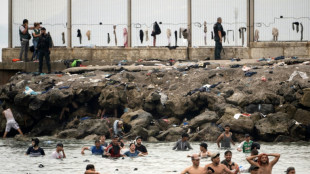 How online disinformation fuelled Ceuta migrant surge
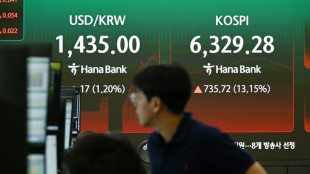
 Forex Expo Dubai Announces Opportunity to Win Up to 150 Grams of Gold This September 2026

 Suspected Ebola death on boat heading for DR Congo capital
 England selector North not 'hung up' on Stokes absence
 UK Anti-Doping confirm former world champ Parker's ban lifted
 French winemakers dread 'smoky taste' after wildfires

 Stocks diverge with earnings, tech in focus
 England recall batsman Lawrence for Pakistan series
 Siemens shares plunge on disappointing guidance raise
 New Australia coach Kiss gives Japan starts to Ross, Amatosero
 'Stretch our money': Romanians face highest EU inflation
 Iran says close to Hormuz plan with Oman, but reopening depends on US
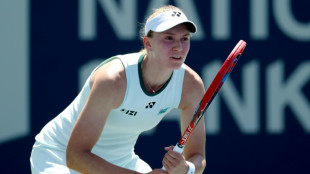
 Messi scores twice to set Leagues Cup record in Miami victory
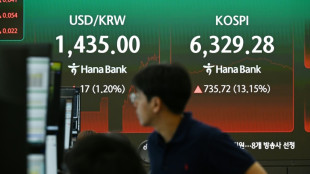 Asian stocks mostly down with tech firms back under pressure
 Back to the future as world champion Springboks host All Blacks
 India youth protests highlight mistrust in 'lapdog' media
Twenty years after Chechen separatists seized a crowded theatre in Moscow, spurring a hostage standoff that ended with more than one hundred dead, the survivors are haunted by the memories and plagued by unanswered questions.
On October 23, 2002 -- as the second Chechen war was raging in southern Russia -- armed militants burst into Moscow's Dubrovka theatre during a sold-out performance of the musical "Nord-Ost."
Demanding the withdrawal of Russian troops from Chechnya, a predominantly Muslim republic in the North Caucasus, the attackers held 900 people for three nights until Russian forces stormed the theatre in the early hours of October 26, 2002.
Two decades on, Svetlana Gubareva, 65, can't stop thinking about the ordeal that turned out to be her final outing with her 13-year-old daughter Sasha and American fiance Sandy Alan Booker.
"Sandy understood better than me what was going on and told us to lie down on the floor between the rows of seats," she told AFP, recounting the moment the gunmen rushed the stage.
She had met Booker, a 49-year-old engineer from Oklahoma, on a dating site and on that day they were celebrating after she submitted her application for a US visa at the embassy.
They had bought the last three tickets to see the show.
- 'A burst of bullets' -
It all started at the beginning of the second act when the audience was waiting for a highly-anticipated moment in the performance that would see a large prop plane make a landing on stage.
Instead, camouflage-clad men in masks stormed onto the stage.
"A lot of the people sitting near me thought this was some sort of artistic decision or part of the show," she said.
"They didn't believe it was a takeover -- until one of the Chechens fired a burst of bullets at the ceiling."
What followed was a 57-hour siege that Gubareva constantly relives: hundreds of hostages paralysed by fear; female militants wearing belts with explosives; the stench from the orchestra pit used as a lavatory.
Together with Booker, Gubareva and her daughter -- both citizens of Kazakhstan -- were part of a group of foreigners that the militants promised to release after an intervention from several embassies.
On the last night of the takeover, the three of them fell asleep thinking ahead to their promised release at 8:00 am the next day.
But in the early hours of October 26, Russian forces dispersed an unknown gas into the ventilation systems knocking out both hostages and attackers before storming the building.
By the time it was over, 125 people, including 10 children were dead, and five more people were executed by the attackers.
Gubareva woke in a hospital hours later to hear on the radio that her daughter and fiance were among the dead.
"For me, it was all over," she told AFP.
The three-day horror was a national tragedy and sparked a moment of reckoning in Russia with questions still plaguing some of the survivors.
Why were so many killed? Why did doctors run out of the antidote? Why were ambulances stuck in traffic?
And these are questions the Russian authorities have never been held accountable for. In 2007, investigators dropped a years-long probe into the tragedy.
- 'My worst nightmare' -
Russian courts also repeatedly rejected complaints filed by the families with the European Court of Human Rights in 2011, pressing Moscow to hold those responsible for the deaths to account.
"We won't be able to avoid attacks in the future if we don't investigate past ones," Dmitry Milovidov, the head of an association of families of victims called "Nord-Ost", told AFP.
Now 59, Milovidov lost his 14-year-old daughter in the attack.
On Monday, the Kremlin acknowledged the "pain" associated with the loss felt by Russians after repeated attacks.
"We've learned a lot in the fight against terrorism, and of course we will always keep the memory of those who died as a result of these attacks, including at Nord-Ost," Kremlin spokesman Dmitry Peskov said.
But two years after the Dubrovka theatre siege, again Chechen separatists staged a hostage crisis, taking more than a thousand people hostage at a school in Beslan, a town in the Caucasus republic of North Ossetia.
That tragedy -- on the first day of the school year -- left 330 dead, including 186 children, with Russian forces criticised for their disorderly assault on the building.
"By forgetting our mistakes, we make them again," said Irina Khramtsova, a 39-year-old businesswoman, who lost her father in the Dubrovka theatre attack.
"Until the authorities learn to correct its mistakes, these attacks will happen again. And that is my worst nightmare".
D.Schneider--BTB