For struggling Haiti, return of cholera is a 'catastrophe' / Photo: © AFP/File

 2 killed, 13 wounded in bus blast near Syrian capital: state media

 All Blacks skipper Taylor cautiously recovering from calf strain

 UN chief denounces Russia, Ukraine for civilian deaths

 UEFA turn up the pressure on Infantino and repeat boycott threat

 Rodri approves Barcelona transfer talks with Man City: Barca source to AFP
 Venezuela unable to tally missing from cataclysmic quakes
 Le Court sprints to stage six Tour de France Femmes win
 Doping body says Parker's positive cocaine test caused by nutritionist

 UEFA says boycott of World Cups stands despite FIFA backdown on private investment
 Rheinmetall sales keep surging despite cancelled naval frigate project

 Pogacar teammate Del Toro gets new UAE deal after Tour podium
 Stocks tread water with earnings, tech in focus

 Forex Expo Dubai Announces Opportunity to Win Up to 150 Grams of Gold This September 2026
 Forlan named new Uruguay head coach

 UEFA chief Ceferin: 'Underdog' leader taking fight to FIFA's Infantino

 Salah completes move to Turkey's Trabzonspor
 UK clears Paramount's takeover of Warner Bros
 North Korea fires ballistic missile: South Korea military

 'Don't have to hide': Thai IDs, legal work give hope to Myanmar refugees

 Stocks mixed with tech firms back under pressure

 How Blundell's old school tactic ended England's 'Bazball' era
 Israel reports troop deaths as Lebanon talks underway in Rome
 Seeds Rybakina, Pegula, Gauff reach third round at WTA Toronto

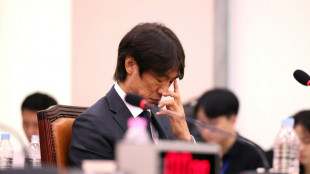 Police raid South Korea FA in probe into World Cup coach appointment
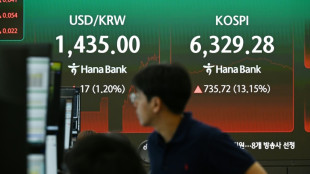
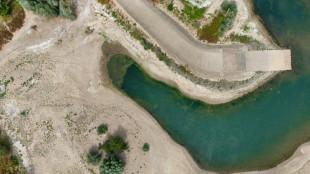 Low water on Germany's Rhine river threatens new blow to economy

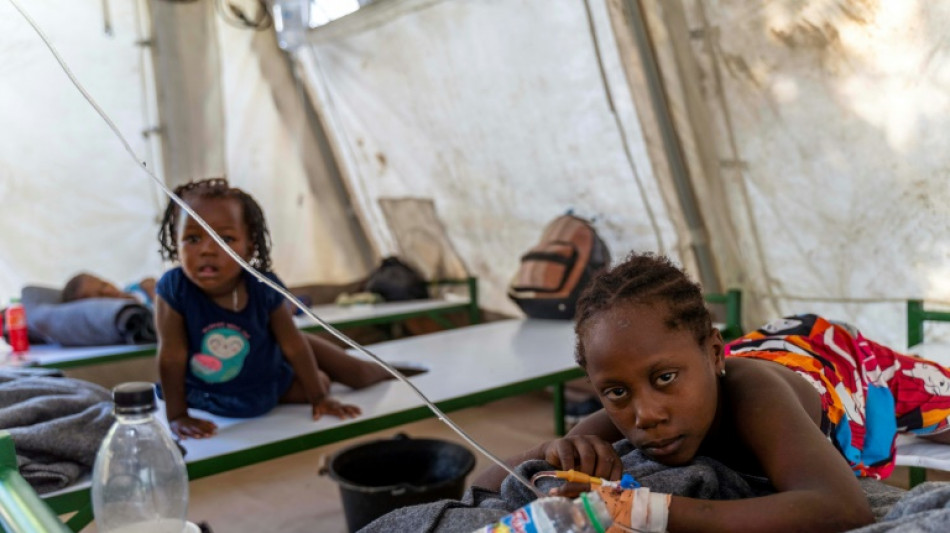
When humanitarian officials in Haiti try to describe their concerns over a new, fast-spreading cholera epidemic, they struggle to find words strong enough: "alarming," "chaotic," even "a catastrophe."
A sizable part of the island's population has been isolated -- and unable to access health care -- either by serious fuel shortages or by the brutal armed gangs that control vast areas.
And without health care, cholera patients, who suffer acute diarrhea, can die of dehydration in just hours.
"It's a catastrophe. We're overwhelmed," Doctor Jean William Pape told AFP. His NGO, called Gheskio, operates two of the country's 15 cholera treatment centers.
In one of them, in the capital of Port-au-Prince, "we have 80 beds, and they're all occupied," he said. "Due to the fuel shortage, people in the slums have told me there have been several deaths in their areas, because it wasn't possible to transport the sick people."
An armed gang has for weeks been blockading a key fuel terminal at Varreux, north of the capital, aggravating the country's paralysis.
UN peacekeepers introduced cholera to Haiti in 2010, ultimately resulting in thousands of deaths.
But, until the latest outbreak, no case of the disease had been reported in Haiti since 2019.
As of Wednesday, 33 cholera deaths and 960 suspect cases have been logged by the health ministry.
And that number could seriously understate the problem, according to Bruno Maes, the UNICEF representative in Haiti.
The situation is all the more frustrating, experts say,given that even serious cholera cases are easily treatable with a few days of rest and rehydration that there is a cholera vaccine.
That vaccine, however, is only effective for around five years, and the last big targeted vaccination campaign in Haiti was in 2017.
- Children are hard-hit -
Roughly half of all cases here have involved children younger than 14, who are particularly vulnerable when their immune systems are weakened by poor nutrition due to poverty.
"Many of them are very badly nourished," said Pape, the doctor, adding it was difficult to find their veins to administer solutions intravenously.
The UN estimates that 4.7 million Haitians, nearly half the country's population, suffer from acute food insecurity.
Doctors Without Borders (MSF) operates four centers with a total of 250 beds and some 20 oral-rehydration clinics, deputy mission chief Moha Zemrag told AFP.
He said a priority is securing access to potable water in gang-controlled areas like the Brooklyn neighborhood in the capital's Cite Soleil commune, which has had no fresh water for three months.
Cholera is caused by the ingestion of water or food contaminated with a bacteria called vibrio cholerae.
The high risk of kidnapping by the gangs has prevented aid groups from entering these areas to disinfect homes and buildings with chlorine.
While MSF has established a system of shuttles to safely bring its personnel to treatment centers, fuel shortages could make this impossible "in a few weeks," Zemrag said.
Concern is also growing for rural dwellers, who, without access to fuel, may have to walk days for help. Early cases have been detected in the southern region of Nippes and in Artibonite to the north.
Armed groups now blockade highways leading both to the north and south, Maes said.
"Port-au-Prince is literally surrounded, strangled," he said.
UNICEF's offices have been pillaged, and shipments of medication have been blocked at the port.
- Humanitarian corridors -
The return of cholera has revived nightmarish memories of the epidemic introduced by blue-helmeted UN peacekeepers in 2010, after a major earthquake ravaged the country. The disease claimed more than 10,000 lives from then until 2019.
But conditions today are different, said Sylvain Aldighieri, deputy director of public health emergencies with the Pan American Health Organization.
"For now, we're not seeing an explosion (in cases) as we observed during the first months" of 2010, he said.
He said the authorities have "10 years' experience with cholera" and the key now is to "reactivate the mechanisms" that worked before.
Doing so, however, presents challenges.
The UN on Friday imposed sanctions, including an arms embargo, on several gangs. But it remains divided on whether to send a new international force to the country.
Such a force, said Aldighieri, might be able to establish "humanitarian corridors for difficult zones," and help free supplies now blocked in ports.
At the moment, he added, airplanes carrying additional supplies are expected in the coming days.
T.Bondarenko--BTB