Crisis-hit Sudan faces biggest threat yet: climate change / Photo: © AFP

 Galloway accuser could not foresee publishing-sector fallout, lawyer argues

 New York City Center revives In the Heights as a timely community story

 Godzilla Minus Zero shifts focus toward postwar human drama
 Mehbooba Mufti urges dialogue and renewed Central Asia links for Kashmir

 Seacliff Healthcare Seeks Specialist GP in Thirroul

 US stocks fall before midterm Election Day as technology shares weaken

 BLS Polymers makes strong market debut at ₹248 per share

 Petrol and diesel prices remain broadly steady across major Indian cities
 Reliance shares remain in focus after near-12% surge

 2026 Arizona Midterms: Key Races, Ballot Measures, and Voter Deadlines

 Coal India prepares possible $1 billion Mahanadi Coalfields listing

 Julia Stiles and Ezra Sosa Share Emotional Farewell After 'DWTS' Elimination

 US Buildings Threatened by Wildfires Could Triple by 2060

 Why Pregnancy Cost Estimates Fail: A Family’s $9,000 Surprise

 US Strikes Iranian Targets in Strait of Hormuz Ahead of Midterms

 Brodeur’s Overtime Goal Secures Bethlehem’s Second Consecutive Sectional Title

 Rare 1970 Plymouth ‘Cuda 426 Hemi Listed for $400,000

 The Digital Burden: Why Instant Messaging Feels Like a Full-Time Job
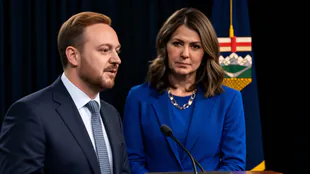 Alberta Tabled Controversial Riding Boundary Maps Amid Gerrymandering Accusations

 Hong Kong court set to sentence activist Joshua Wong in security case

 Australia raises benchmark rate to highest level in 18 years

 'The Remarried Empress' Cast Discusses Bringing Fantasy Royal Drama to Life

 Asian stocks retreat as AI worries outweigh steep oil-price drop

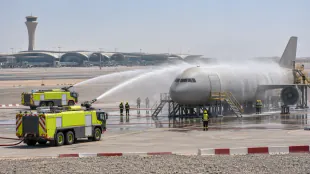 Hamad International Airport stages emergency drills during WATAN 2026

 Global failure to punish attacks leaves journalists at continuing risk

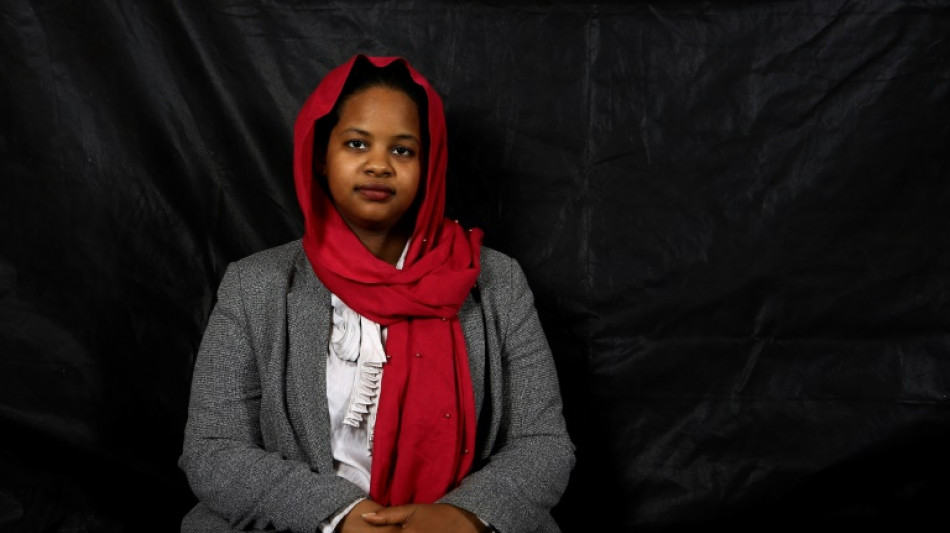
Conflict, coups, dire poverty: Sudan is reeling from multiple crises, but environmental activist Nisreen Elsaim warns a bigger problem dwarfs them all -- climate change.
A determined climate campaigner for nearly a decade, both at home and on the world stage, she speaks passionately of the growing threat a heating planet poses to her northeast African nation.
"Climate change needs to be prioritised in Sudan," 27-year-old Elsaim said, speaking weeks before the COP27 climate conference starts in neighbouring Egypt.
Elsaim -- who joined the protests which toppled longtime president Omar al-Bashir in 2019 and now favours a return to civilian rule following a military coup in 2021 -- argues that urgent environmental action must go hand in hand with political change.
Sudan is the world's fifth most vulnerable country to the impacts of climate change, according to a 2020 ranking in the Global Adaptation Index, compiled by the Notre Dame University in the United States.
"There has also been a noticeable increase in temperature," said Elsaim about her arid country. "There is no winter anymore."
The war-ravaged nation has been hit hard in recent years by erratic weather patterns -- harsh droughts and boiling temperatures followed by torrential rains.
Severe floods that wreck property, infrastructure and crops have killed more than 145 people this year, Sudanese authorities say.
- 'Ecological crisis' -
Egypt, which borders Sudan to the north, will from November 6 host the 27th Conference of the Parties to the UN Framework Convention on Climate Change.
For Elsaim, named chair of the UN Youth Advisory Group on Climate Change in 2020, it is an opportunity to ring the alarm bell on the climate impacts her youthful country faces -- 62 percent of Sudan's 45 million people are aged under 30, according to UN figures.
Sudan is already struggling from what experts and activists say is the results of shifting weather patterns: worsening conflicts over scarce land and water resources.
Increasing demands on dwindling natural resources has fuelled inter-ethnic conflicts, including the 2003 war that erupted in the arid western region of Darfur.
"Such conflicts are caused primarily by scarcity," said Elsaim, who has a degree in physics and a masters in renewable energy from the University of Khartoum.
"And the reason for said scarcity is climate change."
In Darfur, the war pitched ethnic African minority rebels against the Arab-dominated government of hardline president Bashir, who responded by unleashing the notorious Janjaweed militia.
The war in Darfur would leave about 300,000 people killed and 2.5 million displaced, according to the United Nations.
Then UN secretary-general Ban Ki-moon, writing in The Washington Post in 2007, argued that "amid the diverse social and political causes, the Darfur conflict began as an ecological crisis, arising at least in part from climate change".
- 'Threat multiplier' -
Linking the heating planet to conflict is complex: the International Crisis Group calls climate change "a threat multiplier", that increases "food insecurity, water scarcity and resource competition, while disrupting livelihoods and spurring migration".
Organisations such as the International Committee of the Red Cross note that climate change "exacerbates existing social and economic factors that may lead to conflict", while at the same time, insecurity can "limit people's ability to cope with climate shocks".
Sudan also remains gripped by regular protests following the October 2021 military coup led by army chief Abdel Fattah al-Burhan that upended a post-Bashir transition to civilian rule.
Elsaim says the authorities have given little attention to climate change.
As COP27 approaches, she remains committed to doing what she can to make change -- even while admitting progress from previous climate summits she has attended has been "very small".
"Though the small progress will not save us," she said, "it's still better than nothing."
R.Adler--BTB