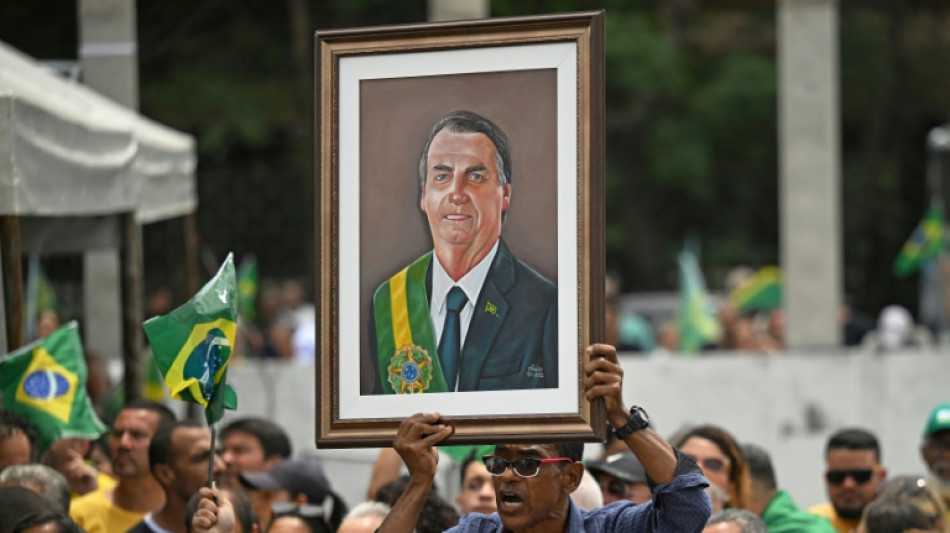
In Brazil, Bolsonaro's far-right echoes Trump's / Photo: © AFP

 Thousands protest private property legislation in Argentina

 Battling Norrie survives match point to oust de Minaur at Montreal
 Venezuela's political transition talks start: AFP

 Real Madrid extend Vinicius deal, sign Diomande in title bid boost

 PSG sign France midfielder Akliouche from Monaco
 CONMEBOL 'expresses concern regarding repeated unilateral actions' by FIFA
 Warren coy over whether Fury-Joshua will be in UK or US

 Taiwan blocks key bridge in drill for potential Chinese invasion
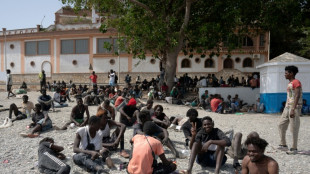 Migrant children risk abuse on streets of Ceuta, aid groups warn

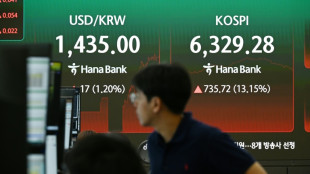 Oil price shoots up as stocks tread water

 British Grand Prix stays on MotoGP calendar until 2028

 Britain's EasyJet flies into US hands as takeover confirmed

 Real Madrid sign Ivory Coast winger Yan Diomande

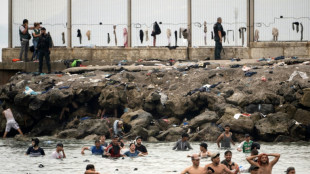 How online disinformation fuelled Ceuta migrant surge
 Inevitable AI Group Raises $6M From Aleph to Launch AI-Native SaaS Companies

 Suspected Ebola death on boat heading for DR Congo capital

 England selector North not 'hung up' on Stokes absence

 UK Anti-Doping confirm former world champ Parker's ban lifted

 French winemakers dread 'smoky taste' after wildfires

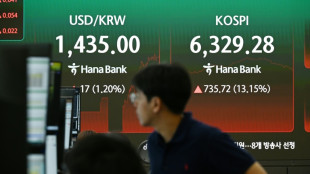 Stocks diverge with earnings, tech in focus

 England recall batsman Lawrence for Pakistan series

 Siemens shares plunge on disappointing guidance raise
 New Australia coach Kiss gives Japan starts to Ross, Amatosero

 'Stretch our money': Romanians face highest EU inflation

 Iran says close to Hormuz plan with Oman, but reopening depends on US

"Bolsonarismo," the Brazilian far-right movement built around President Jair Bolsonaro, shares much in common with ultra-conservatives in power in Europe -- Hungary, Poland and soon Italy -- but is closer to Donald Trump and the US alt-right.
Whether or not Bolsonaro wins his uphill fight for re-election against veteran leftist Luiz Inacio Lula da Silva in Brazil's October 30 runoff, the far-right's arrival in power in Brazil, as elsewhere, is linked to deep social upheaval, analysts say.
"All these far-right movements are rooted in an economic and social crisis that is growing worse by the year: rising inequality, declining income for the working and middle classes," says Christophe Ventura, a Latin America specialist at the French Institute for International and Strategic Affairs (IRIS).
"That has triggered the rise of widespread mistrust."
The response, he says, has followed a similar pattern internationally: a rejection of "rotten and incompetent" traditional politicians in favor of "virtuous citizens and a more authoritarian government" to right the wrongs unleashed by globalization and free trade -- blamed for all ills.
In Europe, Italy's Fratelli d'Italia, Hungary's Fidesz, Poland's Law and Justice party, the Sweden Democrats and France's Rassemblement National and Reconquete all "accuse immigrants of causing every crisis and want to close the borders," says Geraldo Monteiro, head of the Brazilian Center for Democracy Studies and Research at Rio de Janeiro State University (UERJ).
The Brazilian context is different: no longer a major immigration destination, "immigrants aren't a big subject," and Islamophobia and anti-Semitism are less prevalent than in Europe, says Monteiro.
Bolsonarismo's version of "national solidarity" is instead a battle of "good people" versus the "corrupt."
Internal enemies include the LGBT community, Indigenous peoples, environmental and human-rights activists, the media, academics and the cultural elite -- all lumped together with Lula and the "communist" left.
- Strong men -
As with far-right movements everywhere, Bolsonarismo's Holy Trinity is God, country and family.
The latter, say true believers, is under threat from gay marriage, abortion and "gender ideology."
Whereas conservative Catholics are the core of the European far-right, in Brazil, it is the powerful, fast-growing Evangelical movement.
Bolsonaro's movement is also more military in nature than its European cousins, says Monteiro.
He says Brazil "still carries the memory of the military dictatorship" (1964-1985) -- fondly, in ex-army captain Bolsonaro's case -- and the president has actively courted military support, naming generals to powerful posts in his administration.
He has also energetically promoted gun ownership, signing a raft of legislation and decrees intended to help "good people" defend themselves and their property -- a viewpoint that "doesn't exist in Europe," says Ventura.
"The primary reference point" for Bolsonaro's far-right has been Donald Trump's United States, he adds, drawing parallels with the American alt-right and Tea Party movements.
It is a brand of populism in which "the leader is the direct representative of the people," says Mayra Goulart, a political scientist at Rio de Janeiro Federal University (UFRJ).
Anything supporters perceive as interfering with that direct democracy -- political parties, institutions, the media -- comes under attack.
Like the US alt-right, Bolsonaro's movement has attacked Brazil's democratic institutions as enemies of the people, notably the Supreme Court and the supposedly fraud-plagued election system.
Many observers fear a Brazilian version of Trump supporters' attack on the US Capitol if Bolsonaro loses on October 30.
Like Trump -- who recently gave him a glowing endorsement -- Bolsonaro regularly insults journalists and attacks the "fake news" media.
He prefers to communicate directly with supporters on social media -- which is inundated with "alternative truth" and conspiracy theories.
- Hate speech -
Trump's influence is also visible in Bolsonaro's climate-change skepticism and resistance to expert advice on handling Covid-19.
The US and Brazilian movements also share a "pro-market, pro-business discourse," says Goulart.
Free speech is upheld as an absolute right -- unfiltered hate speech and disinformation included.
Both Trump and Bolsonaro ran as political outsiders and achieved "unexpected" victories, says Monteiro.
And both "easily draw thousands of supporters into the streets."
O.Krause--BTB