BBC marks 100 years facing questions about its future / Photo: © AFP

 North Korea touts dog soup and other home-cooked recipes to beat the heat
 UK observatory nervously watches growing space junk threat
 Meta ordered to pay US state $567 mn to abate 'public nuisance' and child harm

 Houthi missile attacks kill 58 Saudi-backed Yemeni govt forces: source
 No.1 Sabalenka and Pegula advance at Toronto

 China missile test top of agenda as Pacific diplomats meet in Fiji
 Most UK teens to opt out of planned social media curfew: poll
 Venezuela's political transition talks launch in Caracas
 2 killed, 13 wounded in bus blast near Syrian capital: state media
 All Blacks skipper Taylor cautiously recovering from calf strain
 UN chief denounces Russia, Ukraine for civilian deaths
 UEFA turn up the pressure on Infantino and repeat boycott threat
 Rodri approves Barcelona transfer talks with Man City: Barca source to AFP

 Venezuela unable to tally missing from cataclysmic quakes
 Le Court sprints to stage six Tour de France Femmes win
 Doping body says Parker's positive cocaine test caused by nutritionist
 UEFA says boycott of World Cups stands despite FIFA backdown on private investment
 Rheinmetall sales keep surging despite cancelled naval frigate project
 Pogacar teammate Del Toro gets new UAE deal after Tour podium
 Stocks tread water with earnings, tech in focus

 Forex Expo Dubai Announces Opportunity to Win Up to 150 Grams of Gold This September 2026

 Forlan named new Uruguay head coach
 UEFA chief Ceferin: 'Underdog' leader taking fight to FIFA's Infantino
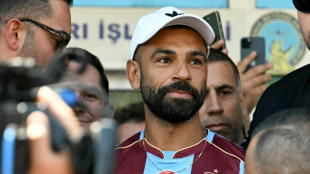 Salah completes move to Turkey's Trabzonspor
 UK clears Paramount's takeover of Warner Bros
On November 14, 1922, the clipped tones of the BBC's director of programmes, Arthur Burrows, crackled across the airwaves.
"This is 2LO, Marconi House, London calling," he announced, and with that, public service broadcasting in Britain was born.
One hundred years on, the British Broadcasting Corporation is a global media giant. But its centenary comes at a time of drastic budget cuts that have raised questions about its future.
The corporation, officially founded on October 18, 1922, has a special place in Britain's broadcasting landscape.
"The BBC is us," said Jean Seaton, professor of media history at the University of Westminster in London, and the corporation's official historian.
"It remains despite the attacks of this government an expression of us, unlike Netflix, which is an expression of the world," she told AFP.
"The BBC is an expression of our sense of humour, interests or values. It belongs to us."
For nearly seven million people, each day starts with BBC Radio 4's flagship "Today" programme, which often sets the political agenda.
At weekends, "Strictly Come Dancing", which pairs celebrities with professional ballroom dancers, has had viewers glued to their sets for 20 years and is the most talked-about television programme on air.
BBC series such as "Peaky Blinders", "Fleabag" or "Killing Eve" have been exported around the world.
The BBC's influence extends far beyond Britain's borders, making it one of the small island nation's most visible and respected global brands.
It reaches an audience of 492 million around the world every week, according to the corporation's 2021-2022 annual report.
BBC World Service broadcasts in 41 languages to about 364 million people a week globally.
For the last 100 years, the broadcaster has stuck firm with its original mission statement: to "inform, educate and entertain".
"It underpins everything that we want to do," said James Stirling, who is head of the BBC's centenary celebrations.
- Impartiality -
Another word -- impartiality -- crops up repeatedly and has become a priority for BBC management given the frequent criticism it has received from the Conservative government.
During Brexit -- Britain's divisive divorce from the European Union -- it accused the BBC of bias in favour of those who wanted to stay in the bloc.
Ministers have also alleged that it focuses too much on the concerns of urban elites rather than the working classes.
Britain's right-wing tabloids -- never shy of criticising their publicly funded competitor -- have lapped it up.
But more worrying is a decision in January by Boris Johnson's government to freeze its licence-fee funding model for two years, raising fears it could be scrapped in future.
The annual charge for households with a television set is currently set at £159 ($176).
In response to Johnson's plans, the BBC in May announced a huge cost-cutting programme of £500 million a year, axing about 1,000 of its 22,000 staff and moving about services online.
The financial situation has been accompanied by an exodus of younger audiences towards streaming and on-demand platforms, prompting questions about why they should still pay for the BBC.
"Today" presenter Nick Robinson, a former BBC political editor, said it was vital for the broadcaster to keep proving its value.
"If my kids' generation... just come to the view that I don't really need that, I can get all that stuff from YouTube and get it from all these competitors... then we're done," he told the Daily Telegraph.
- 'Pride' -
Successful new formats have emerged, however, despite the BBC often being labelled as "legacy media".
Journalist Ros Atkins has made his name with video "explainers" of major news stories and issues, combining them with analysis, fact-checking and vital context.
They are broadcast on television, the BBC website and via social media, where they often register millions of views around the world.
"While we still have millions of people who consume our journalism via our platforms -- the BBC website, TV and radio -- millions of others are consuming journalism elsewhere on Twitter, Instagram, TikTok," he said.
"We've seen very big numbers on these videos. They prove this kind of journalism has an audience."
Atkins, who started at the BBC in 2001, is well aware of the difficulties ahead. "It's going to impact all of us who work here," he added.
"But if you ask me how I feel about the experience of being a journalist at the BBC... I still feel I'm walking through the door at the best news organisation in the world."
L.Dubois--BTB