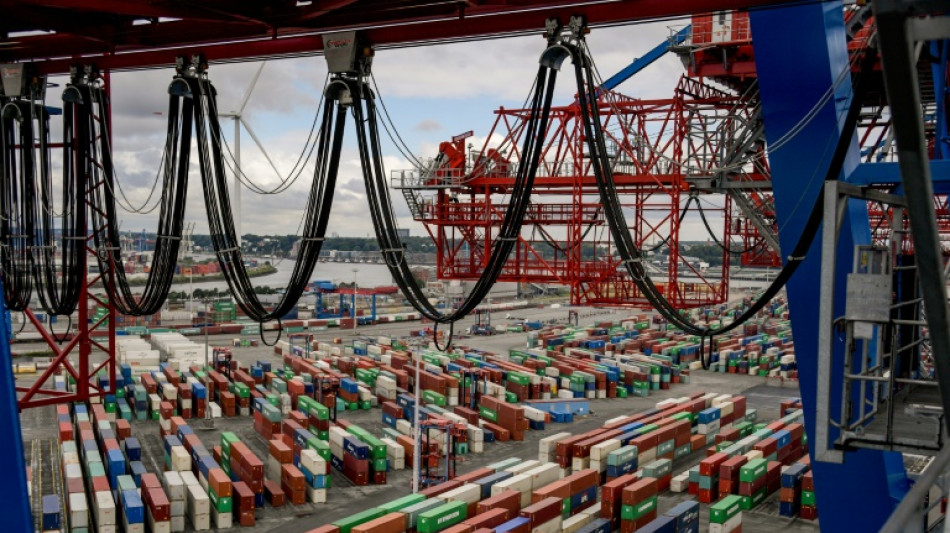
Germany forecasts 2023 recession as energy crisis bites / Photo: © AFP/File

 Chinese activist held in Bangkok finds Canada refuge

 Kiss takes reins as Wallabies face Japan
 North Korea touts dog soup and other home-cooked recipes to beat the heat

 UK observatory nervously watches growing space junk threat

 Meta ordered to pay US state $567 mn to abate 'public nuisance' and child harm

 Houthi missile attacks kill 58 Saudi-backed Yemeni govt forces: source

 No.1 Sabalenka and Pegula advance at Toronto

 China missile test top of agenda as Pacific diplomats meet in Fiji

 Most UK teens to opt out of planned social media curfew: poll

 Venezuela's political transition talks launch in Caracas

 2 killed, 13 wounded in bus blast near Syrian capital: state media

 All Blacks skipper Taylor cautiously recovering from calf strain

 UN chief denounces Russia, Ukraine for civilian deaths

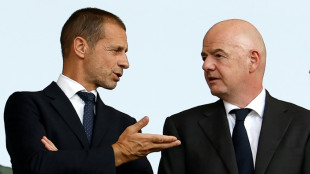 UEFA turn up the pressure on Infantino and repeat boycott threat

 Rodri approves Barcelona transfer talks with Man City: Barca source to AFP
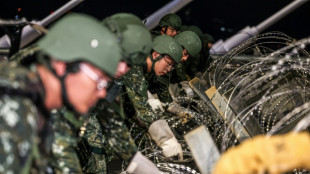
 Venezuela unable to tally missing from cataclysmic quakes

 Le Court sprints to stage six Tour de France Femmes win
 Doping body says Parker's positive cocaine test caused by nutritionist

 UEFA says boycott of World Cups stands despite FIFA backdown on private investment

 Rheinmetall sales keep surging despite cancelled naval frigate project

 Pogacar teammate Del Toro gets new UAE deal after Tour podium
 Stocks tread water with earnings, tech in focus

 Forex Expo Dubai Announces Opportunity to Win Up to 150 Grams of Gold This September 2026

 Forlan named new Uruguay head coach

 UEFA chief Ceferin: 'Underdog' leader taking fight to FIFA's Infantino

Germany will sink into recession next year and inflation will soar, the government forecast Wednesday, as Europe's top economy battles skyrocketing energy prices following Russia's gas shutdown.
The official predictions were the latest warning that Germany's economy, which was just getting back on its feet after the pandemic, is set to shrink in 2023 due to the fallout of Moscow's invasion of Ukraine.
Unveiling the government's latest forecasts of 0.4 percent economic contraction and seven percent inflation for 2023, Economy Minister Robert Habeck painted a dark picture of a "serious energy crisis".
It "threatens to become an economic and social crisis", he warned -- but insisted that Russian President Vladimir Putin will "fail in this attempt to destabilise the basic economic and political order".
Putin "will also fail on the battlefield in Ukraine", he added.
Moscow's move to cut off gas supplies to Europe amid tensions over Ukraine has triggered an energy crisis across the continent, with consumers and businesses facing high prices as winter approaches.
Germany has been particularly hard hit, as 55 percent of its gas supplies came from Moscow prior to the Ukraine conflict.
The soaring energy costs are expected to send inflation to eight percent in 2022 and seven percent in 2023, the government forecast.
Nevertheless, Germany's economy is still set to register growth of 1.4 percent in 2022, according to the government forecasts, after having enjoyed a post-pandemic rebound earlier in the year.
But it will then shrink in 2023, with the economy ministry saying the "central reason" for the downgrade from forecasts earlier this year was "the halt to Russian gas supplies".
High energy prices are acting as "a brake on industrial production -- above all in energy-intensive sectors". The economy will return to growth with expansion of 2.3 percent in 2024, according to the forecasts.
- Energy price cap -
The government recently unveiled a 200-billion-euro ($194-billion) fund to shield consumers and businesses from surging prices, which includes a cap on energy costs.
Without the cap, consumer prices would be much higher in 2023, the forecasts said.
Forecasts by leading economic institutes late last month showed inflation coming in at 8.4 percent for the year as a whole in 2022 -- and climbing further to 8.8 percent in 2023.
Warnings are mounting that global growth will slow further next year due to myriad crises, with the IMF this week downgrading its 2023 global GDP growth forecast.
It forecast that Germany, along with Italy, will become the first advanced economies to contract in the wake of Russia's invasion of Ukraine.
Signs are rapidly multiplying of Germany's escalating economic crisis.
Last week, official figures showed that industrial production -- the pillar of the German economy -- produced 0.8 percent less in August compared with the previous month, with energy-intensive industries badly impacted.
Inflation meanwhile hit a 70-year high of 10 percent in September.
The European Central Bank has started aggressively tightening monetary policy to bring inflation under control, lifting rates a historic 75 basis points last month, but some are worried the move adds to recession risks.
Berlin has been scrambling to find alternative energy sources, accelerating the construction of infrastructure to import gas from further afield, and is preparing to keep two nuclear plants running longer than initially anticipated.
Despite the crisis, Habeck sought to strike a positive note about efforts to find new partners to supply energy.
"We are making very good progress in loosening the grip of Russian energy imports," he said.
J.Bergmann--BTB