US releases new Arctic strategy as climate threat grows / Photo: © AFP/File

 Four dead, 15 injured in Thailand school shooting: deputy minister

 Military shake-up poses little threat to Ukraine's drone revolution

 Camels find unlikely home in outback Australia

 Pacific nations fail to agree on statement condemning China missile test

 Anguish and hope: why a Tibetan set himself on fire in New York

 Oil extends gains and stocks fall on fresh Hormuz worries

 Venezuela's political transition talks wrap first day in Caracas
 South Africa coach Erasmus wary of struggling Argentina

 Actress, engineer, jihadist's widow among Syria's new women MPs

 Battling Norrie survives match point to oust de Minaur

 US firm takes on backyard mosquitoes -- with 600,000 mosquitoes
 Thousands protest private property legislation in Argentina

 Battling Norrie survives match point to oust de Minaur at Montreal
 Venezuela's political transition talks start: AFP

 Real Madrid extend Vinicius deal, sign Diomande in title bid boost

 PSG sign France midfielder Akliouche from Monaco
 CONMEBOL 'expresses concern regarding repeated unilateral actions' by FIFA

 Warren coy over whether Fury-Joshua will be in UK or US

 Taiwan blocks key bridge in drill for potential Chinese invasion

 Migrant children risk abuse on streets of Ceuta, aid groups warn

 Oil price shoots up as stocks tread water

 British Grand Prix stays on MotoGP calendar until 2028

 Britain's EasyJet flies into US hands as takeover confirmed

 Real Madrid sign Ivory Coast winger Yan Diomande

 How online disinformation fuelled Ceuta migrant surge

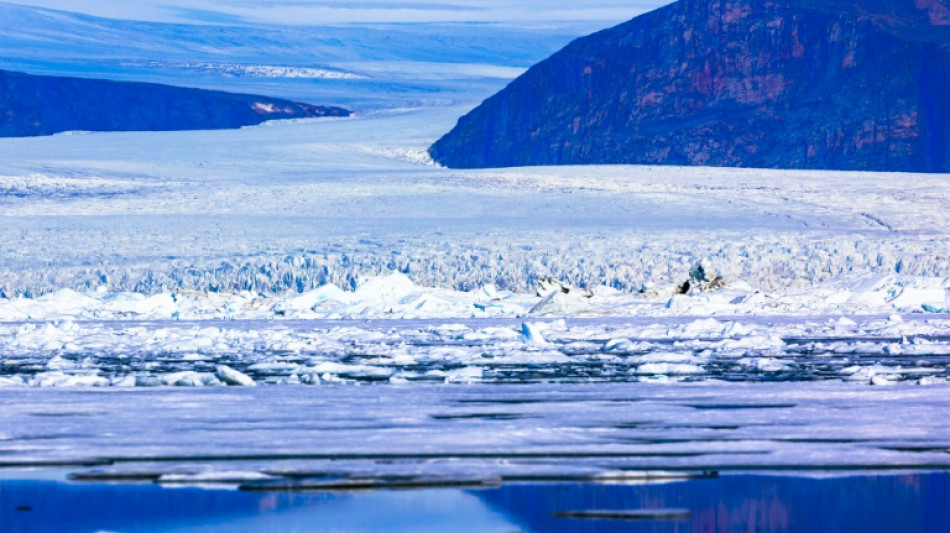
US President Joe Biden's administration released a new Arctic strategy on Friday as the strategically and environmentally important region suffers worsening effects from climate change and sees increased international competition.
Global warming is melting Arctic ice, opening previously closed areas to navigation and creating new opportunities for countries such as the United States, Russia and China to vie for resources and influence.
The situation is further complicated by the invasion of Ukraine by Russia -- a major Arctic power -- which has increased tensions between Moscow and Washington to a level not seen since the height of the Cold War.
"The Arctic -- home to more than four million people, extensive natural resources, and unique ecosystems -- is undergoing a dramatic transformation," the strategy says.
"Driven by climate change, this transformation will challenge livelihoods in the Arctic, will create new economic opportunities, and could intensify strategic competition among countries."
The strategy features four main pillars: security, climate change and environmental protection, sustainable economic development, and international cooperation.
"Our highest priority is to protect the American people and our sovereign territory and rights. We are committed to the security of our treaty allies and to supporting our partners in the region," the strategy says.
To do this, Washington will "enhance and exercise both our military and civilian capabilities in the Arctic as required to deter threats and to anticipate, prevent, and respond to both natural and human-made incidents."
As the impact of global warming grows, Washington wants to help Alaska -- its northernmost state -- to build resilience and adapt, and also aims to pursue international initiatives to mitigate emissions in the Arctic.
"Climate change generates greater impacts in the Arctic than in many more temperate regions, yielding unstable terrain, vulnerable coasts, changing ecosystems, and a worsening biodiversity crisis," the strategy says.
- Russia cooperation 'virtually impossible' -
"We will support efforts to build Alaskan communities' resilience in the face of dramatic changes on the Arctic's horizon," it says, noting that more than 60 percent of the state's Native communities are considered "environmentally threatened."
On the economic front, the strategy notes that melting Arctic ice -- while a "stark indicator of accelerating climate change" -- also presents opportunities.
"The US government will help create the conditions to catalyze responsible, inclusive, and transparent economic development in Alaska and across the Arctic," it says, including via infrastructure development and supporting industries that increase opportunities for local communities.
The strategy says the United States values Arctic cooperation, but that Russia's invasion of Ukraine has dealt the prospects of working with Moscow a significant blow.
"Russia's brutal war in Ukraine has made this cooperation in the Arctic virtually impossible... at present. However, maintaining cooperation with our allies and partners in the near-term remains essential to advancing our objectives for the region," it says.
It has been nearly 10 years since the last US Arctic policy document was released, and the new strategy acknowledges both the changing natural and geopolitical environment.
"This strategy addresses the climate crisis with greater urgency, given the developments that we've seen over the last eight to nine years," a senior US administration official said ahead of its release.
It also "recognizes the increased strategic competition that we've seen in the Arctic in terms of Russia and (China) over the last decade, and... seeks to position the US to effectively compete and also manage those tensions."
G.Schulte--BTB