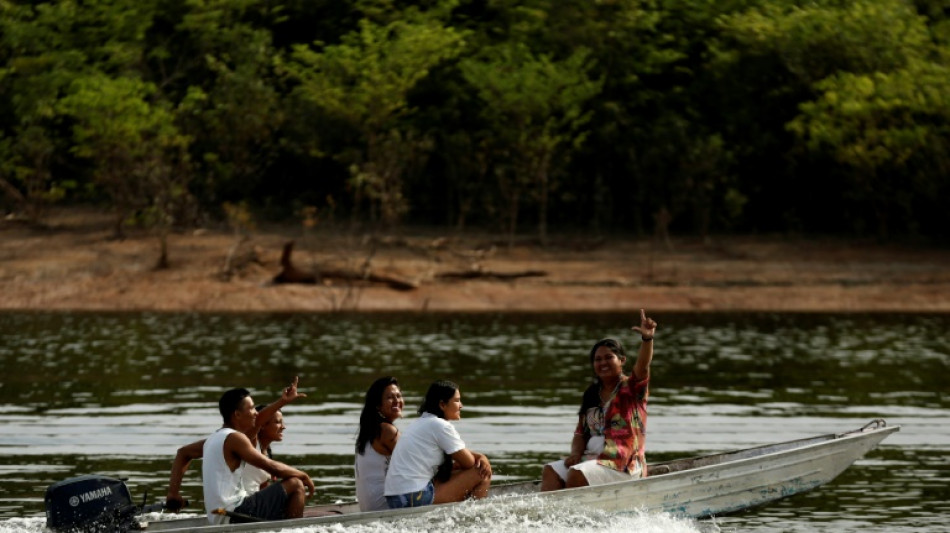
In Amazon, indigenous Brazilians vote by boat / Photo: © AFP

 Hong Kong court set to sentence activist Joshua Wong in security case
 Australia raises benchmark rate to highest level in 18 years

 'The Remarried Empress' Cast Discusses Bringing Fantasy Royal Drama to Life
 Asian stocks retreat as AI worries outweigh steep oil-price drop

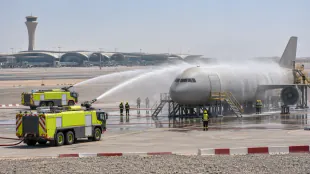 Hamad International Airport stages emergency drills during WATAN 2026

 Global failure to punish attacks leaves journalists at continuing risk

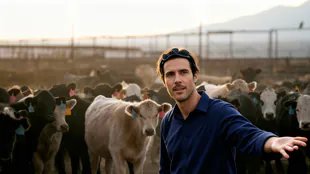 Researchers Warn 'Bookkeeping Trick' Masks Beef Industry's Methane Emissions

 Climate Change Intensified Atlantic Hurricanes, Study Finds

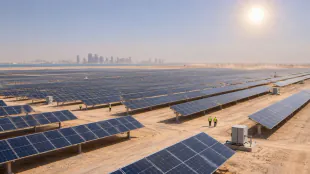 Qatar solar expansion opens scope for technical performance gains

In beaded headbands, a group of indigenous Brazilians is boating across a tributary of the Amazon river, flashing the same hand sign on their way to vote: "L" for Lula.
Like many Brazilians, the Kambeba people are voting in a school that has been turned into a polling station for Sunday's elections. Unlike most, they have to travel there by motor boat from their remote village in the rainforest.
As this sprawling South American country chooses its next president -- a polarizing battle between the two main candidates, leftist front-runner Luiz Inacio Lula da Silva and far-right incumbent Jair Bolsonaro -- the Kambeba say it is worth making the trip to participate.
"It's important for indigenous peoples to fight for democracy, to vote for people who value and respect us," says Raimundo Cruz da Silva, a 42-year-old deputy "Tuxaua," or chief, wearing a white outfit decorated with traditional indigenous designs.
Like many in his village, he is voting for Lula, after what many in Brazil's 900,000-strong indigenous population consider four disastrous years under Bolsonaro.
The far-right incumbent, who came to office vowing not to allow "one more centimeter" of land to be turned into protected indigenous reservations, has presided over a surge of environmental destruction, particularly in the Amazon rainforest, and pushed for native lands to be opened to mining.
Da Silva's village, Tres Unidos, is home to just over 100 people, situated in an indigenous reservation around 60 kilometers (40 miles) outside Manaus, the capital of the northern state of Amazonas.
The village where their polling station is, Sao Sebastiao, is outside the reservation, a five-minute boat ride across the river.
The four shuttle boats doing election duty ferry around 40 people at a time across the dark waters of the Rio Negro, through lush, emerald-green rainforest stretching as far as the eye can see.
- 'How to resist' -
Taynara da Costa Cruz, an 18-year-old student and artisan, is voting for the first time.
"It's very important to vote -- even more so for us young people. We have to keep our eyes on the Amazon and indigenous peoples," she tells AFP, wearing a necklace and headband made of Amazonian seeds.
Leurilene Cruz da Silva, 38, Raimundo's sister, proudly flashes her voter ID as she arrives at the polling station.
"We have to show we know how to resist," she says.
Lula, who led Brazil from 2003 to 2010, dramatically reduced deforestation during his two presidential terms -- though he also clashed with indigenous communities at times, notably over his decision to push ahead with the massive Belo Monte hydroelectric dam in Amazon.
This time around, the leftist veteran has promised to create a ministry of indigenous affairs and work to achieve net-zero deforestation.
O.Bulka--BTB