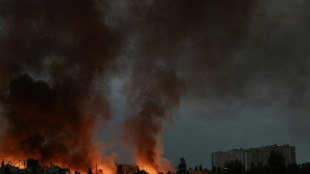
Centrists set to win as Latvia holds elections / Photo: © AFP/File

 Meta ordered to pay $567 mn in US over 'public nuisance' child harm

 Saudi Arabia, Turkey and Pakistan to sign defence pact amid regional violence
 PU Prime Expands Gold Trading with the Launch of XAUUSD247

 Oil extends gains and stocks mostly down on fresh Hormuz worries

 Four dead, 15 injured in Thailand school shooting: deputy minister

 Military shake-up poses little threat to Ukraine's drone revolution
 Camels find unlikely home in outback Australia

 Pacific nations fail to agree on statement condemning China missile test
 Anguish and hope: why a Tibetan set himself on fire in New York

 Oil extends gains and stocks fall on fresh Hormuz worries
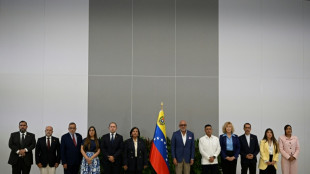 Venezuela's political transition talks wrap first day in Caracas
 South Africa coach Erasmus wary of struggling Argentina

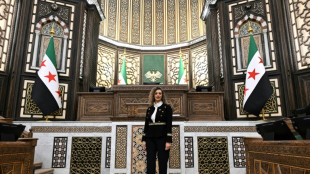 Actress, engineer, jihadist's widow among Syria's new women MPs

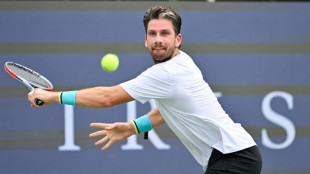 Battling Norrie survives match point to oust de Minaur
 US firm takes on backyard mosquitoes -- with 600,000 mosquitoes
 Thousands protest private property legislation in Argentina

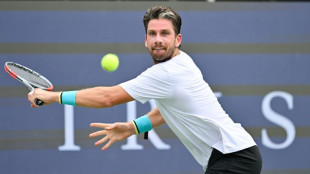 Battling Norrie survives match point to oust de Minaur at Montreal
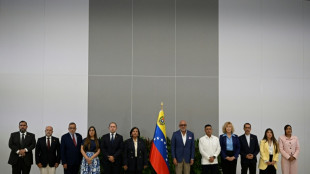
 Venezuela's political transition talks start: AFP

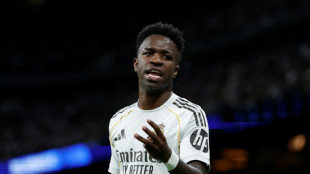 Real Madrid extend Vinicius deal, sign Diomande in title bid boost

 PSG sign France midfielder Akliouche from Monaco
 CONMEBOL 'expresses concern regarding repeated unilateral actions' by FIFA
 Warren coy over whether Fury-Joshua will be in UK or US

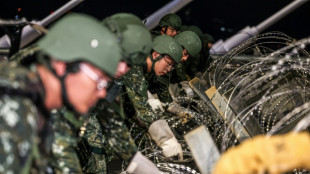 Taiwan blocks key bridge in drill for potential Chinese invasion
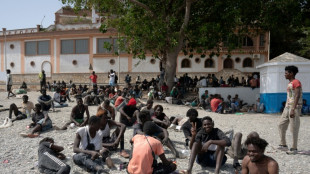 Migrant children risk abuse on streets of Ceuta, aid groups warn

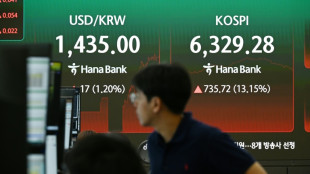 Oil price shoots up as stocks tread water

Latvians headed to the polls on Saturday in the shadow of neighbouring Russia's invasion of Ukraine, with victory expected for centrist parties that have vowed to continue backing Kyiv.
Opinion polls ahead of the general election have shown a weakening of populists, conservatives and the social-democratic party Harmony which usually has strong support from Latvia's large Russian-speaking minority.
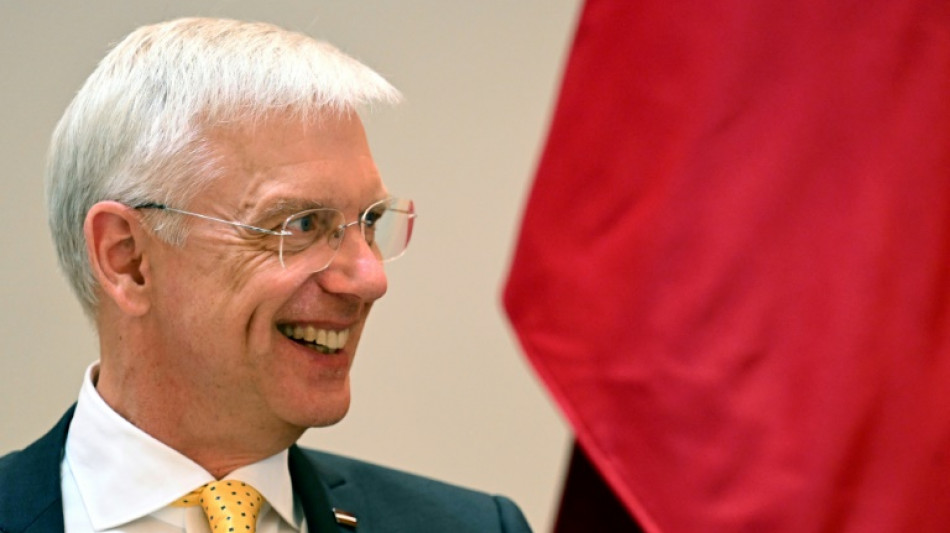
Political expert Marcis Krastins said Prime Minister Krisjanis Karins was "most likely" to win, depending on how many smaller parties supporting him get past the five percent threshold for entering parliament.
"Russians invading Ukraine helps Karins to secure voters in Latvia because in such times people tend to rally around the flag," Krastins said.
Karins's New Unity Party topped one recent opinion poll with 13.3 percent.
Harmony, which has come first in recent elections but has lacked enough allies to govern the Baltic state, got 5.1 percent.
Ahead of the election, President Egils Levits warned voters against backing politicians in the Russian-speaking community who "hesitated to clearly state who is the aggressor and who is the victim at the outset of the Russian invasion".
Referring to the energy crisis and economic difficulties, he warned against populists saying he was "highly sceptical of political parties and figures promising to get us out of this mess quickly and easily.
"I do not trust those who offer simple, and most often useless, solutions to extraordinarily complex problems," he said in a statement.
Dominated over the centuries by Teutonic knights, Swedes, Poles, then Russians, Latvia gained independence in 1918 before finding itself under Soviet occupation in 1944-1990.
Today, the Russian-speaking minority makes up around 30 percent of the population of 1.8 million.
Polling stations opened at 0400 GMT and close at 1700 GMT.
- Fears over Russian expansionism -
Along with inhabitants of nearby Poland and their Baltic neighbours Lithuania and Estonia, many Latvians are worried about Russia's expansionist plans and feel their country is vulnerable even though it is an EU and NATO member.
The outgoing government has shown strong support for Ukraine, hiked defence spending and worked towards greater energy security.
The Harmony party, which scored 20 percent at the last election in 2018, has been on a path of gradual decline since then in part because of a series of corruption scandals.
Harmony has condemned Russia's invasion but has been less vocal about accusations that Russian forces are carrying out human rights atrocities.
The Russian-speaking electorate has turned to two new parties -- one that is openly pro-Kremlin and another favourable to Russia but less staunchly so.
Some Russian speakers in Ukraine say Latvian attitudes towards them have deteriorated since the war started and feel their linguistic and cultural identity is being challenged.
"In Latvia, Russian-speakers are in a way collateral victims of the war," said Miroslavs Mitrofanovs, co-chairman of the Latvian Russian Union party.
K.Brown--BTB