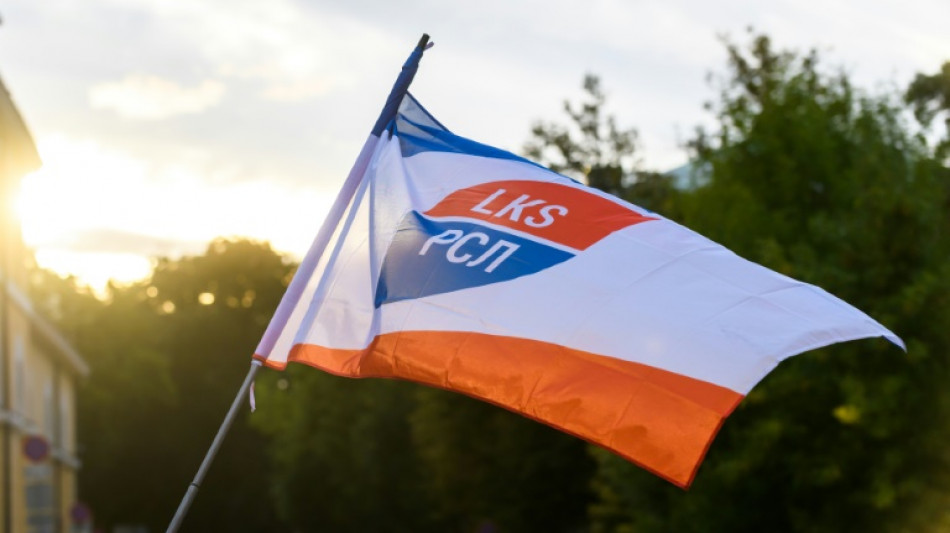
Latvia's Russian-speakers fear becoming Ukraine war 'collateral' / Photo: © AFP

 Saudi Arabia, Turkey and Pakistan sign defence pact amid regional war

 Maradona bloated, bedridden and resigned before death, says icon's masseur
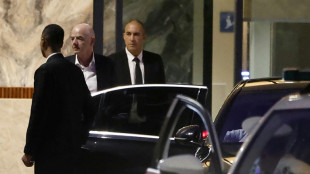 Infantino and the failed investment plan -- What they said
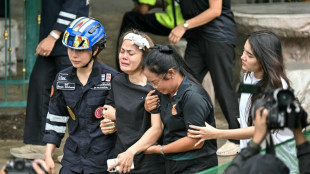 Thailand teen kills seven in home, school shooting

 Volt Funded Launches Globally with Evaluation Program Offering Up to 90% Profit Share
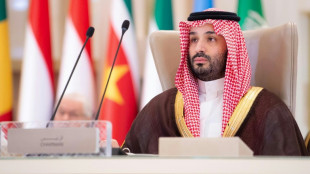
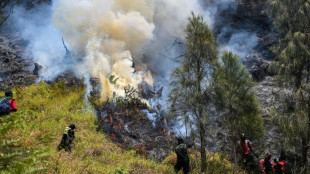 Indonesia battles Mount Bromo wildfire as El Nino takes root

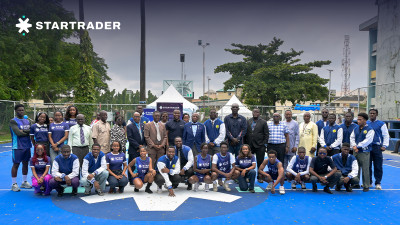 STARCARES Revamps Basketball Court at the University of Lagos for Future Healthcare Professionals
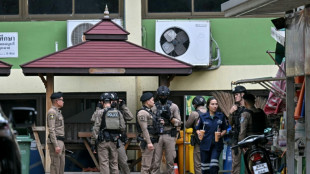
 Eight dead, including teen suspect's grandparents, in Thailand shooting
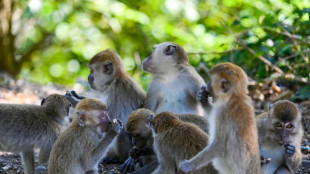 Indonesia traps monkey to end rampage that wounded 18 people
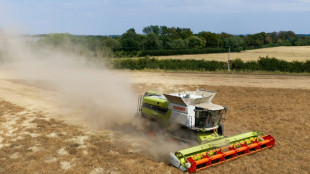 Food security fears mount as UK farmers battle drought
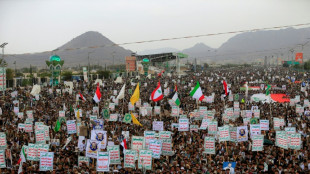 Houthi missile attacks kill 58 Saudi-backed Yemeni govt forces
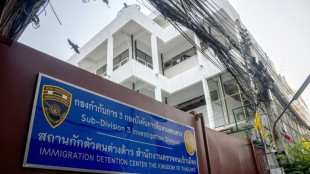 Chinese activist held in Bangkok finds Canada refuge
 Kiss takes reins as Wallabies face Japan
 North Korea touts dog soup and other home-cooked recipes to beat the heat
 UK observatory nervously watches growing space junk threat

 Meta ordered to pay US state $567 mn to abate 'public nuisance' and child harm
 Houthi missile attacks kill 58 Saudi-backed Yemeni govt forces: source
 No.1 Sabalenka and Pegula advance at Toronto
 China missile test top of agenda as Pacific diplomats meet in Fiji
 Most UK teens to opt out of planned social media curfew: poll
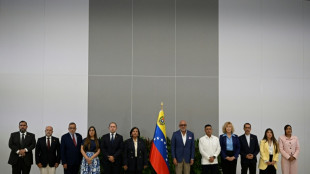 Venezuela's political transition talks launch in Caracas
 2 killed, 13 wounded in bus blast near Syrian capital: state media
 All Blacks skipper Taylor cautiously recovering from calf strain
 UN chief denounces Russia, Ukraine for civilian deaths
 UEFA turn up the pressure on Infantino and repeat boycott threat
Russia's invasion of Ukraine has complicated things for Latvia's Russian-speakers, already caught between an attachment to country versus cultural and linguistic identity and who now fear becoming collateral victims of Moscow's war.
"With the war in Ukraine, the attitude of Latvians towards their Russian-speaking fellow citizens has deteriorated considerably," said Vladimir Dorofeev, a 48-year-old tour guide and member of the country's minority.
The Baltic state's Russian-speaking population is "being associated with Russia".
The father-of-three -- a Russian speaker born and raised in the capital Riga and married to a Latvian -- was attending a rally by the Latvian Russian Union party.
Carrying signs that read "No to Assimilation" and "Stop Linguistic Genocide", around 100 people protest a reform making Latvian the only language of instruction.
Dorofeev remains undecided whether he will vote for the Latvian Russian Union in Saturday's general election.
According to opinion polls, the small party suspected of Kremlin ties is hovering at the electoral threshold, like other groups traditionally associated with the Russian-speaking minority.
That has not always been the case. Over the previous decade, most elections were won by the social-democratic party Harmony, which is backed by Russian-speakers.
But Harmony never found an ally to govern with, as other parties kept their distance.
- Fear of deportation -
"The Ukraine war altered attitudes towards Russian-speakers in Latvia, especially among those with painful memories from the Soviet Union," said Tatiana Efimova, a member of the minority.
"For some, everything associated with Russia and the Russian language is painful," she told AFP.
The 40-year-old logistics specialist said she does not feel discriminated against in Latvia.
"I'm an ethnic Russian but I speak Latvian. I have Latvian friends and no one has ever said anything to me," she said.
Latvians "want to protect their language, their nation, their identity. There's few of them, so it's understandable."
According to an opinion survey from April, support for Russia among Latvia's Russian-speakers fell to 13 percent from 20 the previous month, while support for Ukraine rose to 30 percent from 25.
The undecided remained steady at 47 percent, the research centre SKDS found.
Dominated over the centuries by Teutonic knights, Swedes, Poles, then Russians, Latvia gained independence in 1918 before finding itself under Soviet occupation in 1944-1990.
Tens of thousands of Latvians were deported and replaced with Russians, noticeably altering the country's social and linguistic mix.
Today, the Russian-speaking minority makes up around 30 percent of the population of 1.8 million.
- 'Non-citizens' -
After Latvia regained independence in 1991, the political class championed the model of a nation state built around Latvian national identity rather than that of a multicultural country, said Sergejs Kruks, an expert in culture and communication.
"According to this nationalist view, which still prevails today, anyone born into Russian culture by definition supports Putin's politics," he told AFP.
In 1991, Latvia passed a law granting citizenship only to those who were Latvians before 1940 and their descendants, rather than everyone across the board.
Since then, anyone hoping to acquire citizenship must pass a Latvian language and history test -- a difficult feat for many Russian-speakers, especially the elderly.
Unable or unwilling to meet that hurdle, some wind up as non-citizens who receive an "alien's passport" without citizenship.
Non-citizens constitute nearly 10 percent of the population. They do not have the right to vote and cannot work in the public sector or become lawyers, notaries or pharmacists.
Their situation has led the Kremlin to criticise Latvia, which does not hide its wariness of Russia -- despite EU and NATO membership.
- 'Kremlin-friendly fake news' -
The Ukraine war has only further complicated things.
"In Latvia, Russian-speakers are in a way collateral victims of the war," said Miroslavs Mitrofanovs, co-chairman of the Latvian Russian Union.
"Russian authorities untied the hands of Latvian nationalists who are now taking it out on us," said Mitrofanovs, who before the war frequently appeared on Russian state television.
"They've banned the Russian language at schools and Russian television, they've torn down monuments to the liberators from Nazism," he told AFP, referring to a Riga memorial celebrating the Red Army that was dismantled last month.
For Latvian writer Arvids Degis, this kind of narrative is marginal and tends to surface around election time.
"But it doesn't stick and is usually ridiculed as 'Kremlin-friendly fake news'," he told AFP.
M.Ouellet--BTB