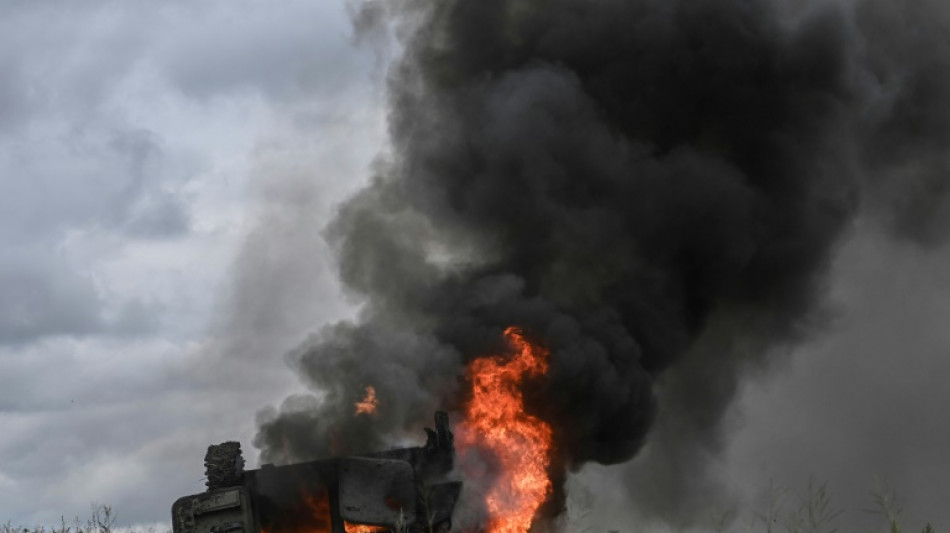
Russian intelligence fails again over Ukraine counter-offensive / Photo: © AFP

 Democrats, Trump hold final rallies before midterm elections

 Japan urges US to enforce discipline after second Marine arrest
 'Remarkable' rookie Lendeborg scores 37 as Warriors beat Clippers

 ExxonMobil urged to re-think Papua New Guinea gas project

 Asian stocks mixed as tech sector struggles to rebound from selloff
 India's royals find new power in their past
 Irish bookshops help meet UK demand for Sally Rooney novels

 NFL Vikings suffer first loss while Broncos edge Chiefs

 Host of fresh faces in Australia white-ball squads to face England

 NFL linebacker Campbell to remain hospitalized overnight
 Chervon Names Thomas Scherer Vice President of Organizational Development - Sales, End User Marketing, and Service

 Chervon Names Jody Grimsley Senior National Account Manager

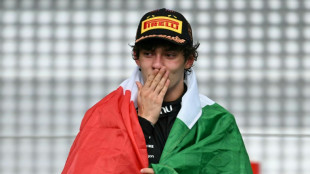 'Grateful' Antonelli becomes youngest Formula One world champion

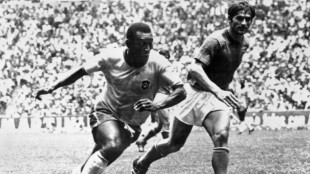 Four sporting prodigies who scaled the heights

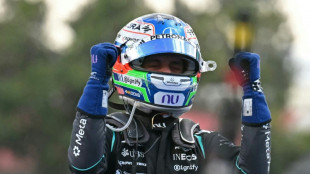 Six key races that made Kimi Antonelli a world champion

 Isa double sends Pau past Toulouse in Top 14

 NFL Lions linebacker Campbell carted off to hospital

 Iran warns new war could last longer after Trump threatens strikes
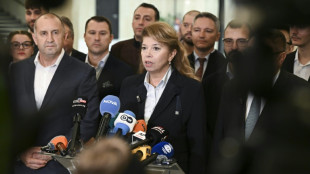 Bulgarian president wins runoff vote as Black Sea attacks raise stakes
 Iraola instructs Liverpool players to dive after Arsenal penalty call
A lightning Ukrainian counter-offensive with the potential to be a turning point in Kyiv's fight against the Russian invasion has once again highlighted Moscow's intelligence shortcomings in the war, analysts say.
The offensive has seen Ukraine recapture the strategic city of Izyum -- which symbolically was visited by President Volodymyr Zelensky on Wednesday -- and the ousting of Russian forces from most of the country's eastern Kharkiv region.
The push came after the over half-year conflict appeared to have reached a kind of stalemate over the summer, with Russian forces holding large parts of Ukraine's east and south but failing to make much further headway.
"This is a colossal Russian military intelligence failure, the fact that they did not see this build-up coming," said Michael Kofman, senior research scientist at the Center for Naval Analyses' Russia studies program.
"The Russian military intelligence completely blew this," he added.
"Russia failed to anticipate" Ukraine's push, said Pierre Grasser, a historian of international relations and researcher at the Paris-based Sirice institution.
Echoing other analysts, Grasser said Ukraine had benefitted by carrying out a major feint tactic, making a counter-attack in the south before launching an even more massive one in the northeast.
"Faint signals could however have alerted" Moscow, he said.
Ukraine had been active through smaller operations on the northeast frontline since August, while the conflict has also been marked by an unprecedented profusion of open-source intelligence such as satellite images.
- 'Still very centralised' -
But the intelligence failure also recalls the apparent over-confidence of Russia six months ago in anticipating that its forces would rapidly surge through Ukraine and take even the capital Kyiv.
Moscow then appeared to scale down its priorities in the short term by focusing on taking control of the east and the south, and no longer explicitly evoking a goal of regime change.
Yet in the face of the military setbacks and problems with reinforcements, President Vladimir Putin has so far resisted making any move toward enforced military conscription.
Rob Lee, a researcher at the Philadelphia-based Foreign Policy Research Institute (FPRI), said some Russian Telegram channels had for a month been evoking a Ukrainian concentration around Kharkiv.
"One of the Russian military's biggest weaknesses is that it is slow to respond to changes on the battlefield," he said.
Lee said that Russia had in particular been caught "flat-footed" by the advances in Ukraine's military hardware due to Western support, notably the HIMARS multiple rocket launchers delivered by the US.
"There are different explanations for why these mistakes are being made, but they indicate a very fundamental problem with Russian military leadership. The Russian military's decision-making is still very centralised," he said.
- 'Did not understand' -
The Ukrainian counter-offensive has also caused open alarm in Russia, with comments by some experts on state TV abandoning the line that what Moscow dubs the "special military operation" has gone well.
The powerful leader of the Russian region of Chechnya, Ramzan Kadyrov, whose own militia fighters had been involved in the invasion, openly spoke on his Telegram channel of the "mistakes" made in the Russian tactics.
He has now urged that head of every Russian region to muster 1,000 volunteers to go fight in Ukraine.
In Moscow, Russian military expert Alexander Khramchikhin said Russia's response had also been complicated by Ukraine's tactic of launching simultaneous attacks.
"Russian intelligence did not understand where exactly the actual counter-offensive would take place," he told AFP.
Khramchikhin also said there was a stark difference in mobilisation between Russia and Ukraine.
"In Ukraine, the whole population is mobilised," he said. "So the Ukrainians can add all the manpower they want."
Along with the weapons deliveries from the West, Ukraine has also benefitted immensely from Western intelligence resources, he added.
"Ukraine receives real-time information from US satellites and long-range radar detection aircraft," he said.
J.Horn--BTB