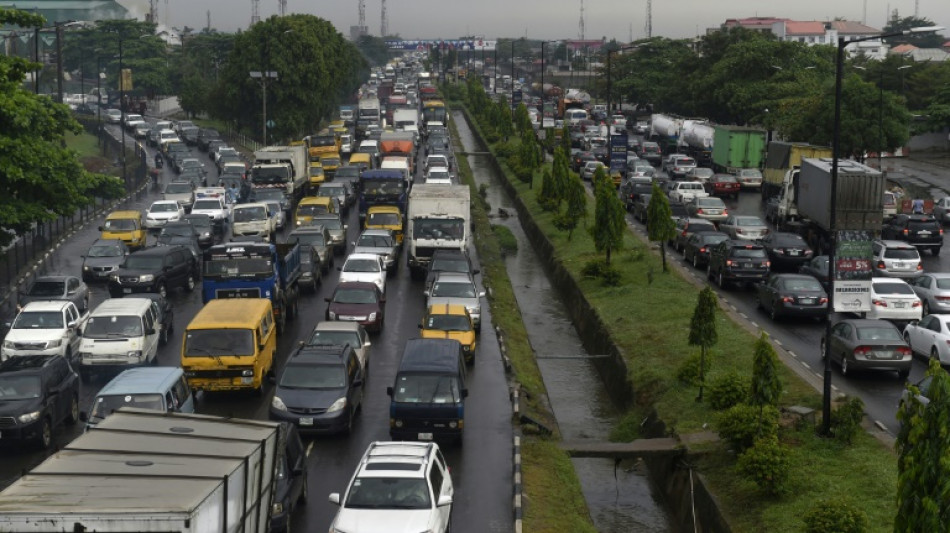
Fossil fuel investment in Africa dwarfs clean air funding / Photo: © AFP/File

 Democrats, Trump hold final rallies before midterm elections

 Japan urges US to enforce discipline after second Marine arrest

 'Remarkable' rookie Lendeborg scores 37 as Warriors beat Clippers

 ExxonMobil urged to re-think Papua New Guinea gas project

 Asian stocks mixed as tech sector struggles to rebound from selloff
 India's royals find new power in their past
 Irish bookshops help meet UK demand for Sally Rooney novels

 NFL Vikings suffer first loss while Broncos edge Chiefs

 Host of fresh faces in Australia white-ball squads to face England

 NFL linebacker Campbell to remain hospitalized overnight

 Chervon Names Thomas Scherer Vice President of Organizational Development - Sales, End User Marketing, and Service

 BEING rather than HAVING. A fascinating, practical STORY.

 'Grateful' Antonelli becomes youngest Formula One world champion

 Four sporting prodigies who scaled the heights

 Six key races that made Kimi Antonelli a world champion

 Isa double sends Pau past Toulouse in Top 14

 NFL Lions linebacker Campbell carted off to hospital

 Iran warns new war could last longer after Trump threatens strikes

 Bulgarian president wins runoff vote as Black Sea attacks raise stakes

 Iraola instructs Liverpool players to dive after Arsenal penalty call

 Lazio pull clear at Serie A summit as Gattuso warns of vertigo

 Israel elections chief says inquiry into irregularities will not undermine result

 Vacherot beats Lehecka to clinch Basel title

 Buzzy Holmes doc wins slow Halloween box office in N. America

 Mbappe strikes after China controversy as Real Madrid beat Santander

Foreign governments are spending more than 30 times more on fossil fuel projects in Africa than on initiatives to lessen the impacts of the continent's second-biggest killer, air pollution, research showed Wednesday.
The report, released on the International Day of Clean Air, showed how little donor nations spend on improving air quality while ploughing money into dirty energy and infrastructure projects across Africa.
The United Nations estimates that air pollution kills around nine million people globally each year, with fossil fuels accounting for two-thirds of the levels of harmful particulates humans are exposed to.
The financial benefits of improving air quality alone would far exceed the costs of slashing emissions to meet the Paris Agreement temperature goals, according to a landmark United Nations climate science assessment this year.
Yet, as Wednesday's analysis by the Clean Air Fund shows, US, European and Asian governments are still going ahead with fossil fuel-based development projects that will likely worsen already poor air quality in cities and along highways across Africa.
The fund found that just 0.3 percent of African countries' development assistance received between 2015-2021 had been specifically earmarked for air quality projects, despite pollution being responsible for some one in five deaths continent-wide.
During the same period, donor nations provided 36 times more funding for prolonging fossil fuel use in Africa.
"That difference alone is extremely startling," Dennis Appiah, head of the fund's Ghana office and a co-author of the report.
"I think it's also highlighted that most often governments are not paying attention to the issue of air pollution," he told AFP.
"Either they are not conscious of the impact of it, or they do not see it as a problem."
Appiah called air pollution a "silent killer" as its effects are far harder to see and message to communities compared with other climate-linked phenomena such as flooding.
- 'Death sentence' -
An ongoing population boom means Africa will be -- on current birth rates -- home to some 2.5 billion people by 2050, with the UN estimating that 26 countries will double their populations by then.
The vast majority of population growth will occur in urban areas, with much of the infrastructure needed to support increases yet to be built.
The continent is virtually blameless for climate change yet continues to be a hotspot for extreme events linked to global heating.
Appiah said that while Africa's development needs were huge, governments needed to prioritise sustainable ways of electrifying and connecting communities.
"Policymakers are stuck in going through the same traditional chain for development that we see in the West, and also in some of the Asian countries that are now suffering the consequences of some of those decisions," he said.
"I think Africa is positioned to take advantage of some of the technology which exists. We don't have to go through the same process (as developed countries), we can leapfrog to new technologies."
With renewable energy such as wind and solar already frequently cheaper than oil and fossil gas per kilowatt hour, the hope is that African governments can factor in the economic benefits of avoiding air pollution into their development plans.
In a preface to Wednesday's report, Ugandan activist Vanessa Nakate said that policies featuring new fossil fuel infrastructure in Africa were "a death sentence for people in communities like mine".
"It's time for governments to hear the voices of people all around the world who are calling for leaders to clean up our air and protect our health," she said.
J.Horn--BTB