
-
 Nocturnal 'coffee frog' discovered in Costa Rica
-
Defending champion Shelton storms to Montreal win
-
 India's 'cockroach' protest movement keeps heat on Modi
-
Exodus: West Bank hardships drive out Palestinian Christians
-
 Russia's only anti-war party eyes support boost at elections
-
Travis Head wins Australian cricketer of the year gong
-
 Canada tries to adapt to a future of wildfires
-
Colombia's new president vows to 'defeat narco-terrorists'
-
 Death of NBA forward Clarke ruled accident due to heroin, cocaine
-
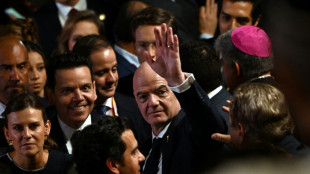
Call for Infantino to resign comes amid wave of support
-
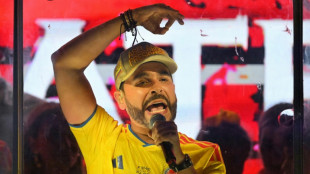 Abelardo de la Espriella, Colombian president and flamboyant millionaire
-
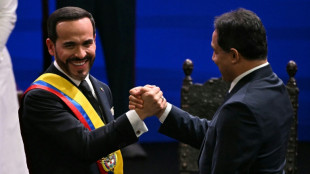
Trump ally Abelardo de la Espriella sworn in as Colombia president
-
 Maradona's 'Hand of God' ball heads to US auction
-
FIFA chief Infantino gets backing of South American football
-
 Rybakina advances while Andreeva exits at Toronto
-
Amazon behind massive private gas plant for new data centers

-
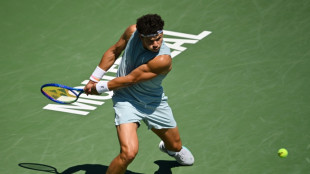 Shelton storms to Montreal win as title defence solidifies
-
Apple and OpenAI escalate legal battle over devices
-
 All Blacks need to improve says coach after opening win against Stormers
-
All Blacks strike late to secure opening win against Stormers

-
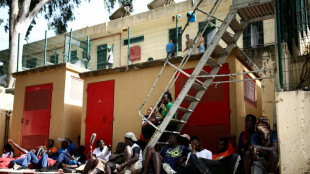 Spain imposes border checks on Italy as migrant showdown grows
-
Saudi Arabia, Turkey, Pakistan sign defence pact amid regional war
-
 Bezzecchi smashes Silverstone track record in MotoGP qualifying
-
Trump renews effort to remove US Fed Governor Lisa Cook
-
 Rashid Khan takes six wickets as Afghanistan thrash Ireland
-
Abelardo de la Espriella, the flamboyant millionaire taking power in Colombia
-
 Flintoff quits England Lions role after Sydney Thunder appointment
-
Germany holds security meeting over explosive drone amid Russia protest
-
 Movement, El Vecino and RISE Partner to Launch First Digital Dollar Wallet for Mexican Remittances
-
Austrian writer Stefan Zweig, who fled Nazis, honoured in London
-
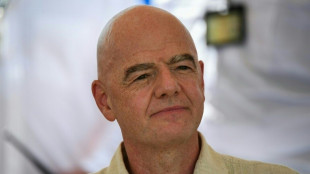 FIFA chief Infantino travels to Colombia for presidential inauguration
-
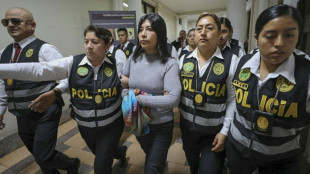
Mexico and Peru reestablish ties after asylum spat
-
 Niewiadoma seizes Tour de France Femmes lead on Mont Ventoux
-
Dollar drops, stocks climb as weak US jobs data eases rate fears
-
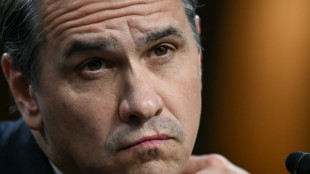 Trump's ex-lawyer all set for confirmation as US attorney general
-
Japan defender Tomiyasu joins Crystal Palace

-
 WHO urges Ervebo vaccine trial in DR Congo Ebola outbreak
-
Celtic boss O'Neill out of hospital after 'small procedure'

-
 Hardline Trump ally De la Espriella to take office in Colombia
-
Man City reject Barcelona bid for Rodri - reports

-
 Cambridge to review hiring process amid plagiarism row
-
US unexpectedly loses jobs in blow to Trump ahead of midterms

-
 STARTRADER in Discussions with Trustpilot to Consolidate Review Profiles
-
Dollar drops, stocks climb after surprise US jobs miss
-
 US unexpectedly loses jobs in blow to Trump's economy claims
-
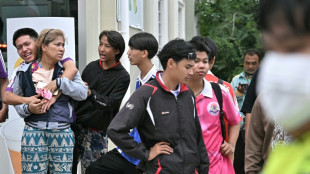
Thai students in disbelief after deadly school shooting
-
 Call for Infantino to resign comes in wake of wave of support
-
McLaren boss glad of 'harmony' between F1 teammates Norris and Piastri

-
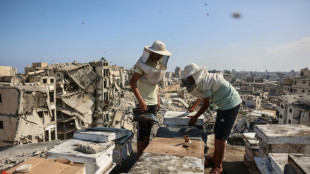 Gaza beekeeper starts again on rooftop amid ruins of war
-
Saudi Arabia, Turkey and Pakistan sign defence pact amid regional war
President vows to work for change after Chileans reject new constitution
President Gabriel Boric vowed to continue working to reform the political landscape after Chileans on Sunday emphatically rejected a proposed new constitution to replace the one adopted during the Augusto Pinochet dictatorship.
With more than 99 percent of votes counted, the reject camp led with almost 62 percent compared to just over 38 percent for those in favor, in a result that exceeded the expectations of the conservative opposition.
Leftist Boric, who supported the new text, accepted the defeat but pledged to "do everything on my part to build a new constituent itinerary."
He said the people had demonstrated "that they want and value democracy, they are counting on it to overcome our differences and to progress."
He then called on "all political forces to put Chile ahead of any legitimate differences and agree as soon as possible on the deadlines and parameters for a new constitutional process."
The result is a far greater margin of victory than was predicted by opinion polls, which had suggested the constitution would be rejected by up to 10 percentage points.
"President Boric: this defeat is also your defeat," said far right leader Jose Antonio Kast, an outspoken admirer of Pinochet who last December lost an election run-off to Boric.
Although celebrating the "defeat for the refounding of Chile," Javier Macaya, president of the conservative UDI party, said his party would fulfil their commitment to work towards a new constitution.
More than 15 million people were eligible to vote in the compulsory election, with polling stations opening at 8:00 am (1200 GMT) and closing 10 hours later.
Social upheaval that began in 2019 provided the impulse to overhaul the constitution, but the 388-article draft proved controversial and often confusing for voters.
The proposed constitution aimed to build a more welfare-based society, boost Indigenous rights and legalize abortion.
In October 2019, protests sprung up mostly in the capital led by students initially angered by a proposed metro fare hike.
Those demonstrations spiraled into wider discontent with the country's neoliberal economic system as well as growing inequality.
- 'Resounding failure' -
Among the chief concerns of opponents was the prominence given to the country's Indigenous peoples, who make up close to 13 percent of the 19 million-strong population.
Proposals to enshrine reproductive rights and protect the environment as well as natural resources such as water, which some say is exploited by private mining companies, had also garnered much attention.
The new constitution would have overhauled Chile's government, replacing the Senate with a less powerful "chamber of regions," and requiring women to hold at least half of positions in public institutions.
"Here people are more in favor of rejection," said Alfredo Tolosa, 47, a woodworker in Tucapel, a small town in the southern Biobio region.
"They think it's the best path because they are afraid of change. They have something to eat, they have work and they think they would lose those," he told AFP.
Some feared the new text would generate instability and uncertainty, which could then harm the economy.
Sociologist Marta Lagos called it a "tremendous victory for reject" and a "resounding failure" for the approve camp.
"No one expected such a gap of over 20 percentage points," she wrote on Twitter.
- Social tensions -
Those in favor of the new constitution believed it would have prompted changes in a conservative country marked by social and ethnic tensions and lay the foundation for a more egalitarian society.
They say the current constitution gives private enterprise free rein over crucial industries and creates a fertile breeding ground for the rich to prosper and the poor to struggle.
Although the 1980 constitution has undergone several reforms since it was adopted, it retains the stigma of having been introduced during a dictatorship.
Sunday's poll was the third time in just two years that Chileans have voted on the referendum, having already elected to rewrite the constitution and then elected the representatives to do so.
The new text was drawn up by a constitutional convention made up of 154 members -- mostly with no political affiliation -- split equally between men and women and with 17 places reserved for Indigenous people.
The resulting proposal recognized 11 Indigenous peoples and offered them greater autonomy, particularly on judicial issues.
Some critics accused the authors of trying to turn the traditionally marginalized Indigenous people into a higher class of citizens.
Y.Bouchard--BTB