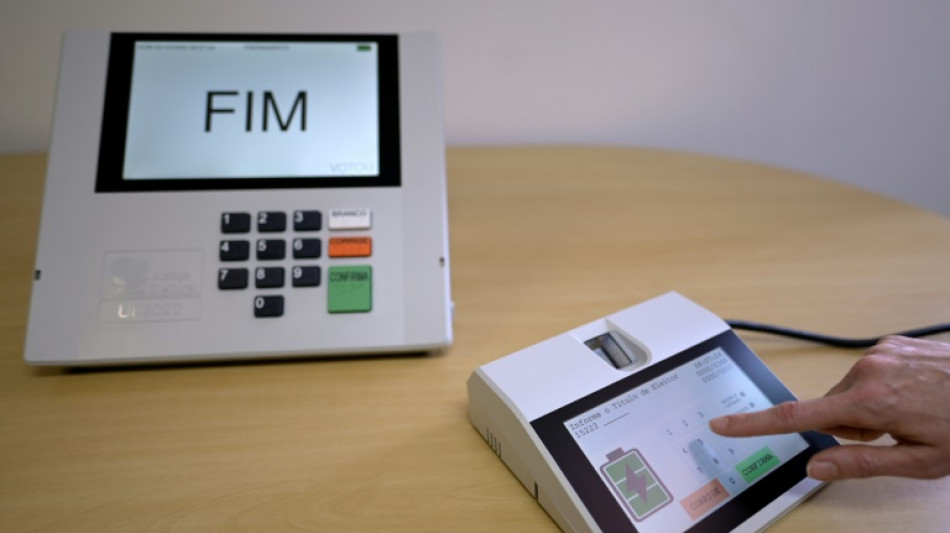
Five things on Brazil's voting machines / Photo: © AFP/File

 Nocturnal 'coffee frog' discovered in Costa Rica

 India's 'cockroach' protest movement keeps heat on Modi
 Russia's only anti-war party eyes support boost at elections
 Canada tries to adapt to a future of wildfires
 Death of NBA forward Clarke ruled accident due to heroin, cocaine

 Abelardo de la Espriella, Colombian president and flamboyant millionaire
 Maradona's 'Hand of God' ball heads to US auction

 Rybakina advances while Andreeva exits at Toronto
 Shelton storms to Montreal win as title defence solidifies
 All Blacks need to improve says coach after opening win against Stormers

 Spain imposes border checks on Italy as migrant showdown grows
 Bezzecchi smashes Silverstone track record in MotoGP qualifying
 Rashid Khan takes six wickets as Afghanistan thrash Ireland
 Flintoff quits England Lions role after Sydney Thunder appointment
 Movement, El Vecino and RISE Partner to Launch First Digital Dollar Wallet for Mexican Remittances
 FIFA chief Infantino travels to Colombia for presidential inauguration
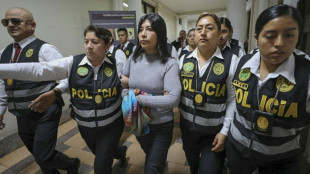
 Niewiadoma seizes Tour de France Femmes lead on Mont Ventoux
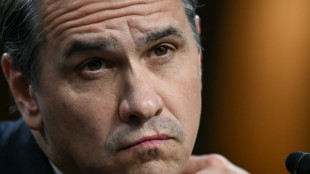 Trump's ex-lawyer all set for confirmation as US attorney general

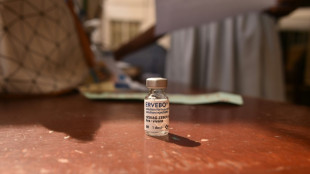 WHO urges Ervebo vaccine trial in DR Congo Ebola outbreak

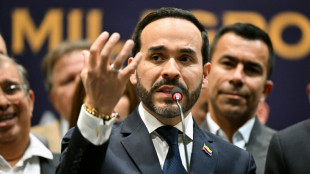 Hardline Trump ally De la Espriella to take office in Colombia

 Cambridge to review hiring process amid plagiarism row
 STARTRADER in Discussions with Trustpilot to Consolidate Review Profiles
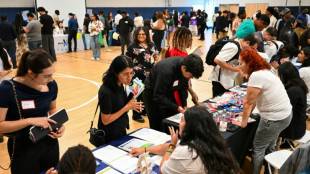 US unexpectedly loses jobs in blow to Trump's economy claims
 Call for Infantino to resign comes in wake of wave of support
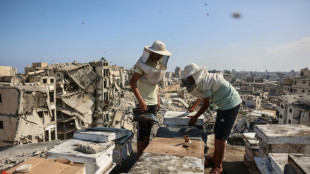 Gaza beekeeper starts again on rooftop amid ruins of war
Brazil has used electronic voting machines in its elections since 1996. But it is only recently they became controversial, with allegations by far-right President Jair Bolsonaro that they are plagued by fraud.
Here are five things to know about the squat beige computers fueling a raging debate on democracy in Latin America's biggest country.
- How did they start? -
Ironically, given Bolsonaro's bashing, the electronic voting machines were introduced partly to combat fraud.
Brazilians used to vote on paper ballots where they would check a box or write in a name, depending on the type of election.
In a country where 14 percent of the adult population was illiterate, the system was chaotic, slow and fraud-prone.
"There were always problems with the count. Illegible writing, names written in the wrong place, X's outside the box -- all that meant a ballot was declared null," says Henrique Neves da Silva, a former judge on Brazil's Superior Electoral Tribunal.
"There was also a lot of fraud and ballot-box stuffing."
With help from the military, computer experts developed the country's first electronic voting machine, rolled out in 57 cities for the 1996 local elections.
- How widespread are they? -
Celebrated as a success, the voting machines were expanded to 67 percent of the electorate for Brazil's 1998 elections, and 100 percent for the 2000 elections.
Brazil is one of 23 countries using electronic voting for general elections, according to the International Institute for Democracy and Electoral Assistance.
Another 18 use them for regional elections.
- How do they work? -
The machines are equipped with a number pad.
When voters type the two-digit code for their chosen candidate, his or her picture appears.
They then press a green button to confirm.
"It's a very simple machine, with one function: to tally votes," says Da Silva.
A key detail: the machines are not connected to the internet.
When voting closes, poll workers remove the memory card from each machine and send them to the local office of the electoral authority, which in turn sends the information to the central counting system in Brasilia via an independent network.
In remote regions such as the Amazon rainforest, a satellite connection is sometimes used.
Results are usually finalized in around two hours -- not bad for a sprawling country with 156 million voters.
- How secure are they? -
The vote-counting software is updated for every election.
Political parties, the judiciary and the military are allowed to inspect the source code.
Security tests are also held in which IT experts attempt to hack into the system.
"They literally take the machines apart, touch whatever they want. There is way more leeway than what (a theoretical hacker) would actually have on election day," says Da Silva.
No major security flaw has ever been detected.
- What does Bolsonaro say? -
Bolsonaro insists the system is plagued by fraud, but has provided scant evidence.
He claims he should have won the 2018 presidential election in the first round, instead of the runoff, but has offered no proof.
He is pushing for a paper print-out to be made of every vote, so the count can be checked.
But election authorities say that would only introduce an avenue for fraud.
Prosecutors are investigating the president on charges of spreading disinformation about the voting system, including during a meeting with foreign ambassadors in July that was spattered with falsehoods.
The US embassy said after that meeting that Brazil's elections are "a model for the world."
Bolsonaro has repeatedly threatened not to recognize the election result if the system is not changed.
N.Fournier--BTB