
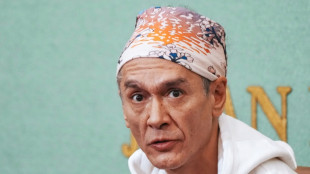
The Japanese idealist behind the last deradicalisation NGO in Somalia / Photo: © AFP

 Rekindled Gucci desirability fails to light flame under Kering sales

 Thousands rally as Serbia heads to pivotal poll

 Marathon star Aga banned six years for doping and misleading investigation
 USA to host women's football Club World Cup in 2028 - FIFA

 Finland grants licence for world's first nuclear waste repository
 'Old-fashioned' South Africa thump Australia to level Test series
 No more taking out the trash at your Airbnb

 Swiss supreme court upholds Guatemala ex-police chief sentence

 UN climate disaster fund moves to provide $20 mn aid for Nepal

 Africa faces 'complex' Ebola outbreak after spread to Nigeria: WHO
 American detained in Russia arrives in US: lawyer

 Pentagon, Lockheed announce deal for 850 F-35 jets over 10 years

 French authorities seek to ban or curb fresh protests
 Nearly all coral reefs risk collapse in 50 years: IUCN

 Foden can be one of Premier League's best again, says Maresca

 'Solution from the heavens': Indonesians pray for rain as fires burn

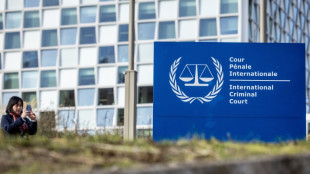
 Targeted by Trump, ICC wins top EU rights prize
 Grabbing a bargain: Japan's claw machines cash in on inflation
 Barclays bank to cut about 5,000 jobs amid AI drive
 Son of Myanmar's Suu Kyi says had first call in five years

 Taiwan issues warnings as Typhoon Champi nears

 Alex Bodi és Larry Fink, a BlackRock vezetője Berlinben: befektetések Németországban és Romániában?

 एलेक्स बोदी और ब्लैकरॉक प्रमुख लैरी फ़िंक बर्लिन में: जर्मनी और रोमानिया में निवेश?
 Alex Bodi ve BlackRock Başkanı Larry Fink Berlin’de: Almanya ve Romanya’ya yatırım mı?
 Wrong anthems played at Asian Para Games after mishap-marred Asian Games

Yosuke Nagai was an idealistic teenager who wanted to help war-torn Somalia. He now runs the only foreign-funded reintegration programme for Islamist fighters still operating in the country.
Nagai was just 19 when he set up a programme for Somali students in 2011 aimed at tackling the root causes of the brutal insurgency waged in their country by the Al-Qaeda-linked Al-Shabaab.
By 2013, he had established a programme to rehabilitate Somali gang members, and three years later, that led to a collaboration with Somalia's government on reintegrating former members of Al-Shabaab.
His teachers had tried to dissuade him, saying it was "freaking super dangerous", as he puts it.
"I was like, okay, fine. But what are you doing to help?," he recalled.
His NGO, Accept International, has since worked with 1,700 imprisoned Al-Shabaab fighters, and 250 defectors, and expanded to Yemen, the Palestinian territories, Indonesia, and elsewhere.
With Washington and other donors reducing much of their aid to Somalia, it has become effectively the only foreign agency still working on deradicalisation.
- 'Agents of peace' -
Funded by donations in Japan, Nagai has 17 people working in prisons and a centre for defectors in Somalia's capital, Mogadishu, plus 15 at a rehabilitation centre in Dhusamareb, capital of Galmudug state.
They can be aggressive workplaces.
"We do counselling and Islamic education for defectors and prisoners. Al-Shabaab prisoners are more radicalised. They sometimes say negative things to us like: 'Hey infidels, I will kill you'," said Nagai.
But the success stories make it worthwhile, he said, highlighting people who became tailors, traffic police, or soldiers in the national army.
Nagai avoids the term "deradicalisation", preferring to talk about "empowerment". He is convinced the rehab programme can turn fighters into "agents of peace".
It lasts about a year and focuses on vocational skills such as carpentry, and basic education. Around a third are illiterate, said Nagai, which has made them "vulnerable to brainwashing".
Among the successes is Nur Ali, 32, an ex-insurgent who now runs the NGO's prison programmes. He joined Al-Shabaab at 17, when government forces killed his brother. After a few months in their ranks, he was captured and sentenced to 15 years in prison.
It was there he met Nagai, accompanied by a religious leader who told him that "things are better and more positive when you forgive", Ali told AFP by phone from Mogadishu.
"Young people need education. They need to be guided," he said, adding that many ex-combatants now "take me as an example to change their lives".
Al-Shabaab still controls much of central Somalia, and is deeply embedded in society, which often makes it hard for members to leave.
Nagai recalls a 21-year-old who fled the group just as he was about to become a suicide bomber. The programme was working -- he was "very social, he loved talking to me" -- but then Nagai discovered he had left to rejoin Al-Shabaab under pressure from his father, a supporter of the insurgents.
"That is one of the realities," Nagai said.
- 'Loss of confidence' -
Deradicalisation -- once a top priority at the height of the West's so-called "War on Terror" -- has been largely abandoned as donors have lost faith in the Somali government's efforts.
The United Nations supported Somalia's reintegration programmes from 2013 to 2024, but stopped funding them in 2025. Its final report said "the limited information the UN and international actors had regarding key aspects of the process contributed to a loss of donor confidence".
The United States, the biggest donor to Somalia, did not respond to questions about whether it had funded such programmes.
When the Somali government retakes an area from Al-Shabaab, it often sends in religious scholars to challenge its extremist rhetoric.
But its reintegration programmes are woefully underfunded, said Martine Zeuthen, who wrote a report on the topic for the Royal United Services Institute, a British think-tank.
Centres for ex-fighters have limited food and are rife with disease, she said. Corruption and government infighting have made things worse.
The government did not respond to AFP's requests for comment.
"When the government is fighting a war like this, these people are rarely the priority," Zeuthen told AFP. "When there's no international focus on these people, it has a negative impact on trying to encourage more people to leave."
- 'Filling the gap' -
That leaves Nagai and his NGO as effectively the only agency still trying to help with ex-insurgents.
"There have been some international organisations or UN agencies supporting them, but now it's over. Now we are filling the gap," said Nagai.
Some are very grateful. Abdullahi, 29, says he only joined Al-Shabaab in desperation because he was promised $5,000. He never received the money, and found life with the insurgents "horrible".
He says others would quit the group if there were more centres like Dhusamareb, where he has been learning English and tailoring skills since fleeing Al-Shabaab in January.
"There are a lot of people who want to defect but they don't know where to go," said Abdullahi.
U.Maertens--VB