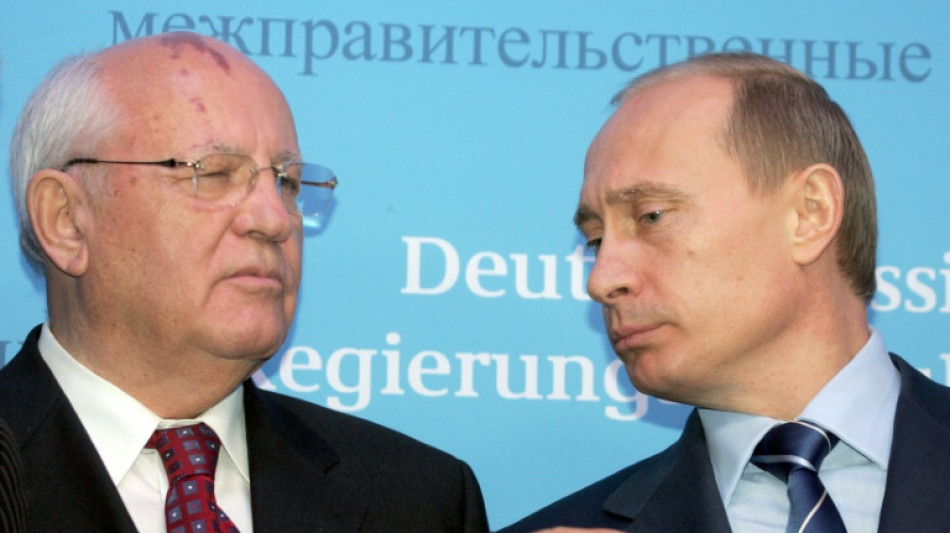
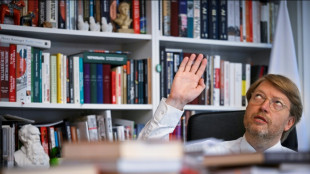
Gorbachev's love-hate relationship with Putin / Photo: © AFP/File

 Nocturnal 'coffee frog' discovered in Costa Rica
 India's 'cockroach' protest movement keeps heat on Modi
 Russia's only anti-war party eyes support boost at elections
 Canada tries to adapt to a future of wildfires
 Death of NBA forward Clarke ruled accident due to heroin, cocaine
 Abelardo de la Espriella, Colombian president and flamboyant millionaire
 Maradona's 'Hand of God' ball heads to US auction
 Rybakina advances while Andreeva exits at Toronto

 Shelton storms to Montreal win as title defence solidifies
 All Blacks need to improve says coach after opening win against Stormers
 Spain imposes border checks on Italy as migrant showdown grows
 Bezzecchi smashes Silverstone track record in MotoGP qualifying
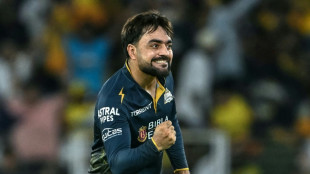 Rashid Khan takes six wickets as Afghanistan thrash Ireland
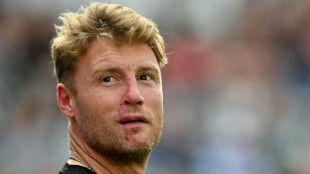 Flintoff quits England Lions role after Sydney Thunder appointment
 Movement, El Vecino and RISE Partner to Launch First Digital Dollar Wallet for Mexican Remittances
 FIFA chief Infantino travels to Colombia for presidential inauguration
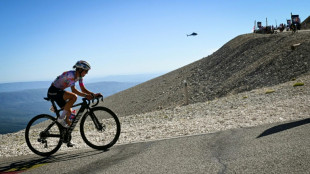 Niewiadoma seizes Tour de France Femmes lead on Mont Ventoux
 Trump's ex-lawyer all set for confirmation as US attorney general
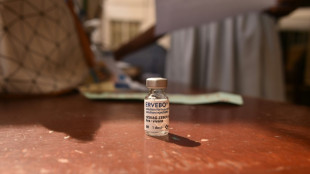 WHO urges Ervebo vaccine trial in DR Congo Ebola outbreak
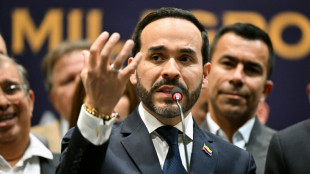 Hardline Trump ally De la Espriella to take office in Colombia
 Cambridge to review hiring process amid plagiarism row
 STARTRADER in Discussions with Trustpilot to Consolidate Review Profiles
 US unexpectedly loses jobs in blow to Trump's economy claims
 Call for Infantino to resign comes in wake of wave of support
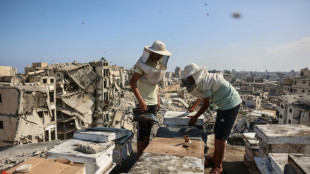 Gaza beekeeper starts again on rooftop amid ruins of war
Mikhail Gorbachev struggled to make up his mind about Vladimir Putin.
Over the more than 20 years after Putin came to power, the ex-Soviet leader embraced, then rejected, then embraced again the man who -- much like Gorbachev in the 1980s -- came to embody Russia in the eyes of the West.
A grudging respect seemed to have developed in the end, with Gorbachev saying ahead of Putin's 2018 re-election for a fourth term: "Today he is a leader who deservedly enjoys people's support."
After the chaos of the 1990s and the rule of his nemesis Boris Yeltsin, Gorbachev expressed hope for the former KGB agent who was first elected Russia's president in 2000.
Putin, he said at the time, was "intelligent, serious, reserved and well-organised. I like people of this kind."
For Gorbachev, Putin represented a chance for stability and economic growth, while continuing the transition to democracy he had set in place.
Even in 2006, as activists expressed increasing concern about the tough treatment of civil society under Putin, Gorbachev was able to declare that "those who fear Putin's authoritarian tendencies are wrong."
But as the years went by and hopes of democratic development in Russia evaporated, Gorbachev turned to veiled criticism and then to strongly worded attacks.
Fraud-tainted 2011 parliamentary elections hardened his attitude against the president, as well as Putin's decision to stand for an unprecedented third term in office.
Gorbachev backed a protest movement that followed the elections and in 2013 made a stinging attack on Russia under Putin.
"Politics is more and more turning into an imitation of democracy. All power is in the hands of the authorities and the president," Gorbachev said at the time.
"The economy is monopolised. Corruption has taken on colossal proportions."
Foreign media often latched on to his comments and he part-owned the proudly anti-Kremlin Novaya Gazeta newspaper, which suspended publication earlier this year after Russia launched its military action in Ukraine.
- An irritating thorn -
But at most Gorbachev was an irritating thorn in Putin's side.
The Kremlin shrugged off criticism from the man who allowed the collapse of the USSR, which Putin famously described as the biggest geopolitical tragedy of the 20th century.
When Gorbachev slammed Putin over the decision to return to the Kremlin for a third term, the Russian strongman spat back by accusing the former Soviet president of "abdicating" power.
By 2014, there were signs of another change of heart, with Gorbachev supporting Moscow's seizure of Crimea from Ukraine despite a Western outcry.
"Crimea is Russia and let someone prove the opposite," Gorbachev said.
The next year he backed Russia's launching of a military campaign in Syria to support President Bashar al-Assad's regime.
By the time Putin was running for a historic fourth term in 2018, Gorbachev was saying he was the kind of leader Russia needed in a "very complicated international situation".
The bitter irony was that in his twilight years Gorbachev supported a man who did not think much of him and who dismantled much of what the Soviet leader worked to achieve.
While Gorbachev had opened the door to political opposition and a free press, Russia under Putin was accused of persecuting dissenters and squelching freedom of speech.
Putin said little of Gorbachev's achievements in a letter of condolences after his death.
He was, Putin wrote, "a politician and statesman who had a huge impact on the course of world history", one who "strove to offer his own solutions to urgent problems".
E.Schubert--BTB