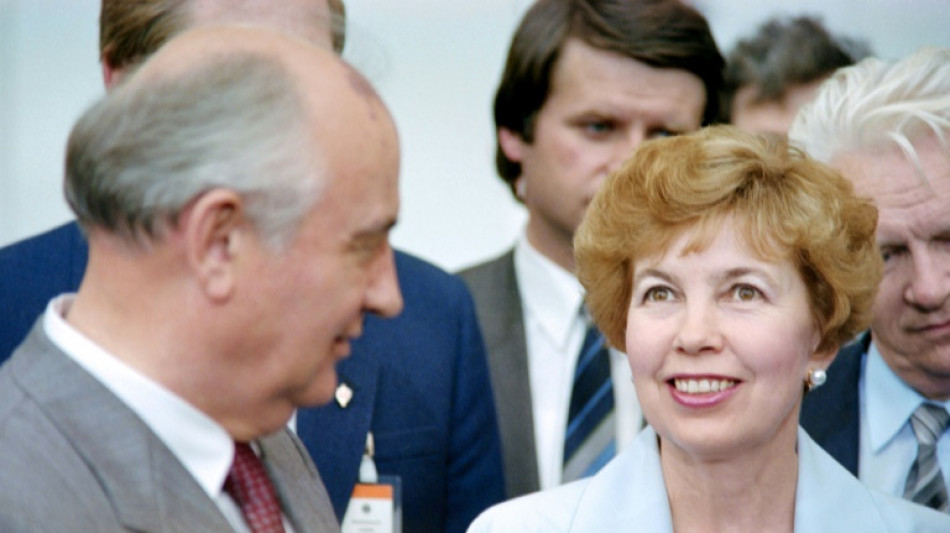
Gorbachev and first lady Raisa, a life 'hand-in-hand' / Photo: © AFP/File

 Nocturnal 'coffee frog' discovered in Costa Rica
 India's 'cockroach' protest movement keeps heat on Modi
 Russia's only anti-war party eyes support boost at elections
 Canada tries to adapt to a future of wildfires
 Death of NBA forward Clarke ruled accident due to heroin, cocaine
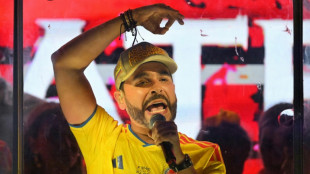
 Abelardo de la Espriella, Colombian president and flamboyant millionaire
 Maradona's 'Hand of God' ball heads to US auction
 Rybakina advances while Andreeva exits at Toronto

 Shelton storms to Montreal win as title defence solidifies
 All Blacks need to improve says coach after opening win against Stormers
 Spain imposes border checks on Italy as migrant showdown grows
 Bezzecchi smashes Silverstone track record in MotoGP qualifying
 Rashid Khan takes six wickets as Afghanistan thrash Ireland
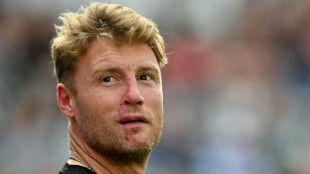 Flintoff quits England Lions role after Sydney Thunder appointment
 Movement, El Vecino and RISE Partner to Launch First Digital Dollar Wallet for Mexican Remittances
 FIFA chief Infantino travels to Colombia for presidential inauguration
 Niewiadoma seizes Tour de France Femmes lead on Mont Ventoux

 Trump's ex-lawyer all set for confirmation as US attorney general
 WHO urges Ervebo vaccine trial in DR Congo Ebola outbreak
 Hardline Trump ally De la Espriella to take office in Colombia

 Cambridge to review hiring process amid plagiarism row

 STARTRADER in Discussions with Trustpilot to Consolidate Review Profiles

 US unexpectedly loses jobs in blow to Trump's economy claims
 Call for Infantino to resign comes in wake of wave of support
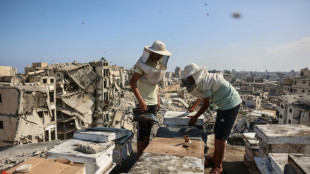 Gaza beekeeper starts again on rooftop amid ruins of war
Uniquely among Soviet leaders, Mikhail Gorbachev made no secret of his warm and supportive relationship with his wife Raisa, an elegant woman who often appeared in public with him and whose premature death from cancer was a devastating blow.
Her confident air and sense of style made Raisa a celebrity, boosting Gorbachev's image in the West.
She defied stereotypes of dowdy, retiring Soviet leaders' wives and clearly demonstrated that her husband represented a new generation.
But to Gorbachev she was much more, a partner and confidante, who travelled with him as he brought about momentous changes to the Soviet Union.
"We walked through our whole life holding hands," Gorbachev said in a 2012 documentary. "She had something magnificent about her... she was like a princess."
The couple met as students at Moscow State University in the early 1950s. Raisa came from the small village of Rubtsovsk near the border with Mongolia to study philosophy, while Gorbachev was a law student from the southern Russian town of Stavropol.
In a 2012 memoir titled "Alone with Myself", Gorbachev said Raisa at first was not interested in a relationship.
"I felt I was losing my head. I wanted to see Raisa and be wherever she was," he wrote, but Raisa was getting over a painful breakup and told him she did not want to date him.
"I told her that I could not fulfil her request, that for me it would just be a catastrophe. That was my confession of love," he said.
- A sense of style -
They first kissed in a Moscow park, when they went swimming in a lake and a thunderstorm suddenly struck.
"I remember Raisa's face in a flash of lightning, her scared, questioning eyes. I hugged her and clumsily but passionately started kissing her."
After their marriage in 1953, they moved to Stavropol, where Gorbachev began a rapid rise in the Communist Party that made him the youngest member of the Politburo, at age 49, by 1979. Raisa worked as a lecturer in philosophy and sociology.
In 1985, Gorbachev was elected general secretary of the Communist Party, taking over the world's biggest state and second superpower, Raisa at his side.
"All my life, wherever I was, Raisa and I did not stop our dialogue. When I became general secretary and president, I would call Raisa two or three times a day or she would call me."
Gorbachev was sometimes portrayed as henpecked, with Raisa as the imperious power behind the throne.
A popular joke imagined the couple in bed together. "Misha," Raisa coos affectionately: "I bet you never imagined that one day you'd be sleeping with the wife of the Soviet president."
But he hotly denied in his memoirs that Raisa influenced his political decisions.
"Those constant stories that she took political decisions or put pressure on me are nonsense. She didn't even know how the Politburo worked."
Her varied wardrobe of fitted suits and fur coats were also controversial in a country where such stylish clothes were inaccessible to most women.
She revealed later though that she used to quietly sell her clothes after a few wearings at a second-hand store because Gorbachev's salary as general secretary did not stretch to many outfits.
- 'I hope we will meet again' -
Health problems began to appear during the 1991 failed coup against Gorbachev, when the couple were held for three days in isolation.
Raisa suffered a mini-stroke and was unable to speak for several days. Television images of her return to Moscow showed a shocked and diminished figure.
In 1999, after her husband had been replaced by a new generation of Russian politicians, Raisa was diagnosed with leukaemia. She was treated for several months in a German clinic but died that year, aged 67.
Gorbachev was haunted by the memories of her final days.
"I return again and again to the last days in Raisa's life and the tortures that she had to go through," he wrote in his memoirs. "What more could I have done, or not done, in my life to avoid this terrible fate?"
After she died, he said, "I had never felt so lonely in my life... I hope that we will meet again."
In 2006 Gorbachev set up a foundation named after Raisa that raises funds to help children with leukaemia and other forms of cancer.
A year later he opened a clinic in Saint Petersburg that specialises in treating children with leukaemia and bears Raisa's name.
The couple had one daughter, Irina, who worked as vice president of The Gorbachev Foundation.
P.Anderson--BTB