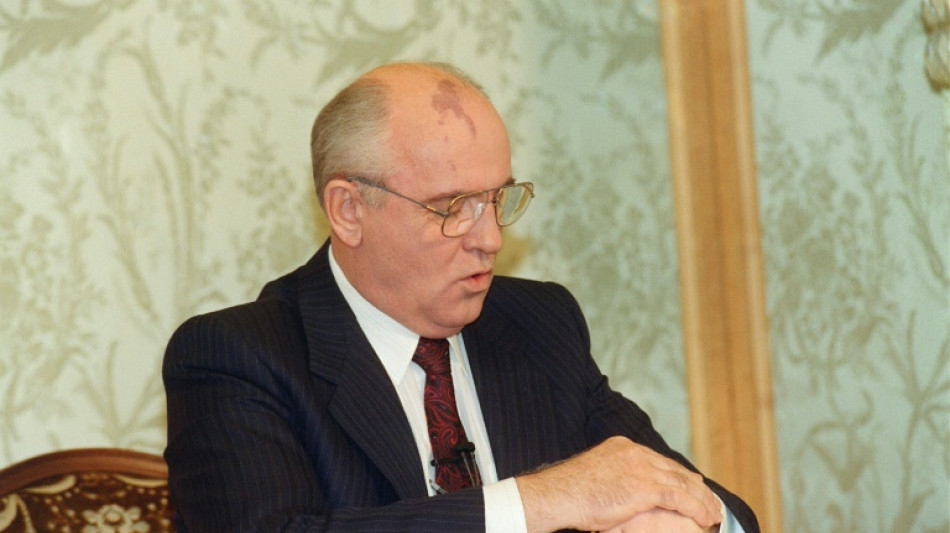
Gorbachev: the man who let the Soviet empire go / Photo: © AFP/File

 Nocturnal 'coffee frog' discovered in Costa Rica
 India's 'cockroach' protest movement keeps heat on Modi
 Russia's only anti-war party eyes support boost at elections
 Canada tries to adapt to a future of wildfires
 Death of NBA forward Clarke ruled accident due to heroin, cocaine
 Abelardo de la Espriella, Colombian president and flamboyant millionaire
 Maradona's 'Hand of God' ball heads to US auction
 Rybakina advances while Andreeva exits at Toronto

 Shelton storms to Montreal win as title defence solidifies
 All Blacks need to improve says coach after opening win against Stormers
 Spain imposes border checks on Italy as migrant showdown grows
 Bezzecchi smashes Silverstone track record in MotoGP qualifying
 Rashid Khan takes six wickets as Afghanistan thrash Ireland
 Flintoff quits England Lions role after Sydney Thunder appointment
 Movement, El Vecino and RISE Partner to Launch First Digital Dollar Wallet for Mexican Remittances
 FIFA chief Infantino travels to Colombia for presidential inauguration
 Niewiadoma seizes Tour de France Femmes lead on Mont Ventoux
 Trump's ex-lawyer all set for confirmation as US attorney general
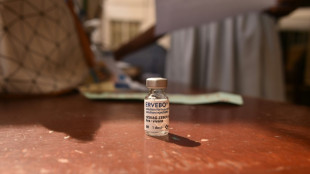 WHO urges Ervebo vaccine trial in DR Congo Ebola outbreak
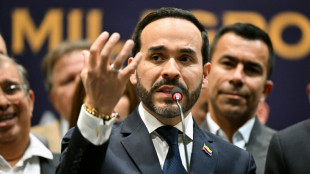 Hardline Trump ally De la Espriella to take office in Colombia
 Cambridge to review hiring process amid plagiarism row
 STARTRADER in Discussions with Trustpilot to Consolidate Review Profiles
 US unexpectedly loses jobs in blow to Trump's economy claims
 Call for Infantino to resign comes in wake of wave of support
 Gaza beekeeper starts again on rooftop amid ruins of war
Mikhail Gorbachev changed the course of modern history by triggering the demise of the USSR and allowing Eastern Europe to free itself from Soviet rule, earning him accolades in the West but the scorn of many Russians.
By championing reforms to achieve "glasnost" (openness) and "perestroika" (restructuring), Gorbachev inadvertently unleashed forces that led to the dissolution of the Soviet Union and his own ouster.
Lionised in the West for championing freedom and change at a time when many feared the Cold War would never end, Gorbachev became a figure of hate for many Russians who held him responsible for the destruction of the once-mighty Soviet empire.
In most instances while he was in power, Gorbachev chose peace over confrontation, hastening a thaw in ties with the West through close relationships with Western leaders such as German Chancellor Helmut Kohl and US President Ronald Reagan.
Britain's Margaret Thatcher famously remarked: "I like Mr Gorbachev. We can do business together."
But the more he relaxed restrictions during his 1985-1991 rule, the more he was sidelined by the energetic Boris Yeltsin, then a fast-rising Communist official.
By the time the USSR collapsed, Gorbachev had become irrelevant.
Over the past decades, an increasingly frail Gorbachev had an ambiguous relation with President Vladimir Putin -- backing the former KGB agent in a new stand-off with the West over Ukraine but criticising him for turning the clock back on democracy in Russia.
- Winds of change -
Born March 2, 1931 into a peasant family in Russia's southern Stavropol region, Gorbachev grew up with the hardships of World War II and the repressive rule of dictator Joseph Stalin, whose regime sentenced his grandfather to nine years in a labour camp.
As a boy Gorbachev was bright and hard working. At 16 he was awarded the Red Banner of Labour for helping in a record harvest, and in 1950 he won a coveted place at Moscow State University to study law.
Five years later, the ambitious graduate and his young wife Raisa moved back to Stavropol, where he began a rapid rise through the ranks of the Communist Party, becoming the youngest member of the Politburo, at age 49, in 1979.
He took over the world's biggest state and second superpower in 1985, when he was elected general secretary of the Communist Party.
At 54 and full of fresh ideas, Gorbachev was a startling contrast to the geriatric ideologues previously in control of the Kremlin.
His foreign policy choices sent shockwaves through the world order. He defused the US-Soviet nuclear standoff with a series of disarmament agreements, withdrew Soviet troops from Afghanistan, and loosened the reins on the leadership of Moscow's Eastern European satellite countries.
At home, his perestroika and glasnost policies set off seismic changes.
Thousands of political prisoners were freed, among them scientist and dissident Andrei Sakharov.
- End of an era -
But storm clouds were gathering. Gorbachev's attempt in 1985 to crack down on chronic alcohol abuse was a disaster, sapping the state budget and earning the Soviet leader the lasting hatred of alcohol-loving countrymen.
His encouragement of freedom at home quickened the disintegration of the multi-ethnic Soviet empire.
From the Baltic republics to the Caucasus and Central Asia, independence movements and inter-ethnic strife shook the seemingly invincible structure of Soviet domination, while glasnost brought wave upon wave of embarrassing revelations about the Soviet Union's dark past.
In 1989, Eastern Europe countries threw out their Communist governments and the Berlin Wall was torn down.
In 1990, Gorbachev was elected the first and final president of the Soviet Union but within months had to contend with a revolt by hardline communists.
The August 1991 coup failed, but it was the defiant Boris Yeltsin who faced it down and became a national hero while Gorbachev was held under house arrest far away in a Crimean resort.
Soon after, the Soviet Union vanished and with it Gorbachev's position.
In an op-ed published in government newspaper Rossiiskaya Gazeta in December 2016, days ahead of the 25th anniversary of his resignation, Gorbachev recognised his share of responsibility in the Soviet Union's collapse.
"But my conscience is clean," he wrote. "I defended the Union until the end, acting through political means."
Facing political ostracism at home, the 1990 Nobel Peace Prize winner hit the international lecture circuit, backed environmental causes, and made what observers found embarrassing fund-raising campaigns for his Gorbachev Foundation, including an appearance in a Pizza Hut television commercial.
- Mixed feelings about Putin -
An ill-judged run for the presidency in 1996 saw him garner only 0.5 percent in a vote won by Yeltsin but he maintained some influence through his part ownership of Russia's leading opposition paper Novaya Gazeta.
As Putin cemented his grip on power since the turn of the century, Gorbachev appeared torn between concern at the clampdown on civil liberties under the former KGB agent and respect for Russia's resurgence on the international stage.
In 2011 Gorbachev slammed what he saw as Russia's "imitation" of democracy as he marked his 80th birthday.
But in late 2014 he backed Putin's seizure of Ukraine's Crimea peninsula and blasted the West for its "euphoria and triumphalism" following the collapse of the USSR.
As he moved into his late 80s, Gorbachev made fewer public appearances but remained a passionate advocate for the causes that had shaped his life.
When Donald Trump announced in 2018 that Washington would be pulling out of the Intermediate-Range Nuclear Forces (INF) Treaty that Gorbachev brokered with Ronald Reagan in 1987, the ex-Soviet leader was scathing.
"A great danger... now looms over all that we have achieved in the years since the end of the Cold War," Gorbachev wrote in the Vedomosti newspaper.
But he remained hopeful.
"Politics, not weapons, is the key to solving security problems," Gorbachev wrote. "We need... to take action to prevent the world from sliding into an arms race, confrontation and ultimately hostility. Despite everything, I believe it is still in our power."
K.Thomson--BTB