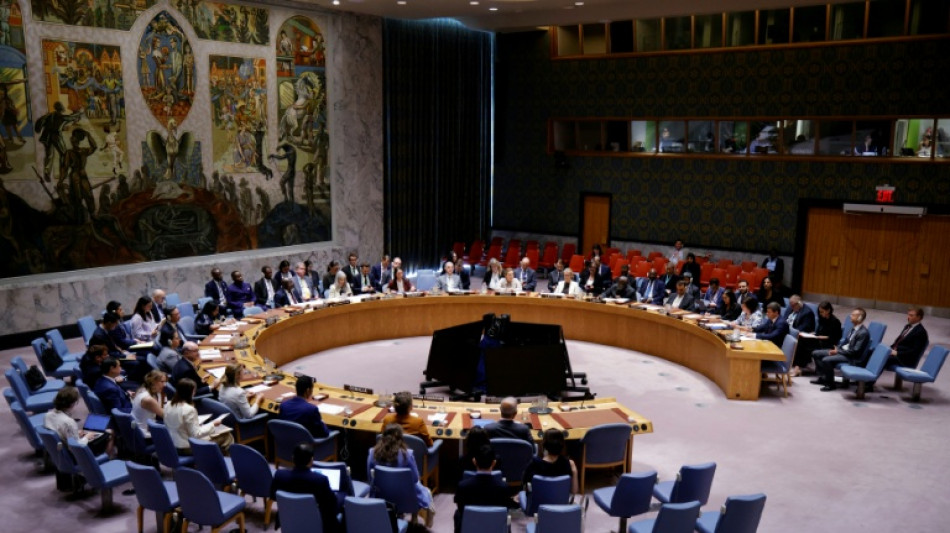
UN holds second informal poll for next leader / Photo: © AFP/File

 Security high as France braces for new protests
 White makes winning start as Fiji edge Eddie Jones's Japan
 Lula, Bolsonaro strike calmer tone in final Brazil election debate
 'How is it possible?': Students protest Indonesian haze
 Israel launches major West Bank operation after soldiers killed
 Typhoon Champi knocks out power to thousands in Taiwan
 As Israeli election nears, campaign turns ugly
 Oscar hopeful 'La Bola Negra' offers lessons about communicating, directors say
 Trapped: Soaring fuel costs hurt Maine lobster industry before midterms
 Marc Marquez beats brother Alex to Australian MotoGP pole
 Ebola vaccine trial begins in DR Congo
 Travelling man Wade equals Prem try record
 Rescuers search for seven people in Nairobi building collapse
 Sacha Baron Cohen revives the 'problematic dinosaur' Ali G in new film
 New race in Barcelona tops 17-event '27 IndyCar season
 Neymar backs Flavio Bolsonaro in Brazil election
 Melania Trump says she brokered truce in war-torn Ukrainian city
 Leclerc tops times for Ferrari in opening practice for US Grand Prix
 Bayern Munich coach Kompany in hospital after collapsing
 Signs point to renewed major US military ops against Iran
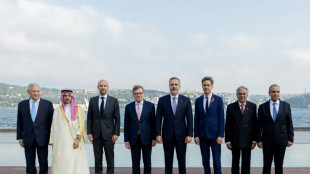 European, Mideast foreign ministers push peace and diplomacy at Istanbul talks
 Ex-All Black centre Williams undergoes 'miracle' heart surgery
 Netanyahu launches major West Bank operation after Israeli soldiers killed
 AFP photographer captures striking images from West Bank attack
 Oil hits $116 with stocks mixed on earnings, AI
The UN's most powerful body, the Security Council, meets Friday to hold another straw poll to gauge the popularity of a growing field of contenders to lead the embattled organization.
Costa Rica's Rebeca Grynspan was the front-runner after last month's first informal vote, in which the council's 15 members, including the five with veto power, pass judgment in secret on the candidates.
Argentina's Rafael Grossi -- the current head of the UN nuclear watchdog -- is also a candidate along with Chile's Michelle Bachelet, Ecuador's Maria Fernanda Espinosa, Guyana's Carolyn Rodrigues-Birkett, Uganda's Olara Otunnu and Senegal's Macky Sall.
After the first round concluded, Ecuador's Ivonne A-Baki threw her hat into the race to succeed Antonio Guterres, who will complete his second five-year term on December 31, 2026.
"While the first straw poll set the scene for the Secretary-General race, the second may give us some direction about where it is headed," said the International Crisis Group's Daniel Forti.
"Diplomats expect fluctuations in the vote distribution compared to the July poll. Most will be watching to see whether the early front-runners consolidate their support or slip in the standings.
"It is unlikely that any candidate will emerge from (Friday's) poll with a decisive lead."
Forti said the veto-wielding nations -- Britain, China, France, Russia and the United States -- might wait until later to express their preferences, while new contenders could emerge.
Russia's ambassador to the UN, Vassily Nebenzia, said Thursday he could not rule out that possibility.
"If, for example -- I'm speculating now -- if there is a deadlock on any of the candidates we are seeing today, if nobody... flies, then I think that we may see other candidates as well," Nebenzia said.
- 'End of the road'? -
Even if a candidate earns the required nine votes from the 15 available in the Security Council, they must also avoid a veto by the five major powers, which are deeply divided.
Once a candidate clears those bars, their name will go to the General Assembly of all UN members for confirmation.
The Security Council straw poll was devised in the early 1980s in an attempt to break a deadlock between two candidates shut down by vetoes.
The informal mechanism has persisted, in various forms, despite criticism from countries opposed to the opaque process.
"There is a good chance that some nominees realize after (Friday's) vote that their campaigns have reached the end of the road," Forti added.
Each member state must anonymously assign each candidate one of three labels: "encourage," "discourage," or "no opinion."
That would give those with no support the opportunity to withdraw -- though they are not obliged.
In the first rounds of the process expected to take several weeks, all ballots are the same color.
But after an unspecified number of votes, the ballots of the five permanent members will become a different color from those of the elected members, making it possible to identify potential vetoes, without knowing which country blackballed any given candidate.
It is tradition that the UN's top job should rotate between different regions.
Under that premise, the role should go to a candidate from Latin America this time. There are many candidates from the region, though Sall and Otunnu hail from Africa.
E.Gasser--VB