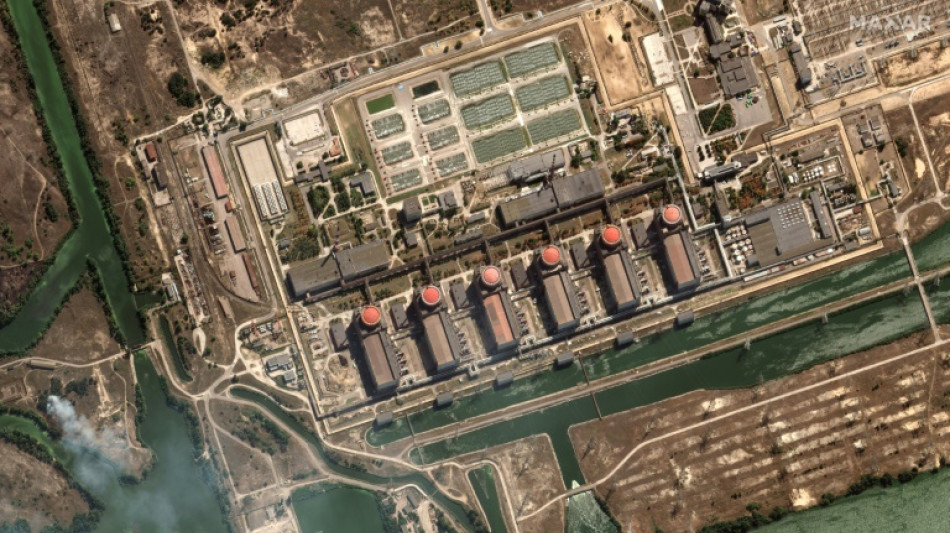
Preparing for the worst near Ukraine's precarious nuclear plant / Photo: © Maxar Technologies/AFP

 Nocturnal 'coffee frog' discovered in Costa Rica

 India's 'cockroach' protest movement keeps heat on Modi

 Russia's only anti-war party eyes support boost at elections

 Canada tries to adapt to a future of wildfires

 Death of NBA forward Clarke ruled accident due to heroin, cocaine

 Abelardo de la Espriella, Colombian president and flamboyant millionaire

 Maradona's 'Hand of God' ball heads to US auction

 Rybakina advances while Andreeva exits at Toronto

 Shelton storms to Montreal win as title defence solidifies

 All Blacks need to improve says coach after opening win against Stormers

 Spain imposes border checks on Italy as migrant showdown grows

 Bezzecchi smashes Silverstone track record in MotoGP qualifying

 Rashid Khan takes six wickets as Afghanistan thrash Ireland

 Flintoff quits England Lions role after Sydney Thunder appointment
 Movement, El Vecino and RISE Partner to Launch First Digital Dollar Wallet for Mexican Remittances

 FIFA chief Infantino travels to Colombia for presidential inauguration

 Niewiadoma seizes Tour de France Femmes lead on Mont Ventoux

 Trump's ex-lawyer all set for confirmation as US attorney general

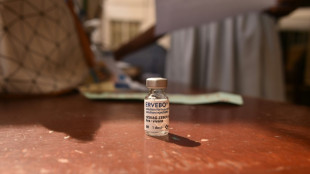 WHO urges Ervebo vaccine trial in DR Congo Ebola outbreak

 Hardline Trump ally De la Espriella to take office in Colombia

 Cambridge to review hiring process amid plagiarism row

 STARTRADER in Discussions with Trustpilot to Consolidate Review Profiles

 US unexpectedly loses jobs in blow to Trump's economy claims

 Call for Infantino to resign comes in wake of wave of support

 Gaza beekeeper starts again on rooftop amid ruins of war

In the southern city of Zaporizhzhia, which lies close to Europe's largest nuclear plant, which has been targeted by shelling, Ukrainians are picking up iodine pills and preparing for the worst.
The city lies some 50 kilometres (30 miles) as the crow flies from the Zaporizhzhia nuclear plant which has been occupied by Russian troops since early March in an area hit by ongoing fighting.
Moscow and Kyiv have traded blame over the shelling around the complex and the nearby town of Energodar amid UN warnings about "the very real risk of a nuclear disaster".
"You know, we survived the accident at the Chernobyl nuclear power plant," says Kateryna, a 68-year-old pensioner who still has thyroid problems linked to the 1986 disaster when one of the reactors exploded.
"That threat was very big, but we survived. Now we have six reactors, not one," she said of the Zaporizhzhia complex.
Like dozens of other residents, she went on Monday to a school handing out iodine tablets that can reduce the medical risk of radiation in the event of a disaster.
Should a serious incident happen at a nuclear facility, it would release radioactive iodine into the atmosphere which, if inhaled, can increase the risk of thyroid cancer -- an effect observed after Chernobyl.
The tablets can help prevent radioactive iodine concentrating in the thyroid gland so it can be flushed out of the body naturally though the urine.
Some 13 schools have been distributing the tablets, which doctors say should be given to anyone living with in a 50-kilometre radius of the plant.
So far, more than 5,000 of the city's residents, among them more than 1,500 children, have collected iodine pills over a two-day period, officials say.
"The tablet is taken in case of danger, when the alarm is raised," said Elena Karpenko, a nurse at the Zaporizhzhia Children's Hospital.
- Radioactive risk -
With tensions high around the plant, inspectors from the International Atomic Energy Agency, the UN's nuclear watchdog are due to visit in the coming days, with the team led by IAEA chief Rafael Grossi.
Beyond the shelling, Kyiv has also accused Moscow of using the plant for storing heavy weaponry and arms and stationing some 500 soldiers at the site.
But the Kremlin has insisted it only has security personnel there. On Monday, Moscow urged the international community to put pressure on Ukraine "so it stops endangering the European continent by shelling".
Last week, the plant was briefly severed from the national grid for the first time in its four-decade history after its last working power line was shelled. Ukraine's nuclear agency Energoatom warned there was a risk of "hydrogen leakage and sputtering of radioactive substances".
Over the weekend, the emergency services in Zaporizhzhia held training sessions on managing the risk of nuclear accidents. They carried out mock evacuations and conducted decontamination exercises involving radioactive dust.
So far, the city has stockpiled two tonnes of decontamination products.
In the event of a leak, two sirens will go off to warn the city's inhabitants: an initial alarm then a second one 24 hours later.
"Perhaps the radioactive cloud will not reach the place where people are," said Taras Tyshchenko, the region's health chief.
"By the time the second alarm goes off, we will clearly know how far the radioactive cloud has spread.
"We will have all the information about safe areas to evacuation sites," he said.
D.Schneider--BTB