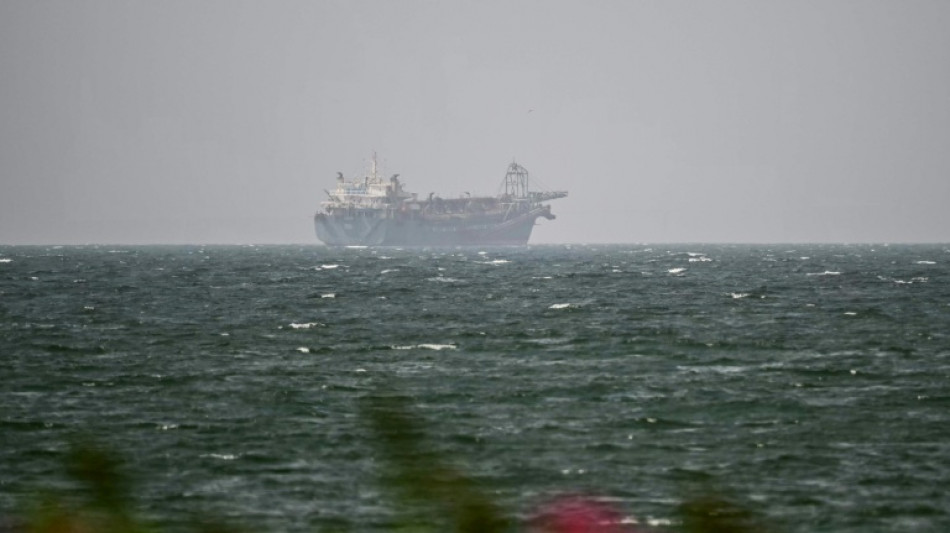
What's behind the UAE's decision to cut Iran trade ties? / Photo: © AFP

 Seen and heard at France protests

 White says Fiji can have 'massive' World Cup after beating Japan
 England thrash France 82-0 to keep Rugby League World Cup hopes alive
 Security high as France braces for new protests
 White makes winning start as Fiji edge Eddie Jones's Japan

 Lula, Bolsonaro strike calmer tone in final Brazil election debate

 'How is it possible?': Students protest Indonesian haze
 Israel launches major West Bank operation after soldiers killed
 Typhoon Champi knocks out power to thousands in Taiwan

 As Israeli election nears, campaign turns ugly

 Oscar hopeful 'La Bola Negra' offers lessons about communicating, directors say

 Trapped: Soaring fuel costs hurt Maine lobster industry before midterms

 Marc Marquez beats brother Alex to Australian MotoGP pole
 Ebola vaccine trial begins in DR Congo
 Travelling man Wade equals Prem try record
 Rescuers search for seven people in Nairobi building collapse

 Sacha Baron Cohen revives the 'problematic dinosaur' Ali G in new film

 New race in Barcelona tops 17-event '27 IndyCar season

 Neymar backs Flavio Bolsonaro in Brazil election
 Melania Trump says she brokered truce in war-torn Ukrainian city

 Leclerc tops times for Ferrari in opening practice for US Grand Prix

 Bayern Munich coach Kompany in hospital after collapsing

 Signs point to renewed major US military ops against Iran

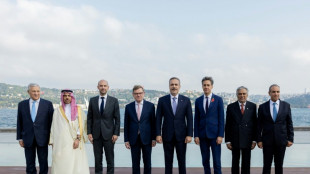 European, Mideast foreign ministers push peace and diplomacy at Istanbul talks
 Ex-All Black centre Williams undergoes 'miracle' heart surgery
The UAE this week announced suspending trade with Iran, heaping pressure on its major trading partner at the same time that the US declared "economic warfare" on Tehran.
It is unclear when the ban came into place and what has prompted it, with the UAE citing "regional escalations".
Experts have said that the UAE is sending a message to Iran, which has ramped up attacks on Emirati tankers in the Strait of Hormuz, while also signalling alignment with the United States -- although halting trade is expected to do little in the way of curbing illicit flows.
- How was UAE-Iran trade? -
The United Arab Emirates is a significant trading partner for Iran and its top import country.
In the 10 months preceding the war, Iran's trade with the UAE totalled $21 billion according to official Iranian figures.
In 2024, Iran relied on the UAE for 30.6 percent of its imports totalling roughly $21 billion according to the World Trade Organization.
The UAE is also Iran's third largest export destination, making up 12 percent of its exports, totalling more than $7 billion.
The vast majority of UAE trade with Iran consists in re-exports, according to official Emirati data, including everything from phones to meat and other food.
These figures do not take into account smuggling and illicit flows, which are difficult to assess.
Some Trump allies have lauded the UAE's efforts, hoping it will help stifle Iran's economy.
- Will it curb illicit flows? -
But halting licit flows may have little impact on Iran's sanctions evasion network.
Experts have said that Iran uses UAE banks and its financial system to access the world economy through illicit, often murky transactions.
"Billions of dollars of the regime's sanctioned oil revenue moves through UAE by way of opaque shell companies based in China/Hong Kong," according to Max Meizlish, a researcher at the Foundation for Defense of Democracies (FDD) think tank.
He formerly worked for the US Department of the Treasury's Office of Foreign Assets Control (OFAC), responsible for sanctions.
"That means halting all direct trade, commercial exchange, and financial transactions with Iran may still allow billions in oil revenue to reach the regime indirectly," he said.
"UAE deserves credit for this long overdue move, but the US needs to keep up the pressure and ensure banks in the Emirates apply enhanced due diligence on transactions for which there is reason to suspect possible Iranian sanctions evasion/shadow banking."
- Why now? -
The UAE took a hawkish stance on Iran in the early weeks of the war, recalling its ambassador in Tehran and shutting schools and hospitals linked to the Iranian state that it said violated its laws.
But since the signing of a memorandum of understanding between the United States and Iran in June, an understanding appeared to take shape.
Iran, which had unleashed the bulk of its wrath on the UAE in the first round of war, did not launch attacks aimed at the country since May.
The UAE announcement coincided with a campaign by its US ally to inflict economic pain on Iran as the war nears its sixth month with no immediate diplomatic or military off-ramp in sight.
One day after the UAE announcement, US President Donald Trump said he was launching a major new campaign to target Iran's economy.
For Esfandyar Batmanghelidj, who heads the Bourse & Bazaar Foundation, the UAE has not changed its Iran strategy, but it is under US pressure to contribute to the US economic sanctions campaign.
Their statement is a way of "publicly signalling that there is no daylight between the US and UAE positions".
Iran has also been hitting ADNOC tankers repeatedly in the past weeks and the UAE recently reported Iranian missiles targeting shipping that fell in the water, after earlier saying they were directed at the country.
For Emirati researcher Mohammed Baharoon, who heads the Dubai Public Policy Research Center, the UAE move comes "after various attempts to reconnect Iran after the war".
"This is not about joining the US sanction (effort) but about re-establishing the basis of the relationship. Iran can't ask for connectivity while they are blocking it," he added, in reference to their attacks on Emirati tankers.
A.Kunz--VB