Renewed Iran war raises US missile supply concerns / Photo: © AFP/File

 Russia says open to mini Ukraine ceasefires, but no let up in war

 Bangladesh measles crisis 'warning sign' of other outbreaks: report

 'Historic victory': World leaders celebrate Lula's re-election

 Stock markets mixed ahead of tech earnings, central bank decisions

 Mother renews anti-bullying appeal a decade after son’s death

 'Historic victory': Leftist leaders in the Americas celebrate Lula's re-election

 African players in Europe: Jackson brace ends City's perfect record

 Argentine police arrest stepfather after pregnant 10-year-old reaches hospital

 Mother dies after rescuing sons from riptide in the Bahamas

 James Blunt reportedly sought extra underwear during Celebrity Traitors filming

 Trump says Canada trade deal coming 'soon'

 Police urge home-security checks as darker evenings return

 Kane primed to pip Yamal, Mbappe to Ballon d'Or glory
 UK households advised to prepare for three days without essential services

 Chiefs and 49ers suffer first losses of NFL season, Vikings stay unbeaten

 Obama mocks Trump tariffs on Canada during Michigan campaign stop

 Brewers erase four-run deficit as Rays lose World Series Game 2

 Shadab century and record last-wicket stand carry Pakistan past England

 Baylor dismisses Dave Aranda and appoints Joe Klanderman interim coach

 Stocks sink as traders brace for tech earnings, central bank decisions

 Albert Zahn’s carved birds find a lasting home in Wisconsin museums

 NPS Vatsalya offers three choices when a child turns 18

 China's Communist Party elite gather for governance talks

 Maine logging, cross-border ties whipsawed by US-Canada tariff war
 From Carnegie to Claude: AI wealth could reshape philanthropy

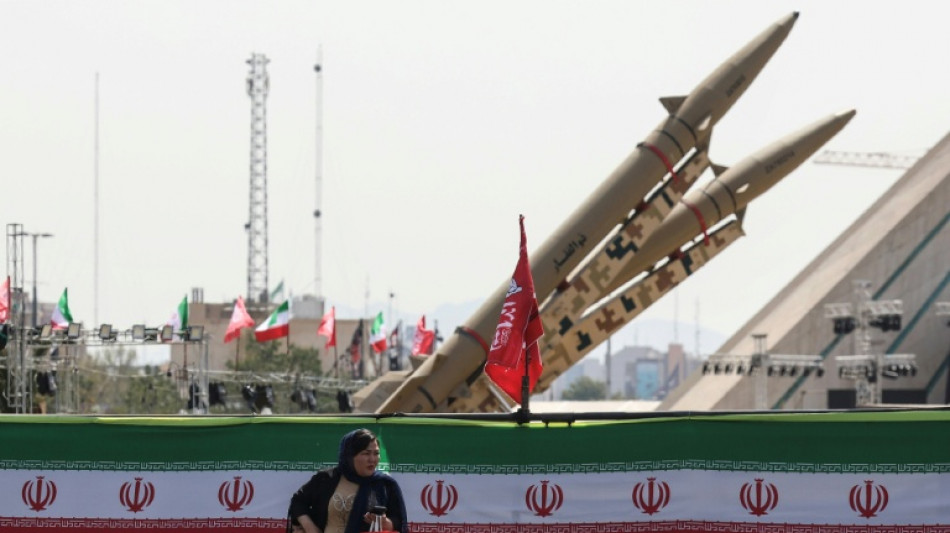
Tehran's forces have carried out frequent missile and drone attacks in the Middle East since the breakdown of the US-Iran ceasefire, raising renewed concerns about Washington's supply of the weapons needed to intercept them.
Highlighting the issue, the US military said it shot down multiple ballistic missiles fired by Tehran in an "attempted surprise attack" this week, following a deadly Iranian strike on American troops in Jordan earlier this month.
Some lawmakers have raised questions about whether the United States has sufficient munitions since early in the war, which began with US-Israeli strikes in late February before the fighting largely halted under an April ceasefire, only to resume in recent weeks.
"We have depleted our interceptors... which are, obviously, necessary to protect American troops," US Senator Chris Van Hollen said Sunday on ABC's "This Week."
"We are depleting these every day, despite the fact that we could face other potential conflicts around the world," the Democrat added.
Defense Secretary Pete Hegseth has previously dismissed fears about Washington's weapons supplies, and the US military has not publicly released details about how many interceptors it has.
But US media outlets have reported that General Dan Caine, the chairman of the US Joint Chiefs of Staff, has raised concerns about falling US interceptor supplies.
President Donald Trump was asked about the issue on Monday and said that while stocks are sufficient, he wants more.
"We have a lot of ammunition, different types," Trump told journalists aboard Air Force One, while adding: "For some of the more sophisticated stuff, we'd certainly like to have more."
Trump took aim at Joe Biden, saying "so much was given to Ukraine" by the Democratic president, who sought to help Kyiv's forces defend against repeated Russian missile and drone attacks.
- 'Extensive use of interceptors' -
But Trump's war against Iran has resulted in major reductions in US weapons supplies.
An analysis by the Center for Strategic and International Studies (CSIS) think tank released this week found that US stocks of key Patriot and THAAD air defense missiles have been slashed by the conflict.
Before it began, the United States had more than 2,300 Patriot and more than 450 THAAD interceptors -- figures that CSIS estimated have been roughly halved or more in the subsequent five months of war.
"The air defense campaign has been largely successful with high -- though not perfect -- interception rates," but "this has required extensive use of interceptors," CSIS said.
The United States is pushing hard for defense companies to increase the pace at which weapons including interceptors are produced.
Trump referred to these efforts on Monday, saying: "Plants are being built. A lot of equipment is being built. The Patriots, in particular, are being built."
The Defense Department announced a $58.6 billion, seven-year deal with Lockheed Martin for Patriot missile production this week that the company said will deliver "critical interceptors into the hands of warfighters at unmatched speed."
But the United States still faces dangers from interceptor shortfalls, CSIS said in its analysis.
"Diminished stockpiles may force the United States and its coalition partners to take more risks with interceptions," while "expended munitions create a near- to medium-term risk for US readiness to fight a war against China in the western Pacific," it said.
Asked if the Pentagon was concerned about current munitions supplies, chief spokesman Sean Parnell said the US military "has everything it needs to execute at the time and place of the president's choosing."
"We have executed multiple successful operations across combatant commands while ensuring the US military possesses a deep arsenal of capabilities to protect our people and our interests," he said.
F.Stadler--VB