Selection process for next UN chief under way / Photo: © AFP/File

 Russia says open to mini Ukraine ceasefires, but no let up in war
 Bangladesh measles crisis 'warning sign' of other outbreaks: report
 'Historic victory': World leaders celebrate Lula's re-election
 Stock markets mixed ahead of tech earnings, central bank decisions

 Mother renews anti-bullying appeal a decade after son’s death
 'Historic victory': Leftist leaders in the Americas celebrate Lula's re-election
 African players in Europe: Jackson brace ends City's perfect record
 Argentine police arrest stepfather after pregnant 10-year-old reaches hospital
 Mother dies after rescuing sons from riptide in the Bahamas

 James Blunt reportedly sought extra underwear during Celebrity Traitors filming
 Trump says Canada trade deal coming 'soon'

 Police urge home-security checks as darker evenings return
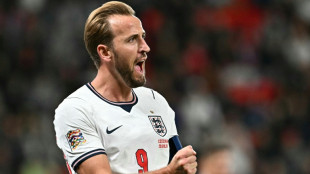 Kane primed to pip Yamal, Mbappe to Ballon d'Or glory
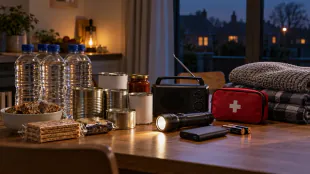 UK households advised to prepare for three days without essential services

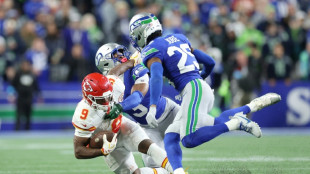 Chiefs and 49ers suffer first losses of NFL season, Vikings stay unbeaten
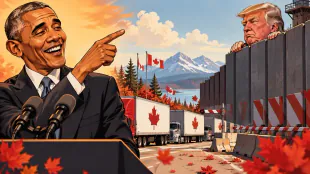
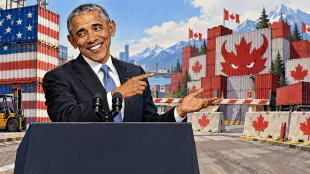 Obama mocks Trump tariffs on Canada during Michigan campaign stop

 Brewers erase four-run deficit as Rays lose World Series Game 2
 Shadab century and record last-wicket stand carry Pakistan past England
 Baylor dismisses Dave Aranda and appoints Joe Klanderman interim coach
 Stocks sink as traders brace for tech earnings, central bank decisions
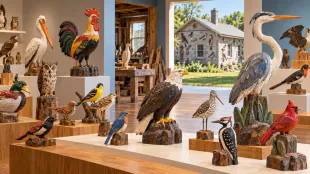 Albert Zahn’s carved birds find a lasting home in Wisconsin museums
 NPS Vatsalya offers three choices when a child turns 18
 China's Communist Party elite gather for governance talks
 Maine logging, cross-border ties whipsawed by US-Canada tariff war
 From Carnegie to Claude: AI wealth could reshape philanthropy
The UN Security Council began the process of selecting the UN's next secretary-general Thursday, holding a first "straw poll" to gauge the seven candidates' support for the high-profile global statesman role.
Following the first round of voting, ambassadors of the 15 Security Council members were tight-lipped about the outcome of the secret poll.
Four women and three men are so far in the running to succeed Antonio Guterres, who will complete his second five-year term on December 31, 2026.
They are Michelle Bachelet of Chile, Maria Fernanda Espinosa of Ecuador, Rafael Grossi of Argentina, Rebeca Grynspan of Costa Rica, Olara Otunnu of Uganda, Carolyn Rodrigues-Birkett of Guyana, and Macky Sall of Senegal.
Although Grossi, the head of the International Atomic Energy Agency, has arguably the best name recognition, observers believe that for now there is no clear favorite in the race that could last several months.
"I'm not going to give you the numbers," said the UN Security Council president, Kinshasa's envoy to the UN, Zenon Ngay Mukongo, who confirmed a second round of the straw poll would be announced in the coming days.
The candidates' nominating countries would be informed of the results of the initial straw poll, he added, with no public announcement planned.
Diplomats are reluctant to predict the outcome of the race because of the sway of the five permanent members of the Security Council -- the United States, Russia, China, France, and the United Kingdom -- which have not yet indicated their preferences.
Even if a candidate bags the required nine votes from the 15 available in the Security Council, they must also avoid a veto by the five major powers, which are deeply divided.
Once a candidate clears those bars, their name will go to the General Assembly of all UN members for confirmation.
On Thursday, the Council's 15 members met behind closed doors to test the waters with the first "straw poll," devised in the early 1980s in an attempt to break a deadlock between two candidates whose bids were shut down by vetoes.
The informal mechanism has persisted, in various forms, in spite of criticism from countries opposed to the opaque process.
- Time for a woman? -
Each member state must anonymously assign each candidate one of three labels: "encourage," "discourage," or "no opinion."
That would give those with no support the opportunity to withdraw -- though they are not obliged.
In the first round of a process expected to take several weeks, all ballots are the same color.
But after an unspecified number of votes, the ballots of the five permanent members will become a different color from those of the elected members, making it possible to identify potential vetoes, without knowing which country blackballed any given candidate.
"The straw polls may show that some candidates are just not viable, and allow them to bow out in a dignified manner," Richard Gowan of the International Crisis Group told AFP.
"I would be surprised if any one candidate emerges with a decisive numerical advantage."
It is tradition that the UN's top job should rotate between different regions.
Under that premise, the role should go to a candidate from Latin America this time, and there are many candidates from the region.
Panama's Ambassador to the UN Eloy Alfaro de Alba said it was a priority that the winner be a woman from Latin America.
Many states are also pushing for a woman to lead the UN for the first time.
H.Weber--VB